Celtic Rose Print Designs

This year, 2026 the focus is on PRINTING with natural plant colour.  Making stencils, print pastes and modifying colours.

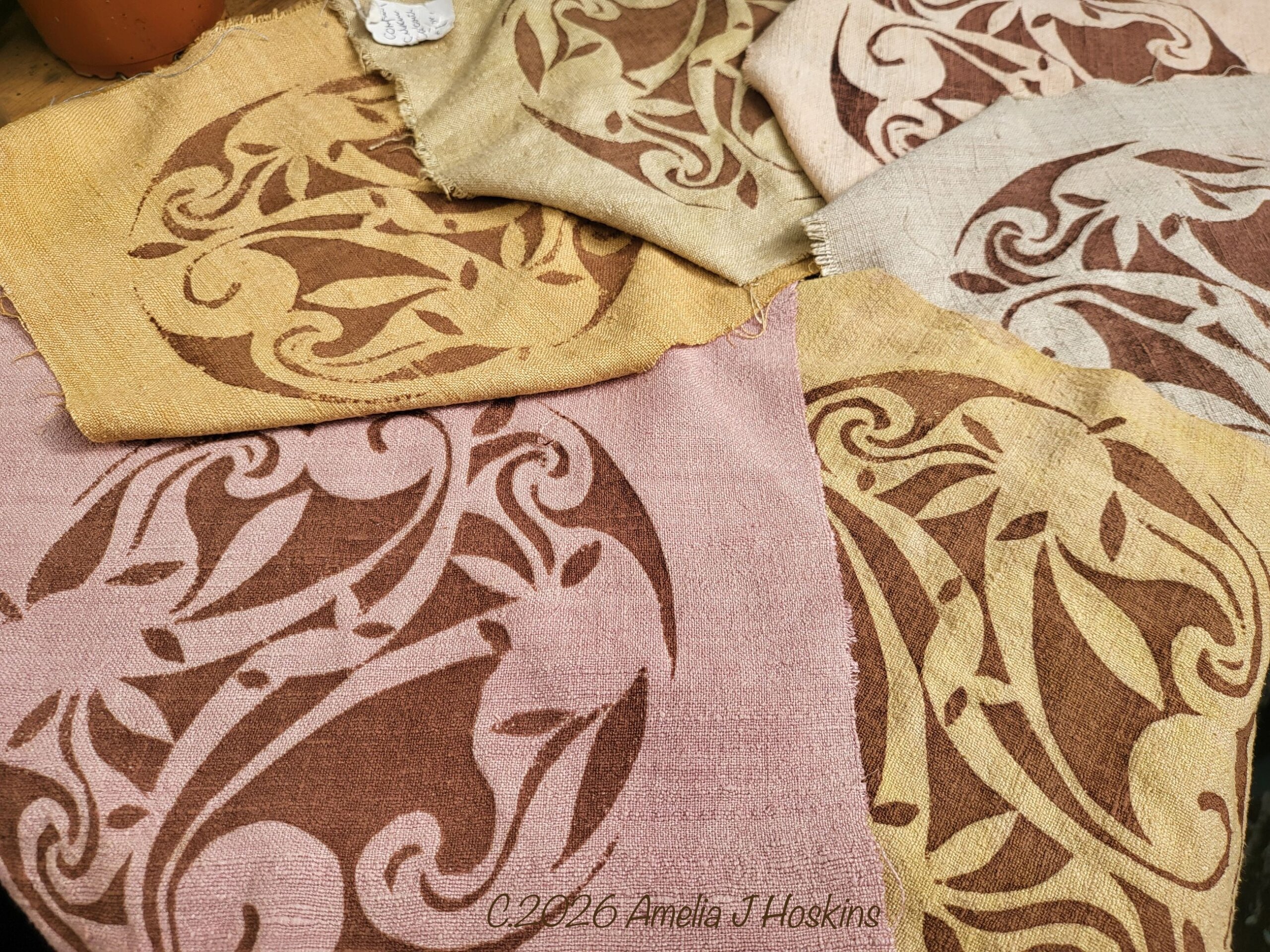
Theme is Seeds, Symbols and Celtic Design.  Dyed pieces and Prints will be utilised for dresses, quilts, and Art Prints: with additional embroidery.  New name (and domain) 'CELTIC ROSE'.  Folksy shop 'Celtic Rose' with my patchwork garments.

Each of the last few years, I've had a new focus with plant dyes. In 2023, I practiced soya wax 'batik' on immersion dyed silk.  In 2024 I learnt bundle dyeing, and loved the idea of using a bundle dyed background with a print over the top.  In 2025 I dyed many sample silks, with seasonal flowers and plants, recording notes and samples of colour changes achieved when using modifiers to the original dye.

This knowledge now feeds into this year's printing tests on those samples; with additional mordant and modifying printing, using print pastes from expert dyers' recipes.  Experimenting with stencils, and block prints.

There is a month-by-month schedule of plant colours' seasonal availability - 2026 starts with HYACINTH BLUE DYE

'Midnight Mystic' is a dark violet hyacinth which on soaking in pond water for 48 hours turns teal, then purple, ready for soaking fabric to turn a staggeringly rich blue.  Practice shows that the flowers need to be over a week old for dye to seep out.

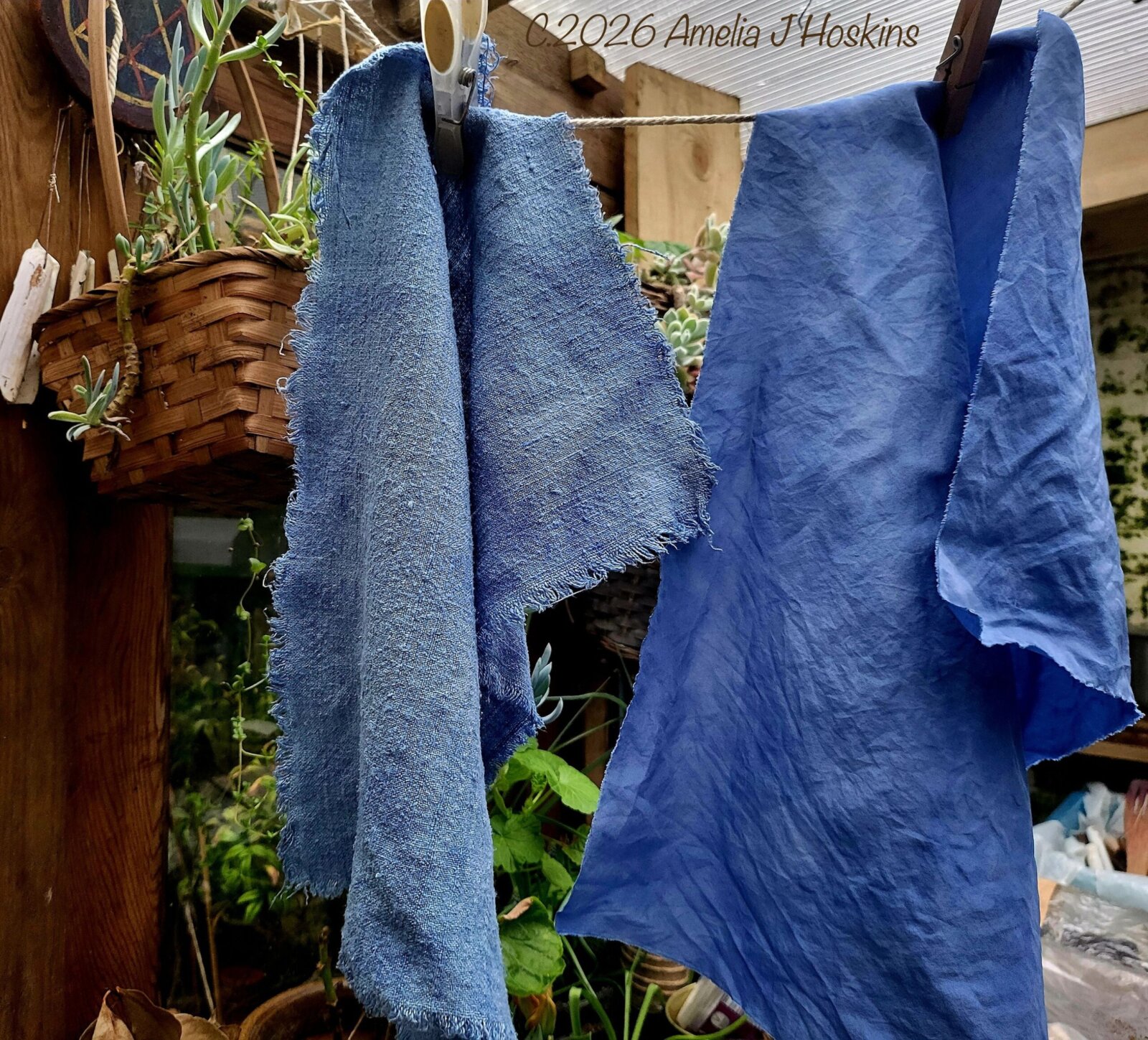
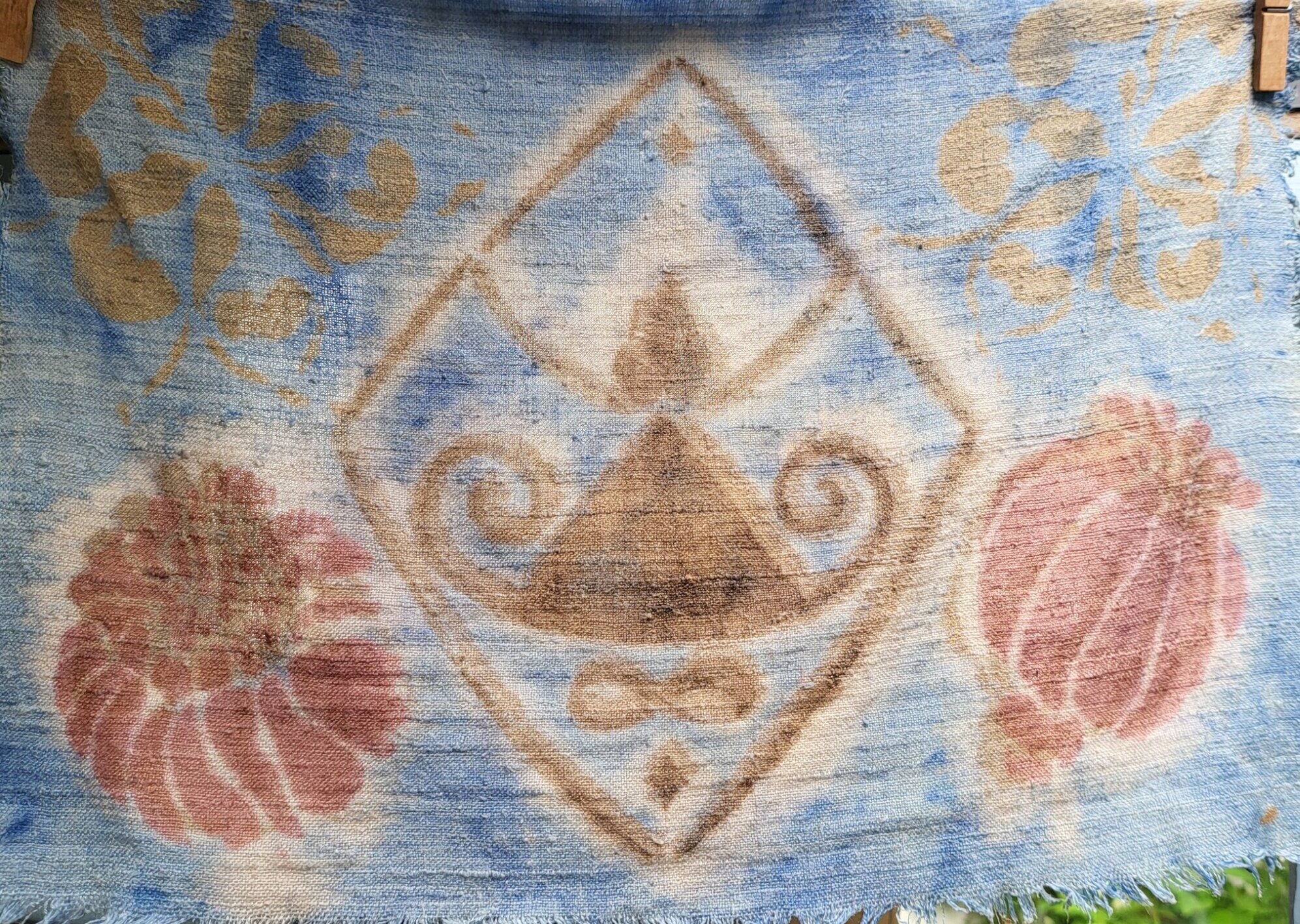
Both silk and cotton/linen take the blue, with different mordants beforehand [ alum sulphate and alum acetate respectively.  Last year's result on textured Eri silk is only fractionally paler after a year hanging in sunlight. This year's shiny Habotai-10 has dyed darker to start with; a true cobalt rather than more turquoise.

Blue dyed silks were used for experiments below with modifier pastes.

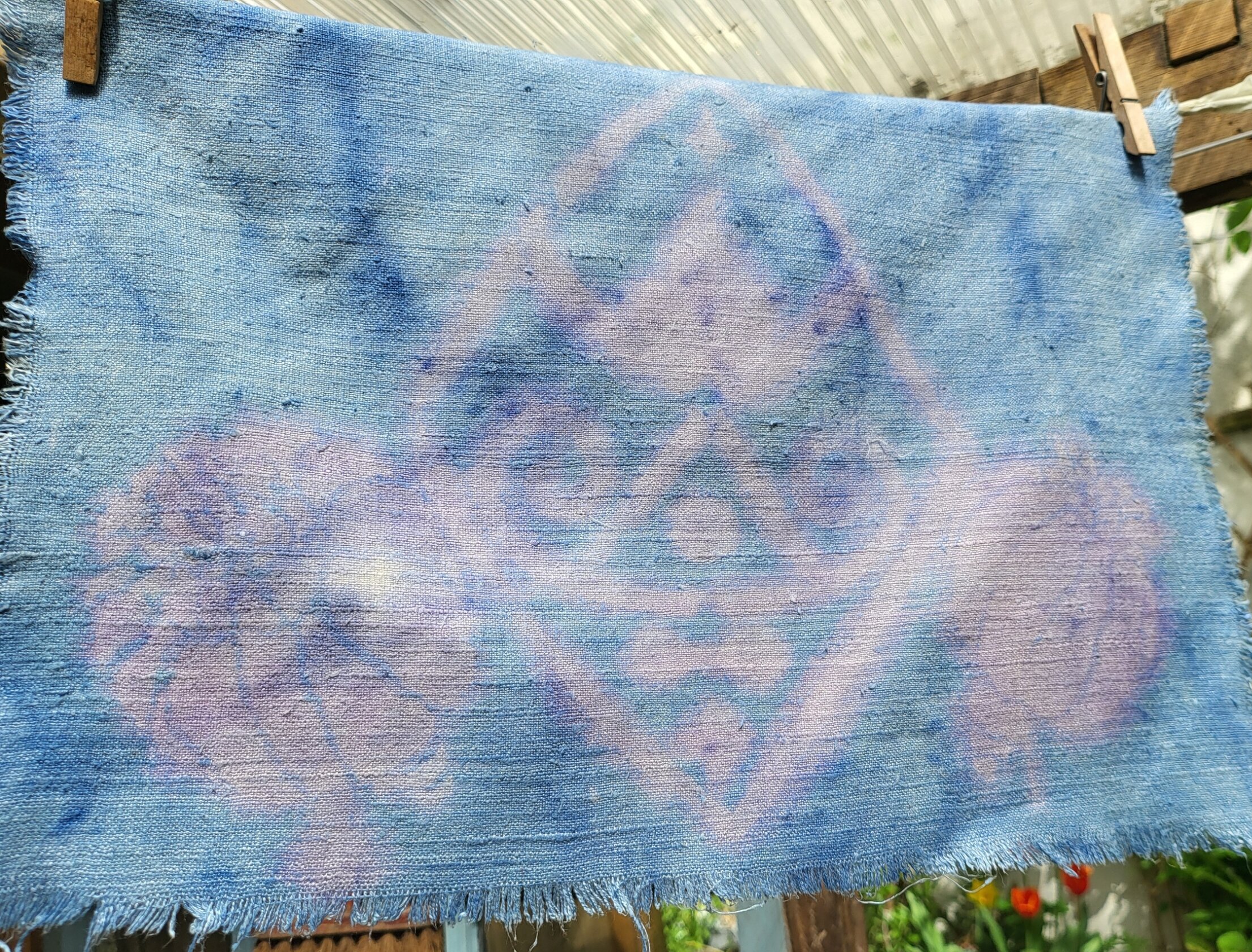
Hyacinth dyed Eri silk and habotai silk

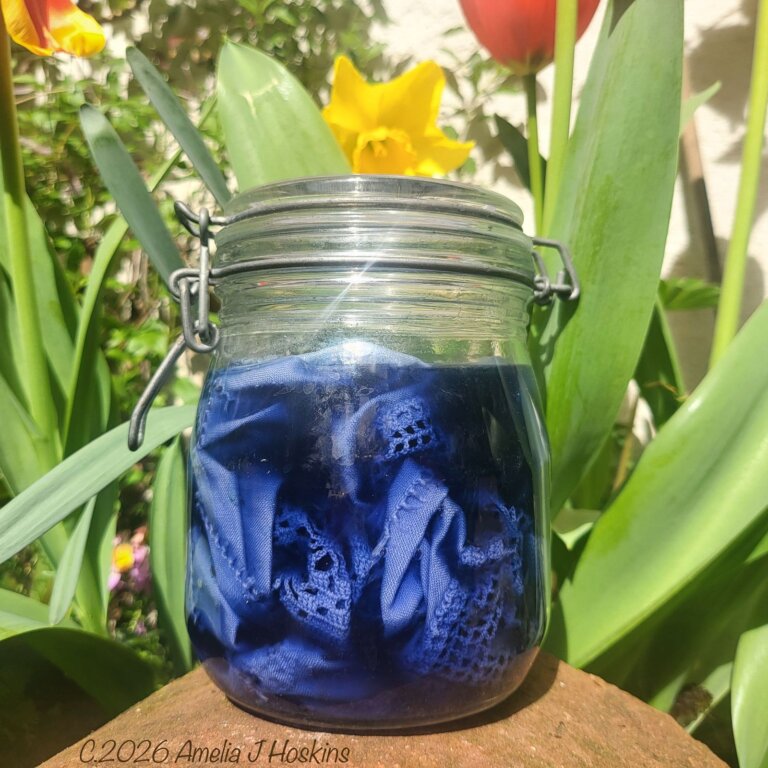
Antique cotton soaking in hyacinth blue

First test MODIFIER PRINTS on Hyacinth dyed silks; Eri and Habotai

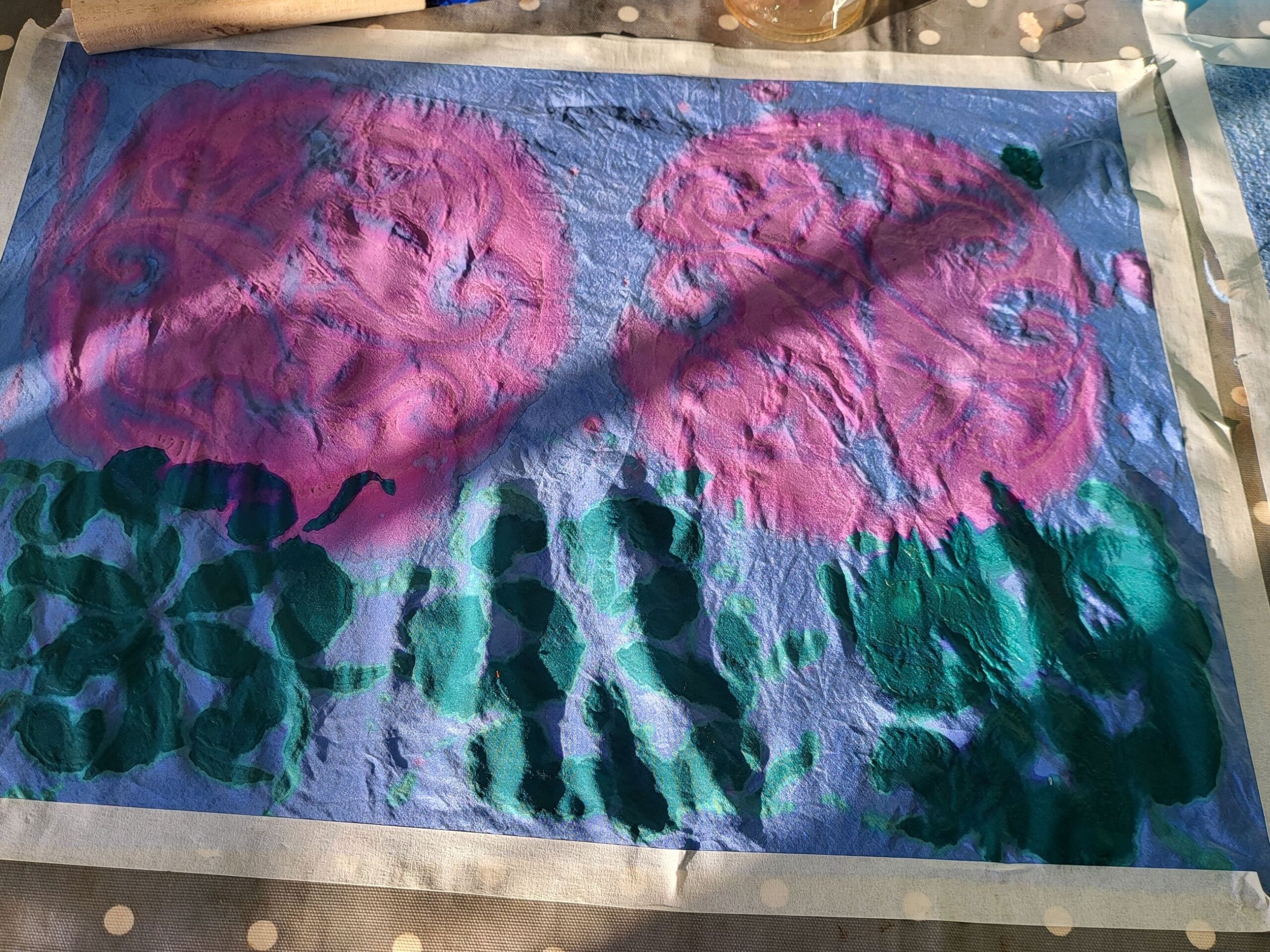
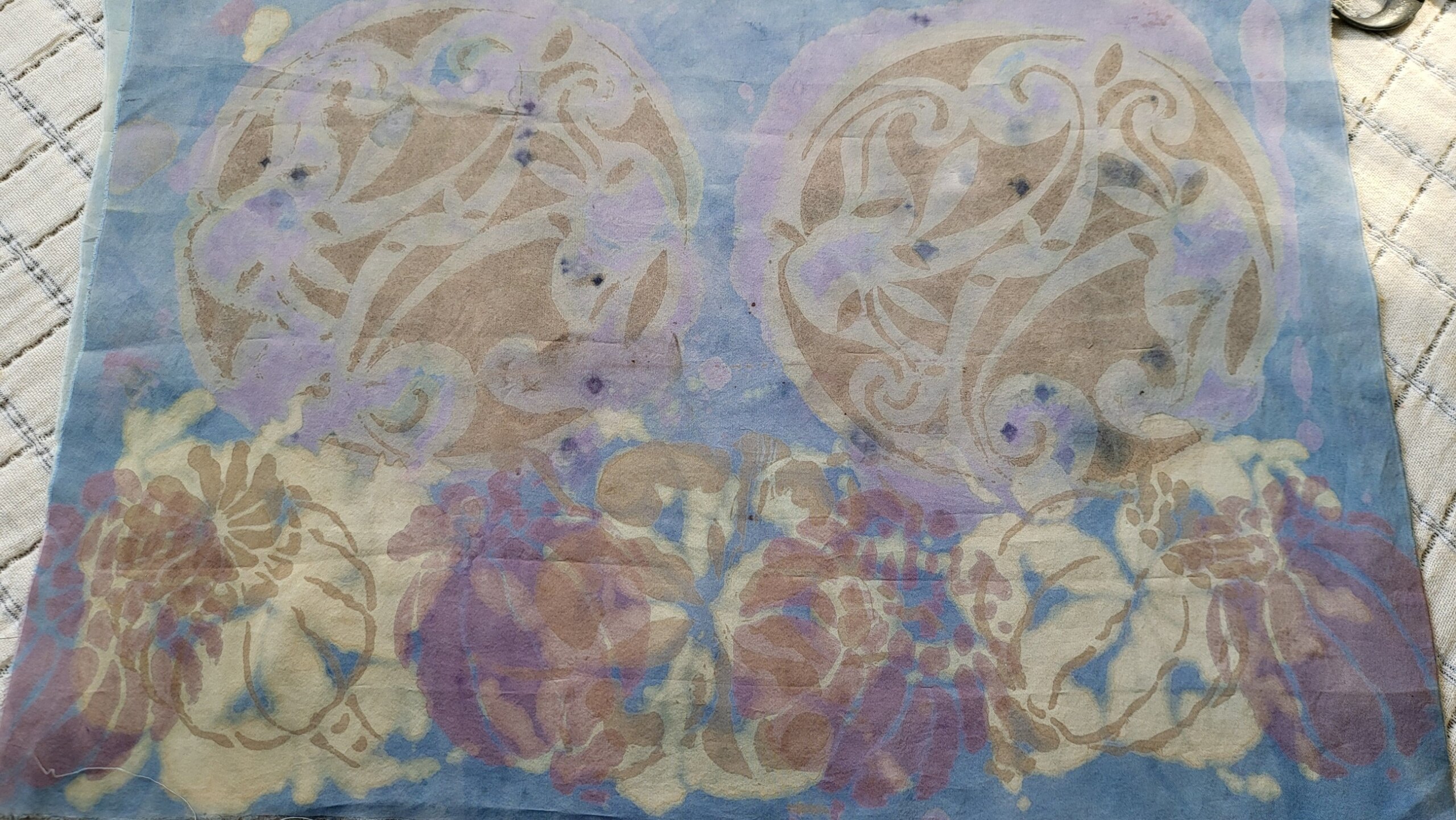
Celtic design image - stencil print - print paste is citric acid, turning hyacinth background pink.

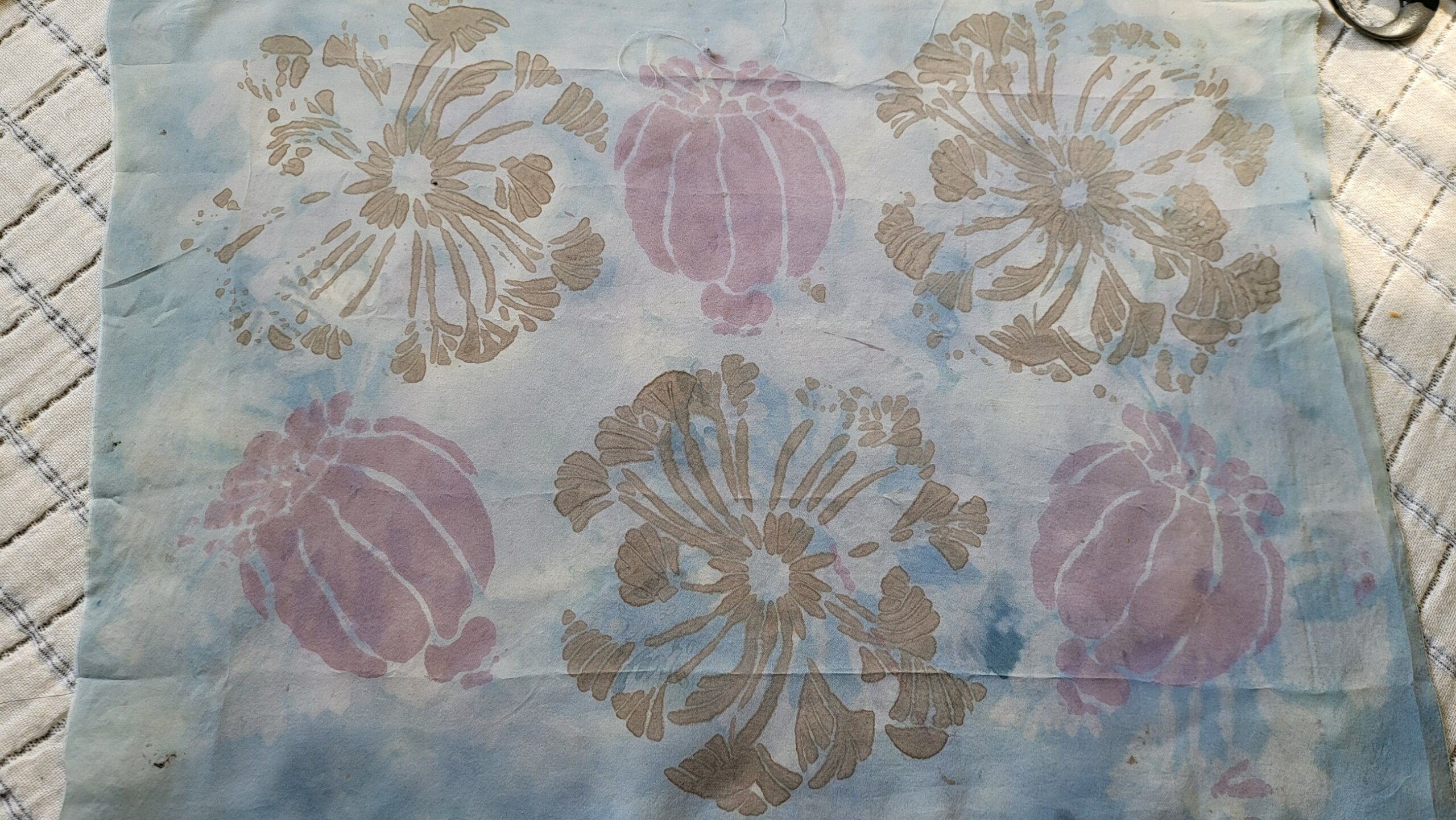
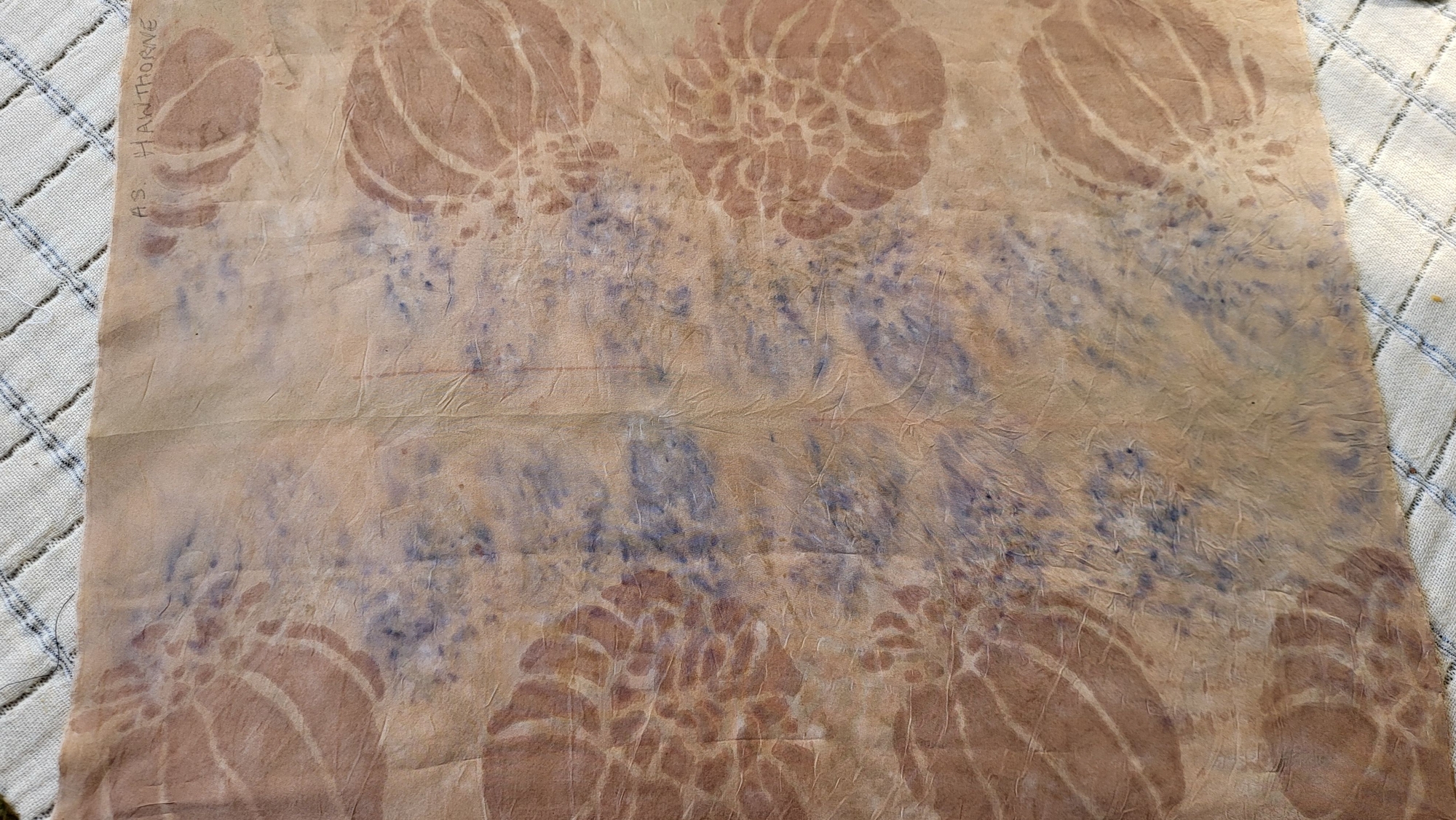
Seed pod design image - stencil print - print paste is sodium carbonate, creates green.

Modifyer prints - Citric Acid pink, Sodium Carbonate green - On Habotai silk

Steamed result

Result after wash and dried

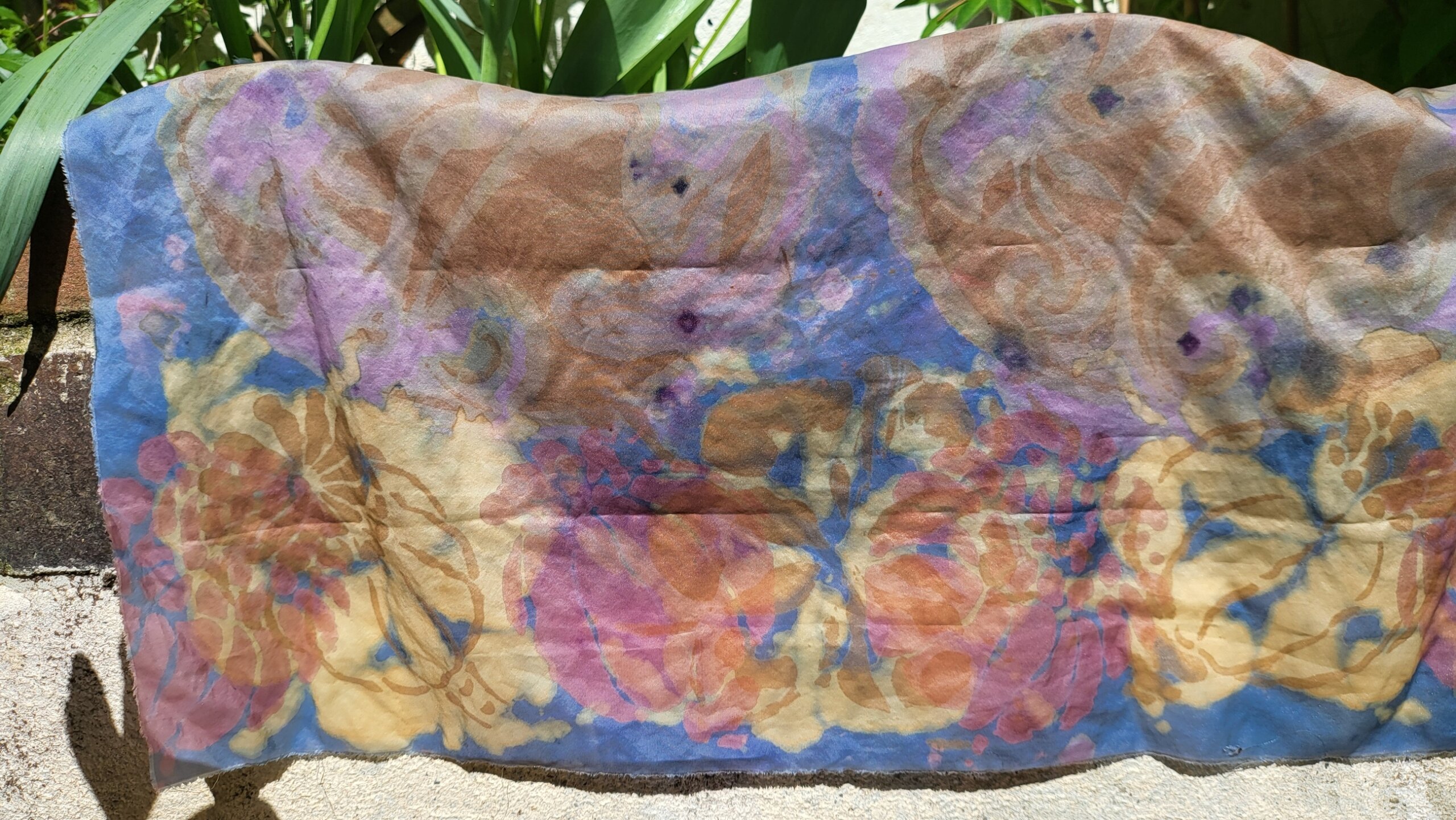
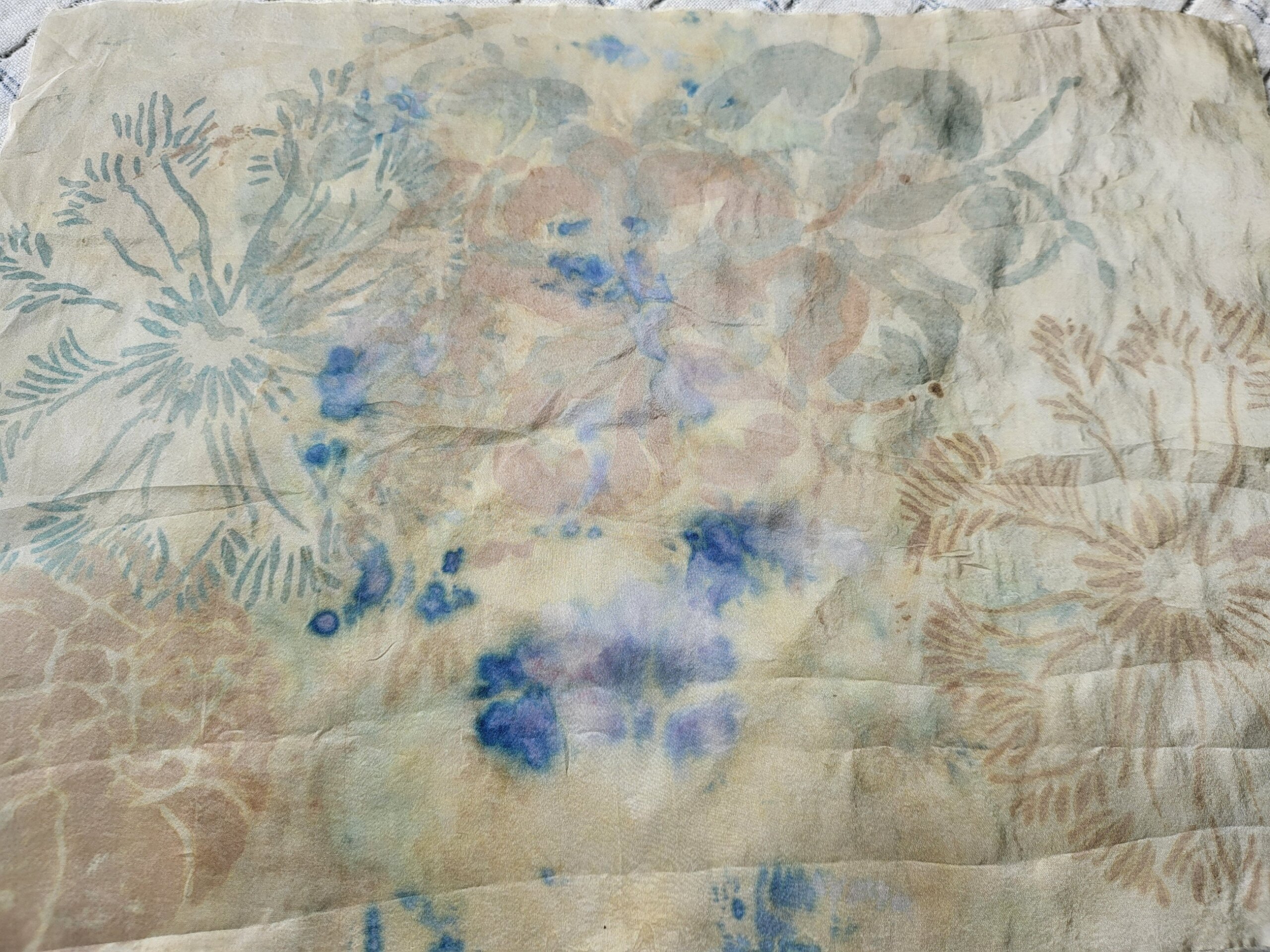
Click images for large view.  Result - top two Celtic motifs showed lilac after steaming, then another print insepia  paste was over-printed.  The green printed seeds (sodium carbonate) turned yellow after steaming, then another print in normal pink paste was over-printed.  Orange is created in areas where the pink overlaps the yellow background print, and purple where the print overlaps blue background.

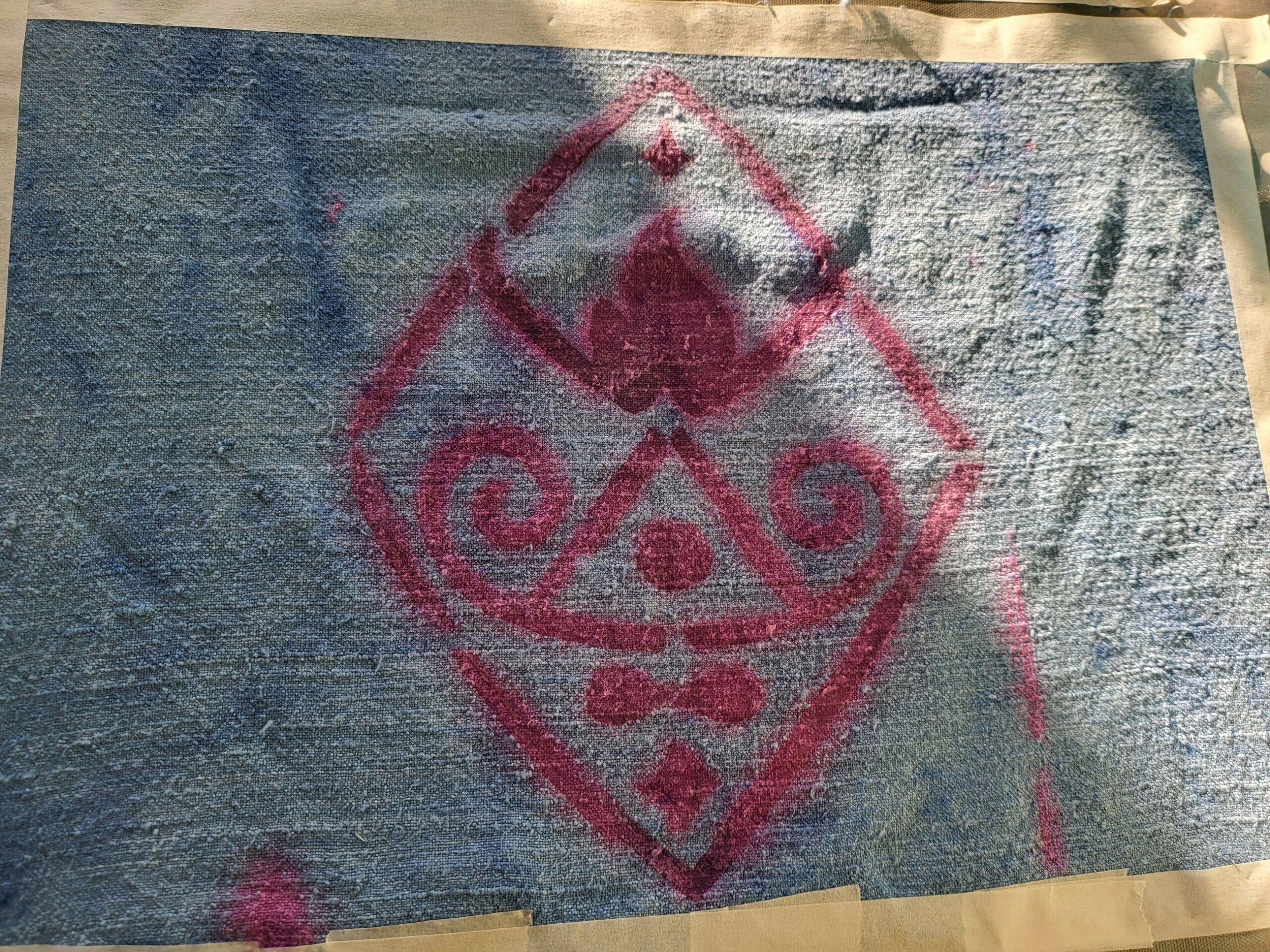
Citric Acid modifier print

Sigil motif and poppy pod steamed after citric acid print

Sigil and poppy pods over printed brown and pink

The thicker Eri peace silk dyes well and discharges with modifiers well.  After overprinting with sepia paste and black hollyhock (pink) paste, the pale lilac  background changed to yellow.  Things happen after steaming!  Maybe if for too long.

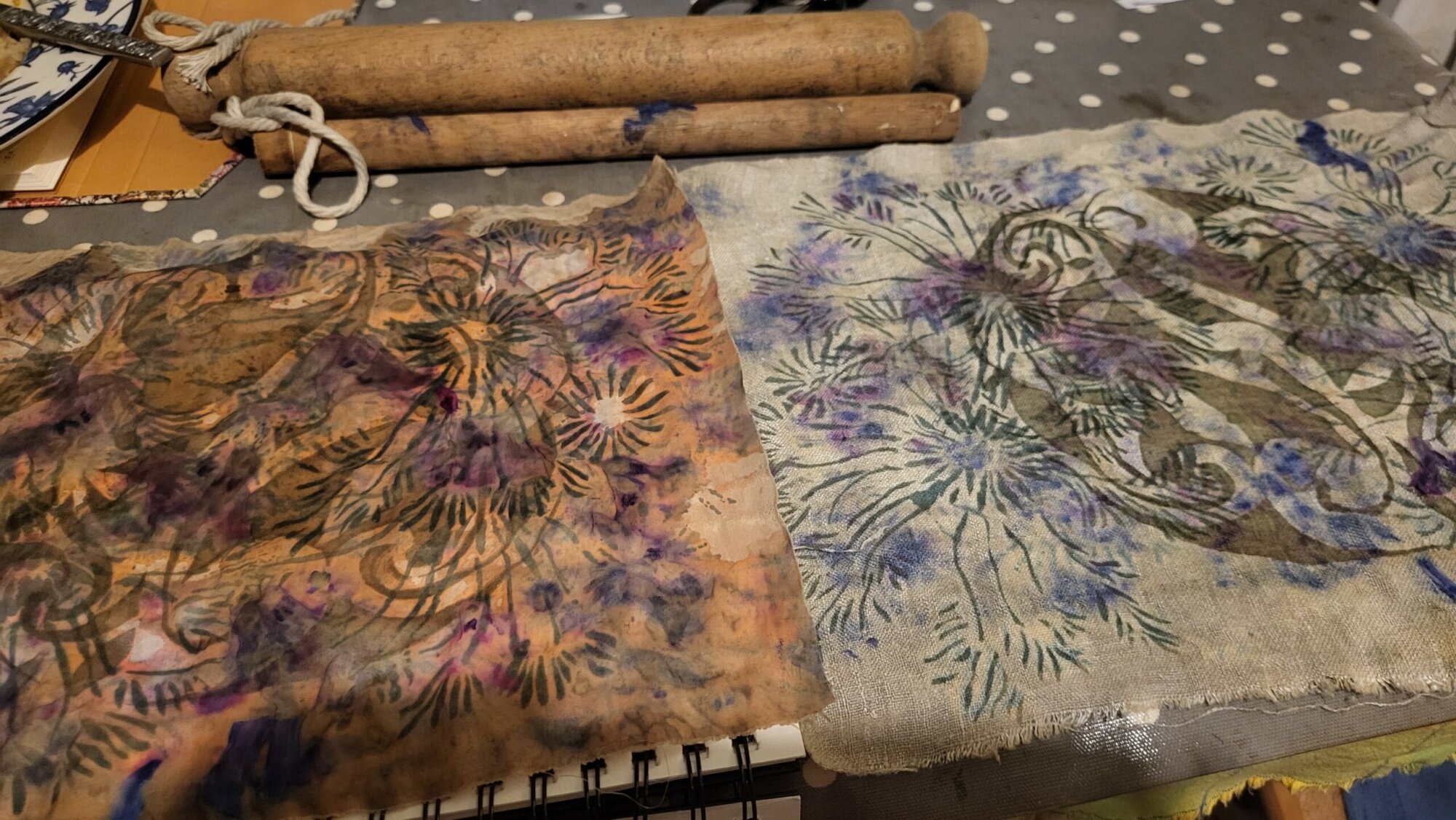
STENCIL PRINTS - Poppy seed pods in black hollyhock pink paste - and Salsify seed head in sepia paste

SEED HEAD DESIGNS - Salsify, Poppy pod, Nigella pod - overprinted with several bundle dyed blue hyacinth flowers

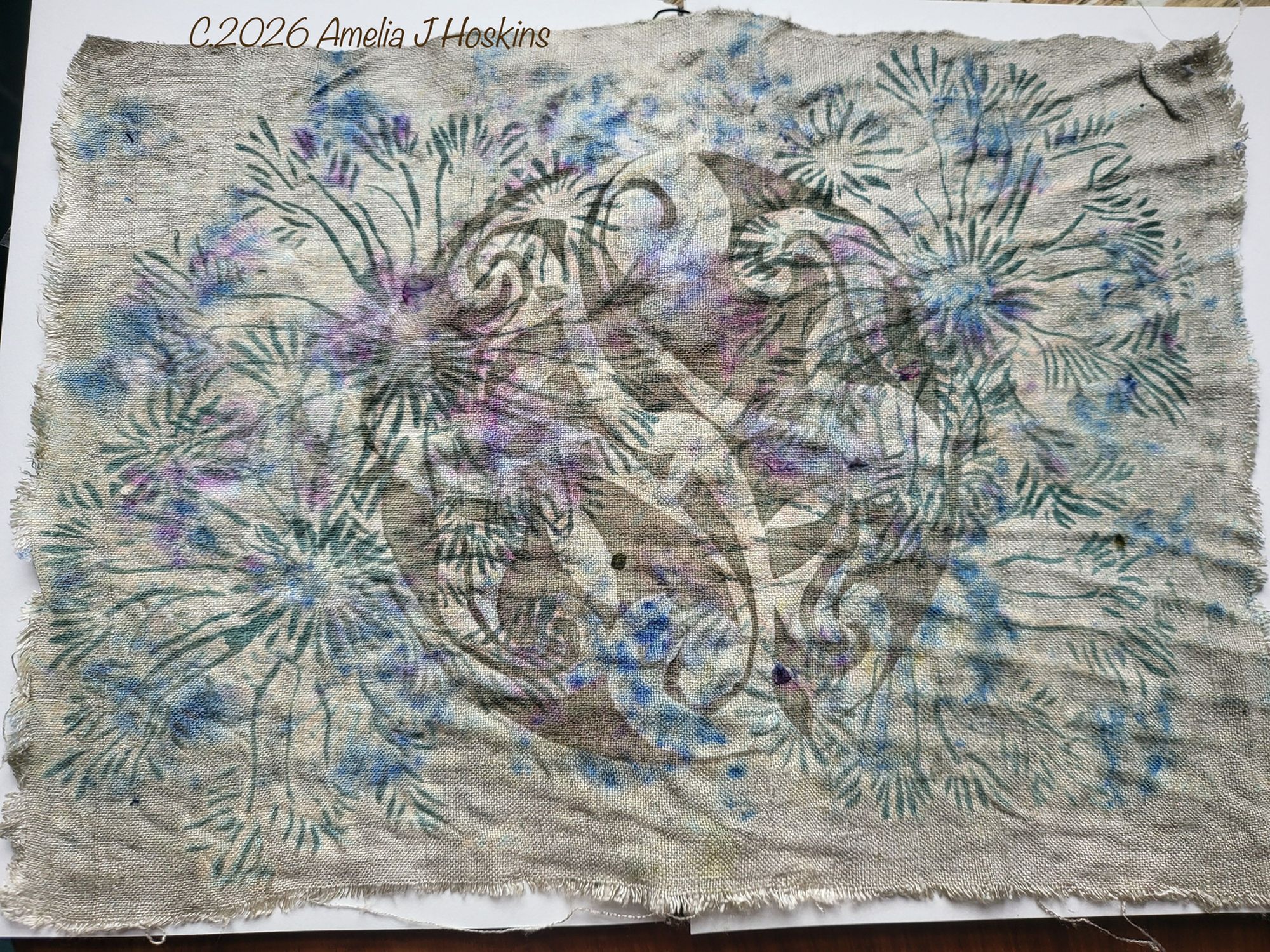
STENCIL PRINTS - Seeds overprinted on Celtic motif

STENCIL PRINTS - different background colours, over bundle dyed hyacinth flowers

STENCIL PRINTS - Poppy pods overprinted on habotai silk bundle dyed with grape hyacinth blue flowers

Layers of prints and bundle dye

I like experimenting with layers:

        • firstly IMMERSION dyed silk,
        • secondly BUNDLE DYED over same silk,
        • thirdly STENCIL SCREEN PRINTED over.

If result is not good enough, bundle dyeing again gives an added layer of interest.  The final result cannot be entirely calculated, due to varied interactions of dyed layers. This can lead to interesting effects that cannot be envisaged exactly beforehand.

Images copyright Amelia Jane Hoskins Please email for use permission.