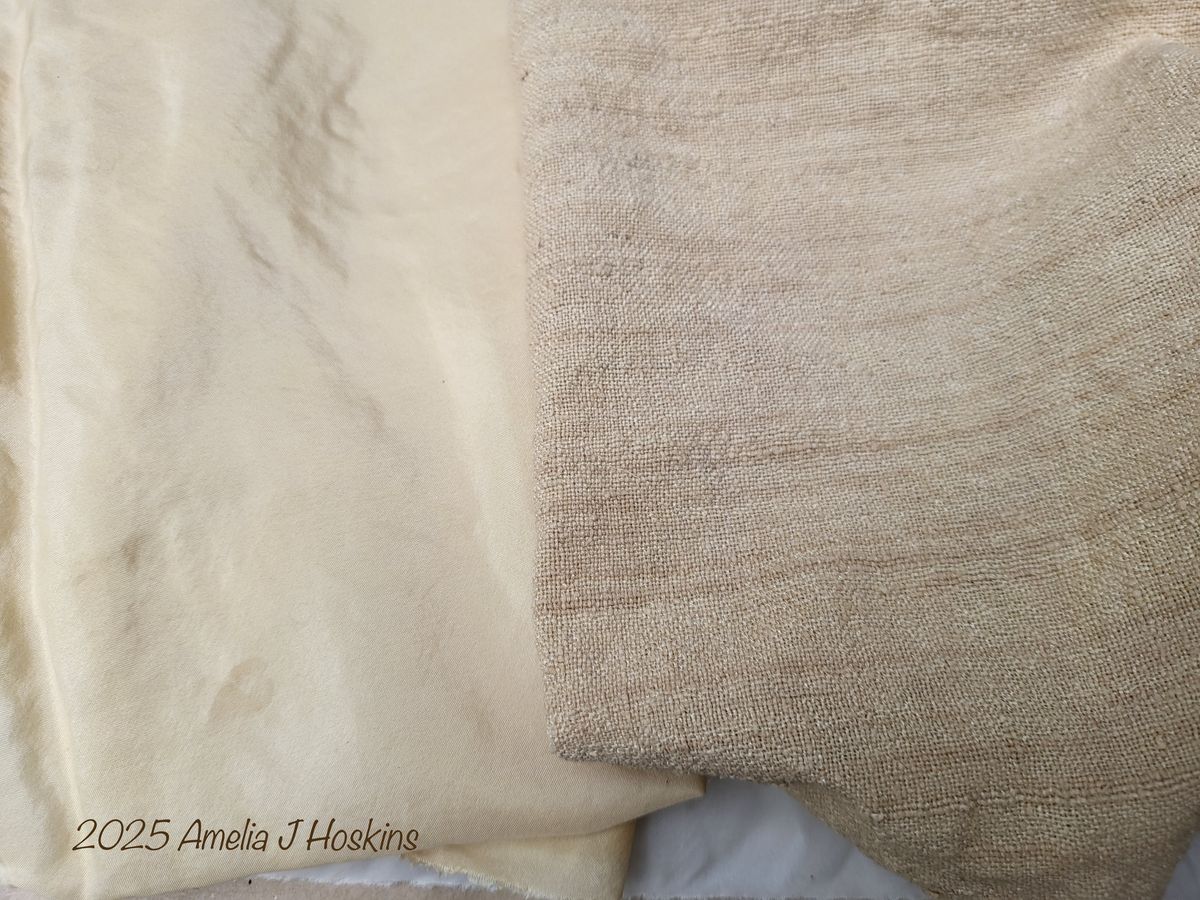
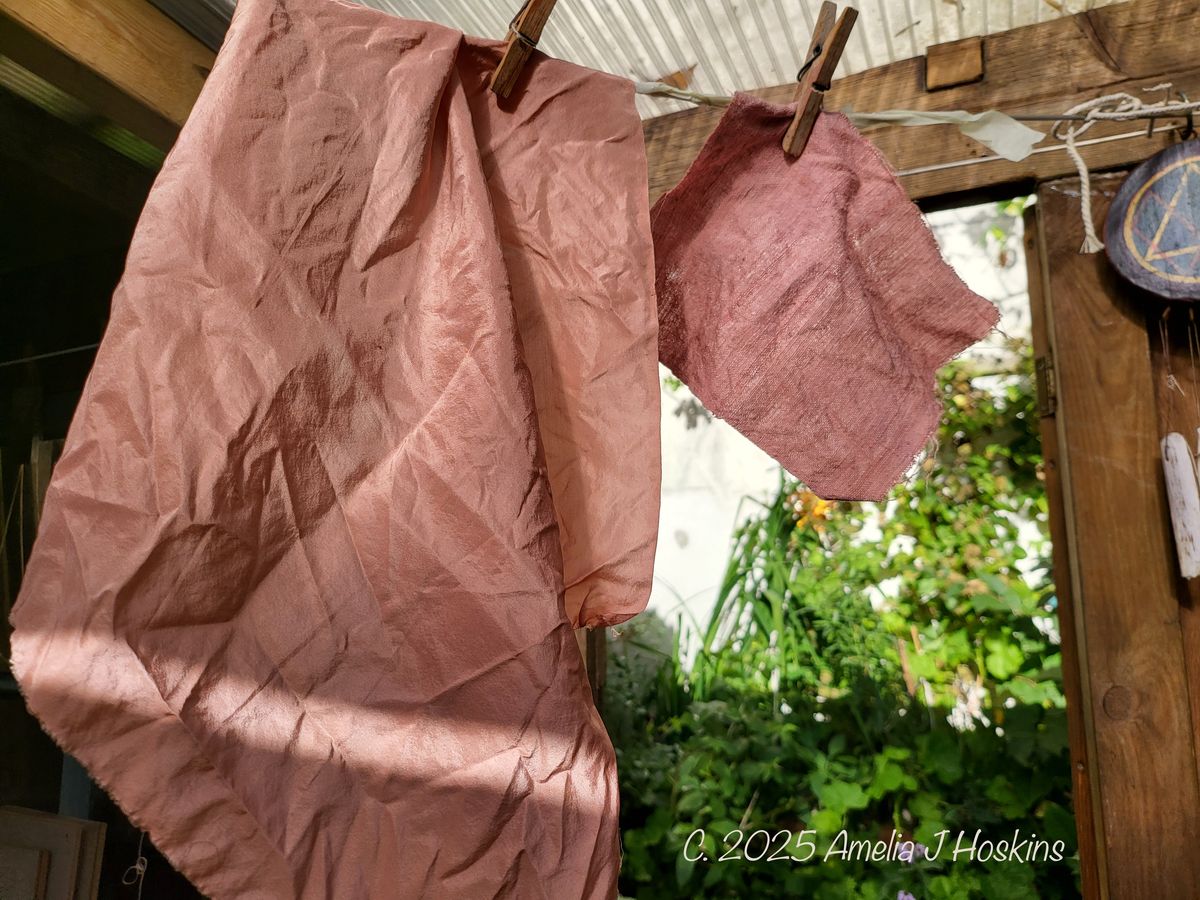
Habotai soaked 24hrs. Erin soaked 72hrs
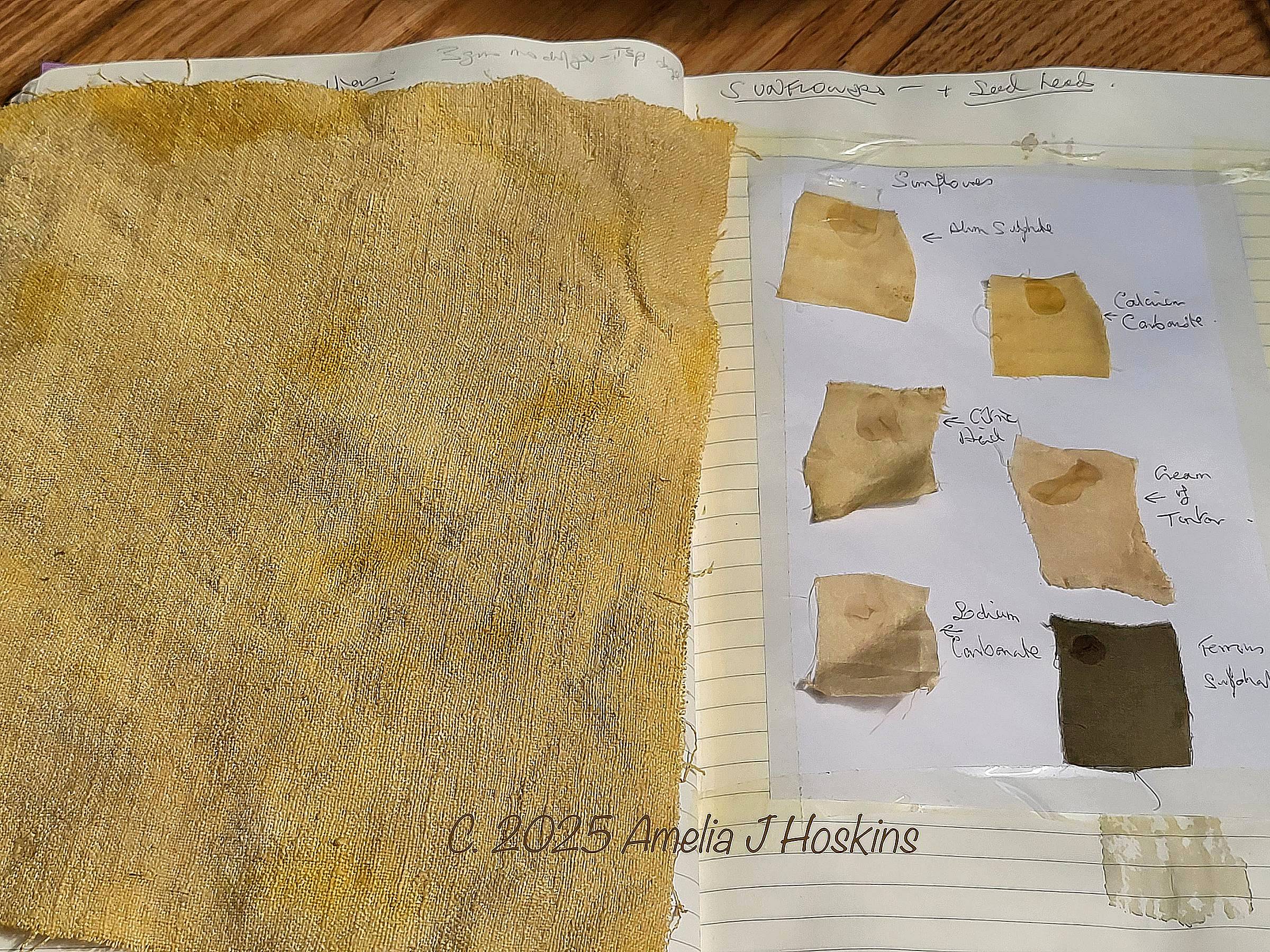
Silks premordanted with Alum Sulphate.
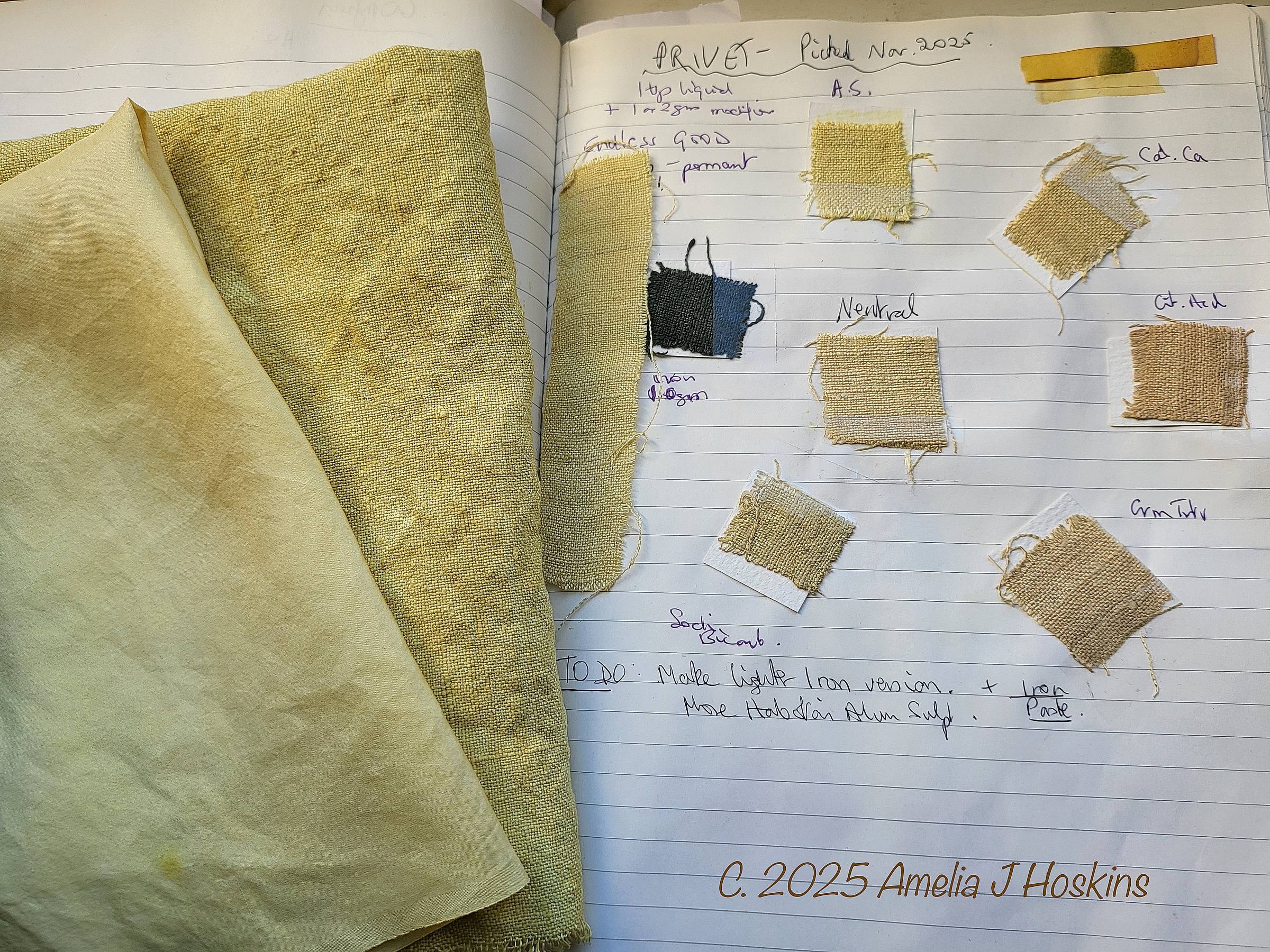
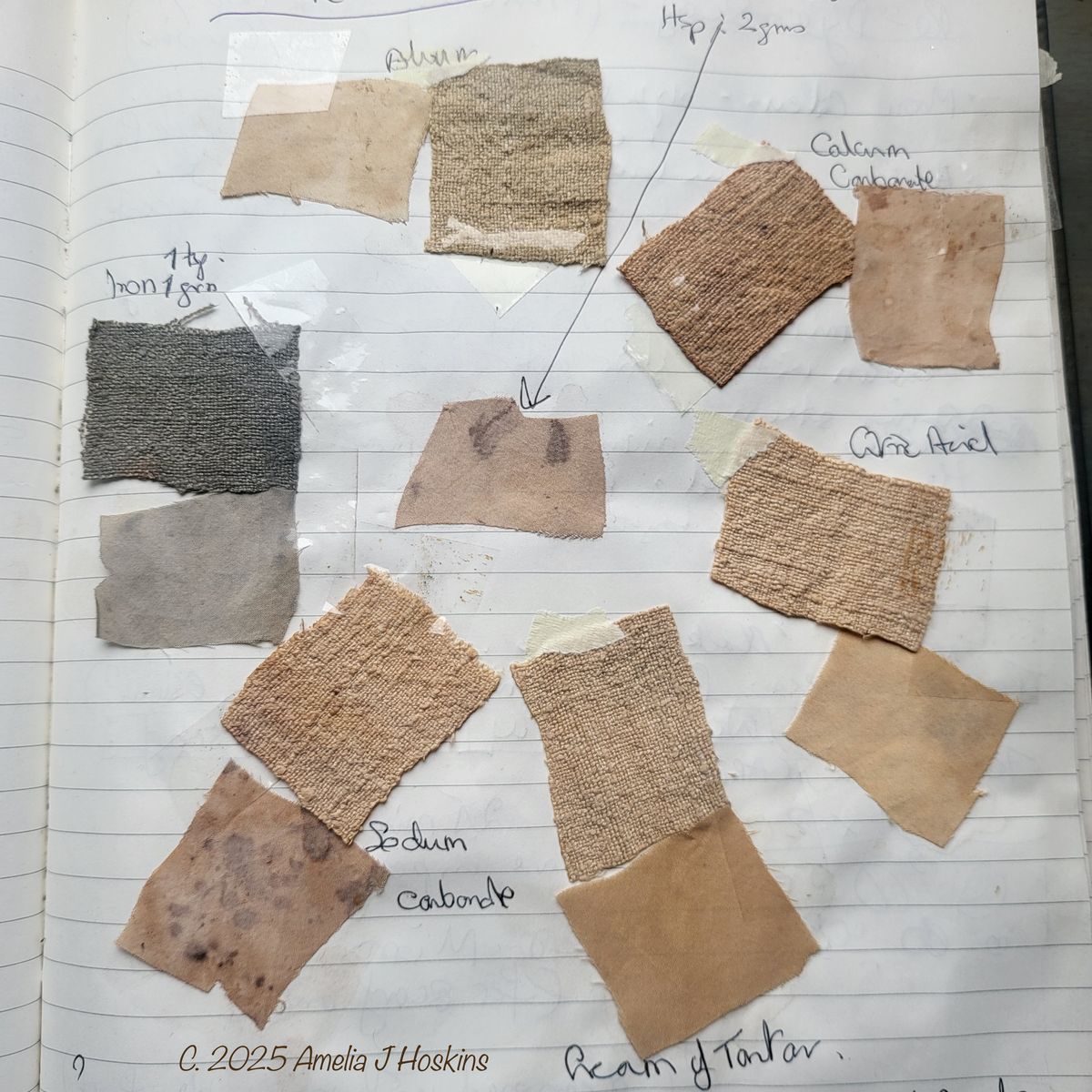
Samples modified show more towards gold with citric Acid and Cream of Tartar, and a touch of iron gives green-black. Iron modifier can be used sparingly to achieve a green.
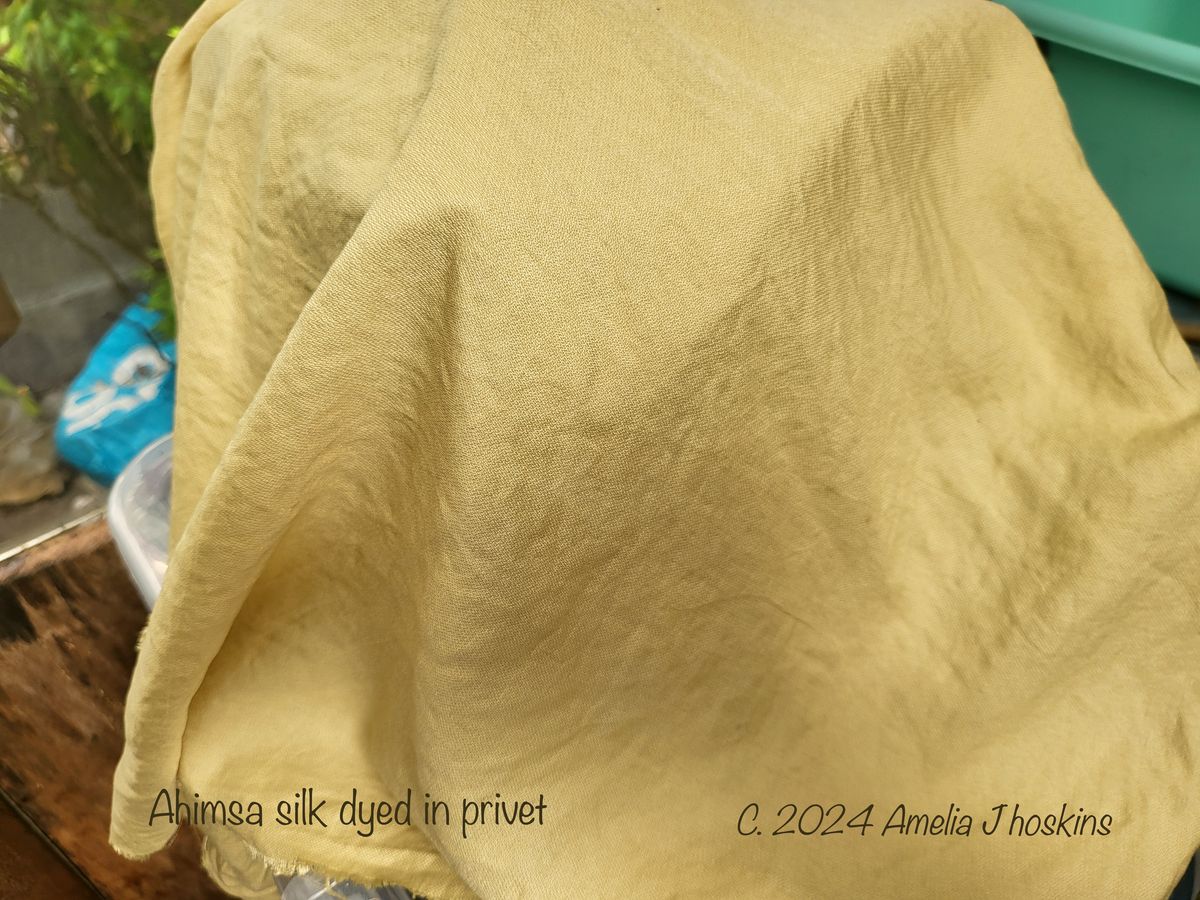
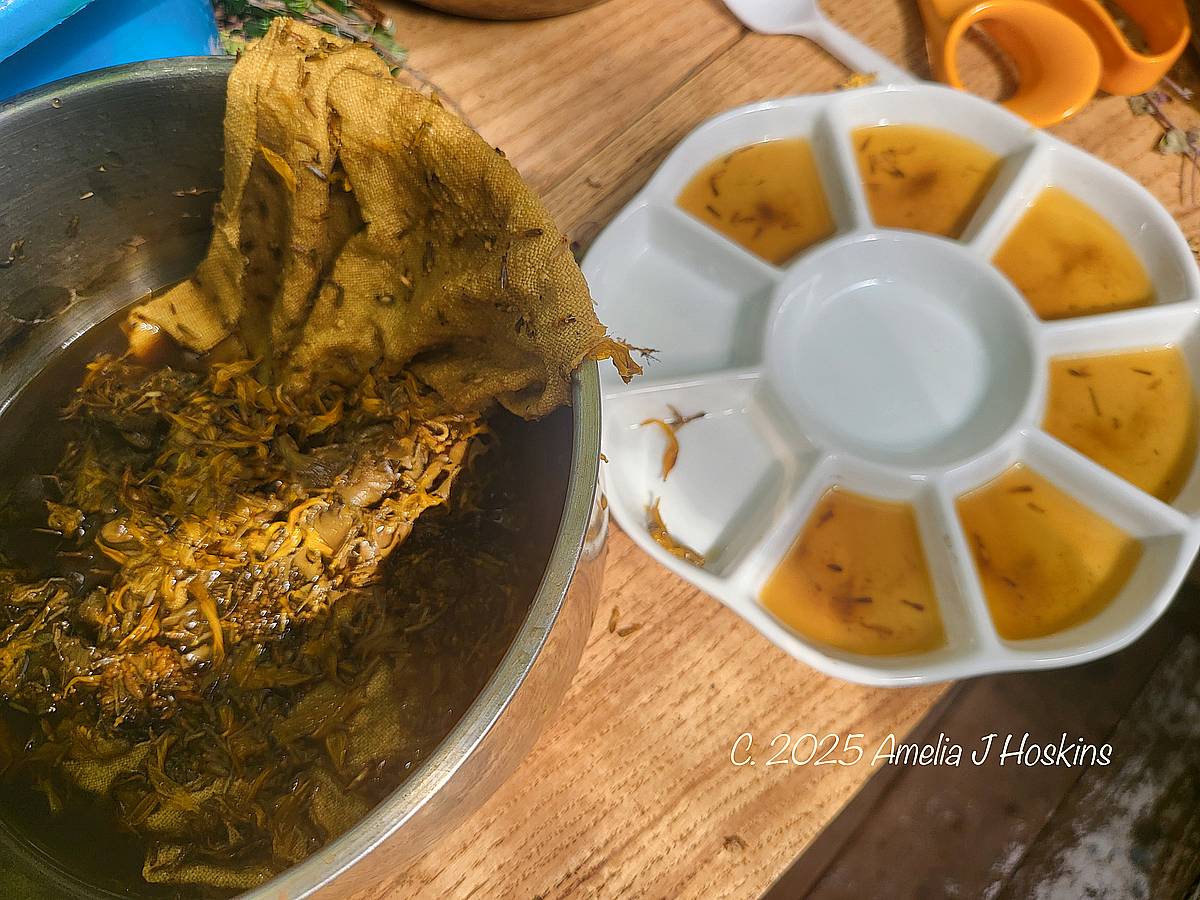
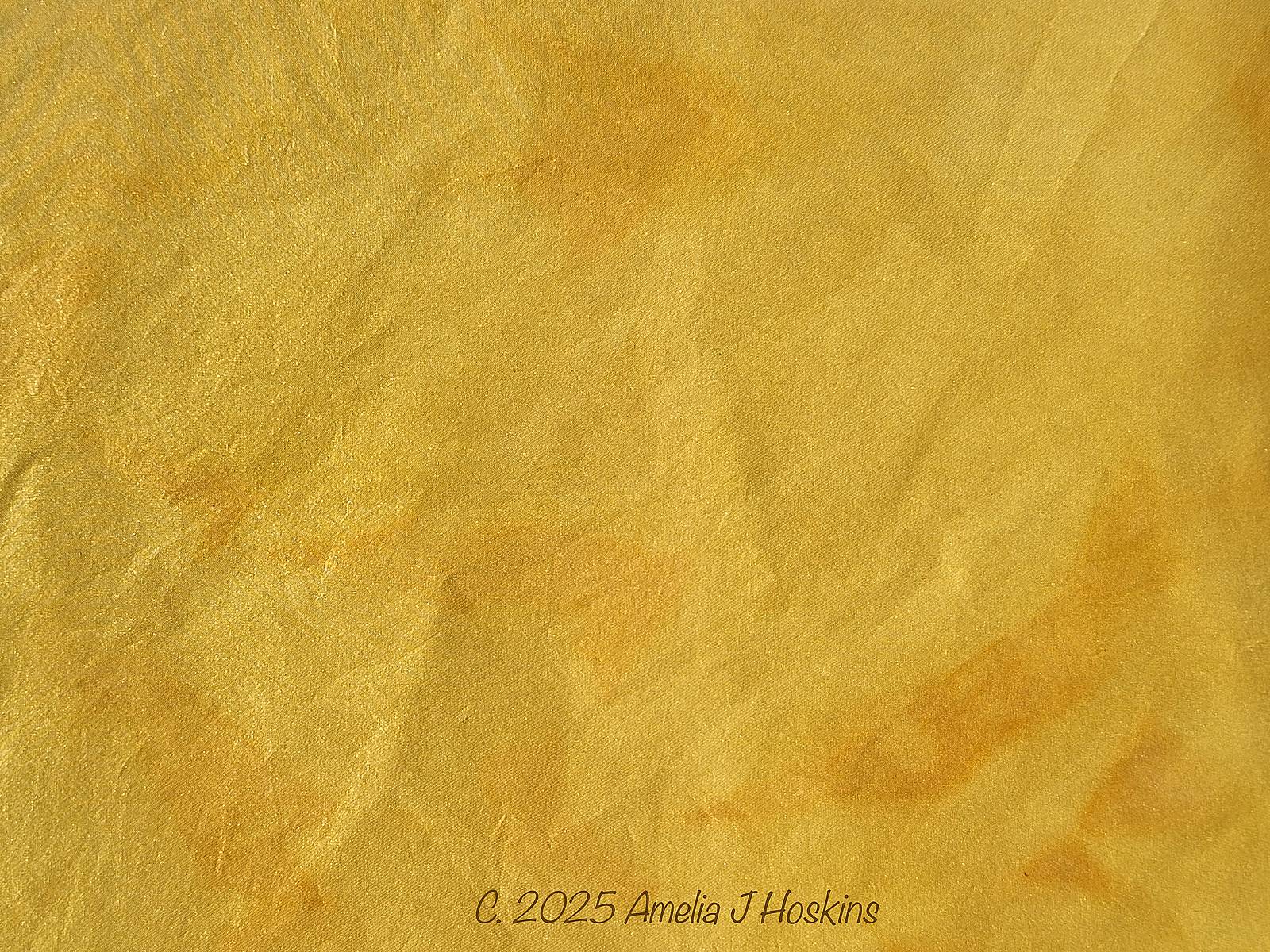
Privet yellow is similar in to privet dyeing in 2024. Page link
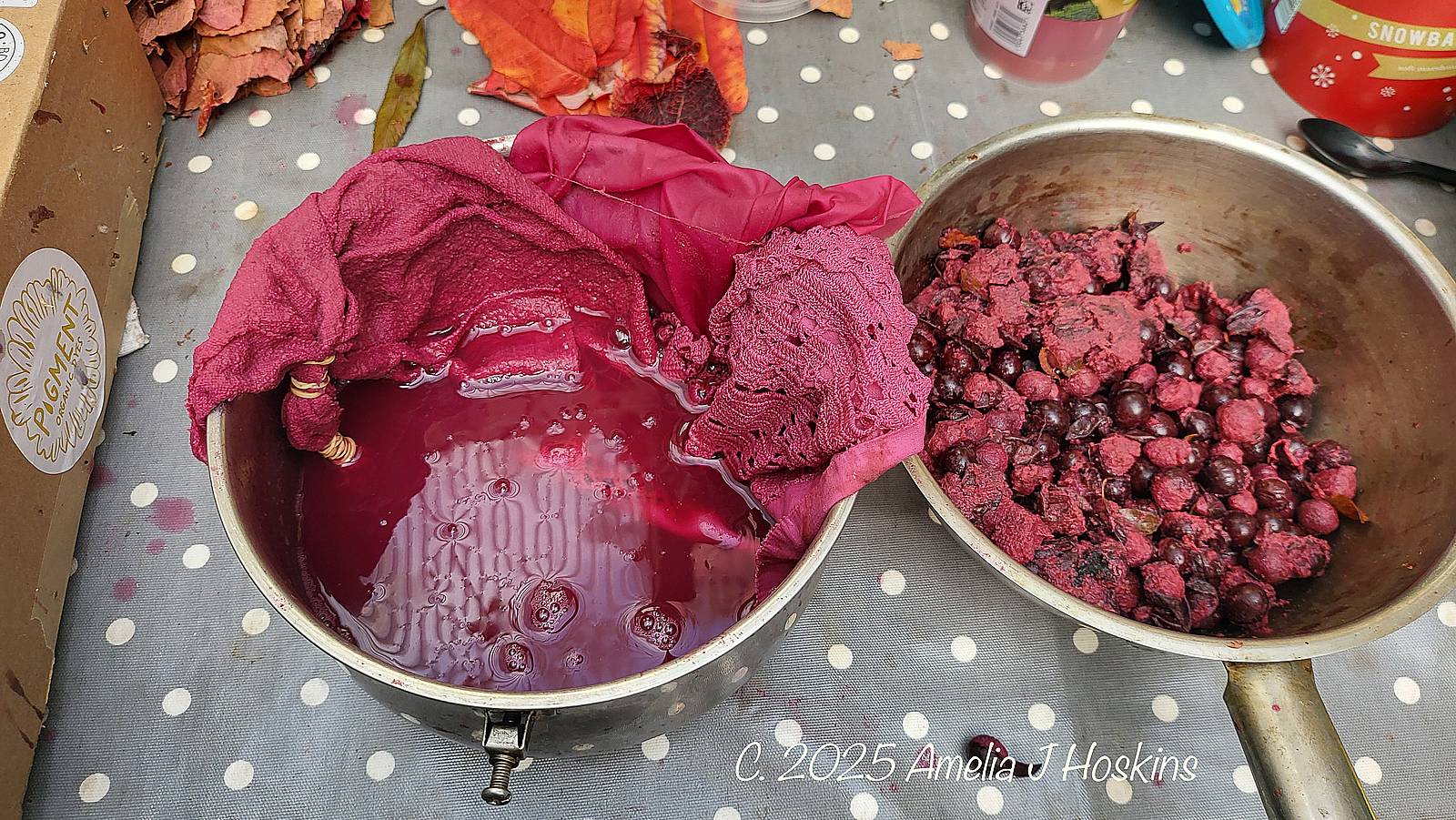
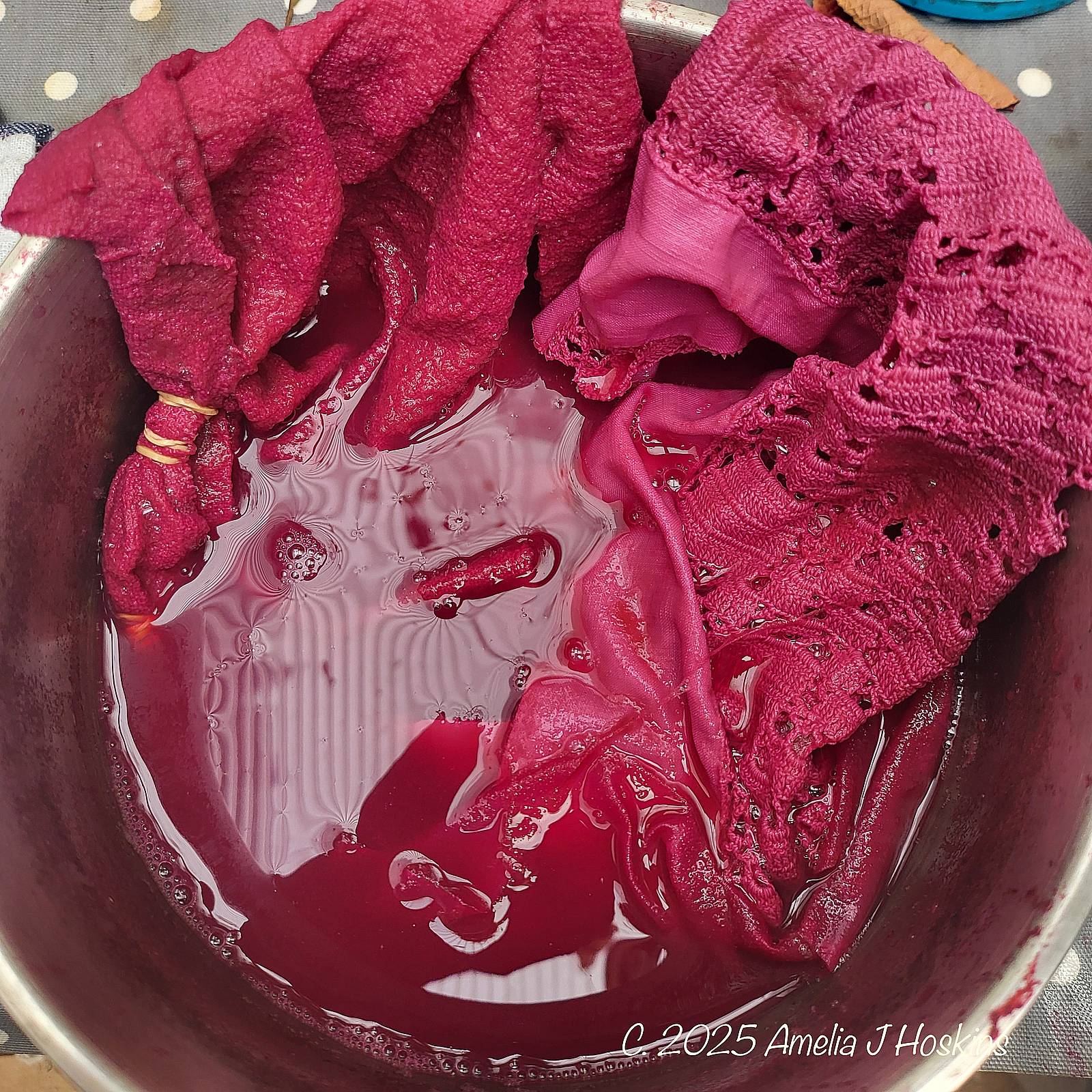
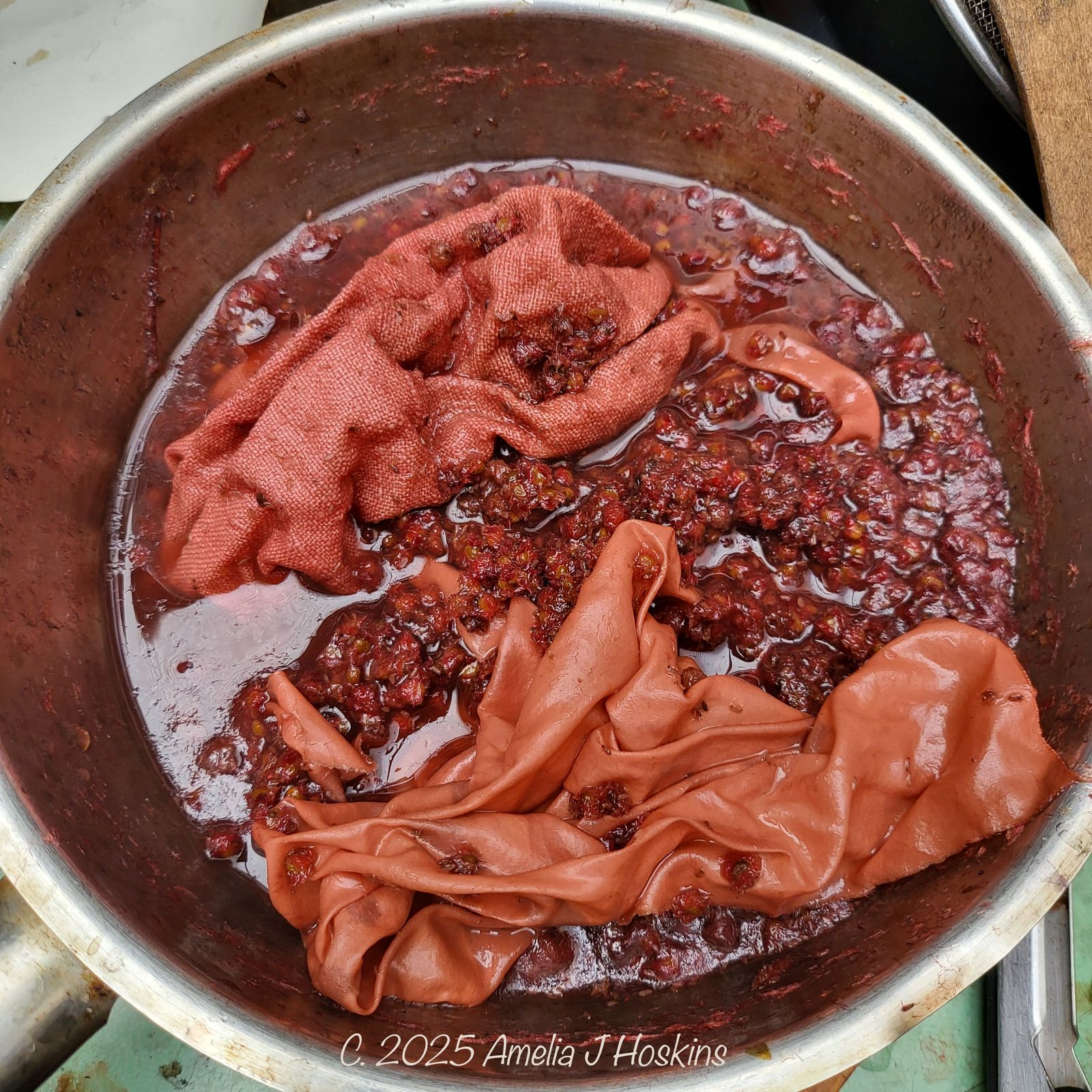
Soaked for a few days, boiled and simmered. Left to rest overnight. Boiled up again and left to cool before straining plant material, and adding silk to the dye bath.
All similar, though silks modified in aluminium sulphate and antique cotton lace modified in aluminium acetate. Cotton lace is more pinky. I often make a resist circle by using rubber bands of tying with cotton twine.
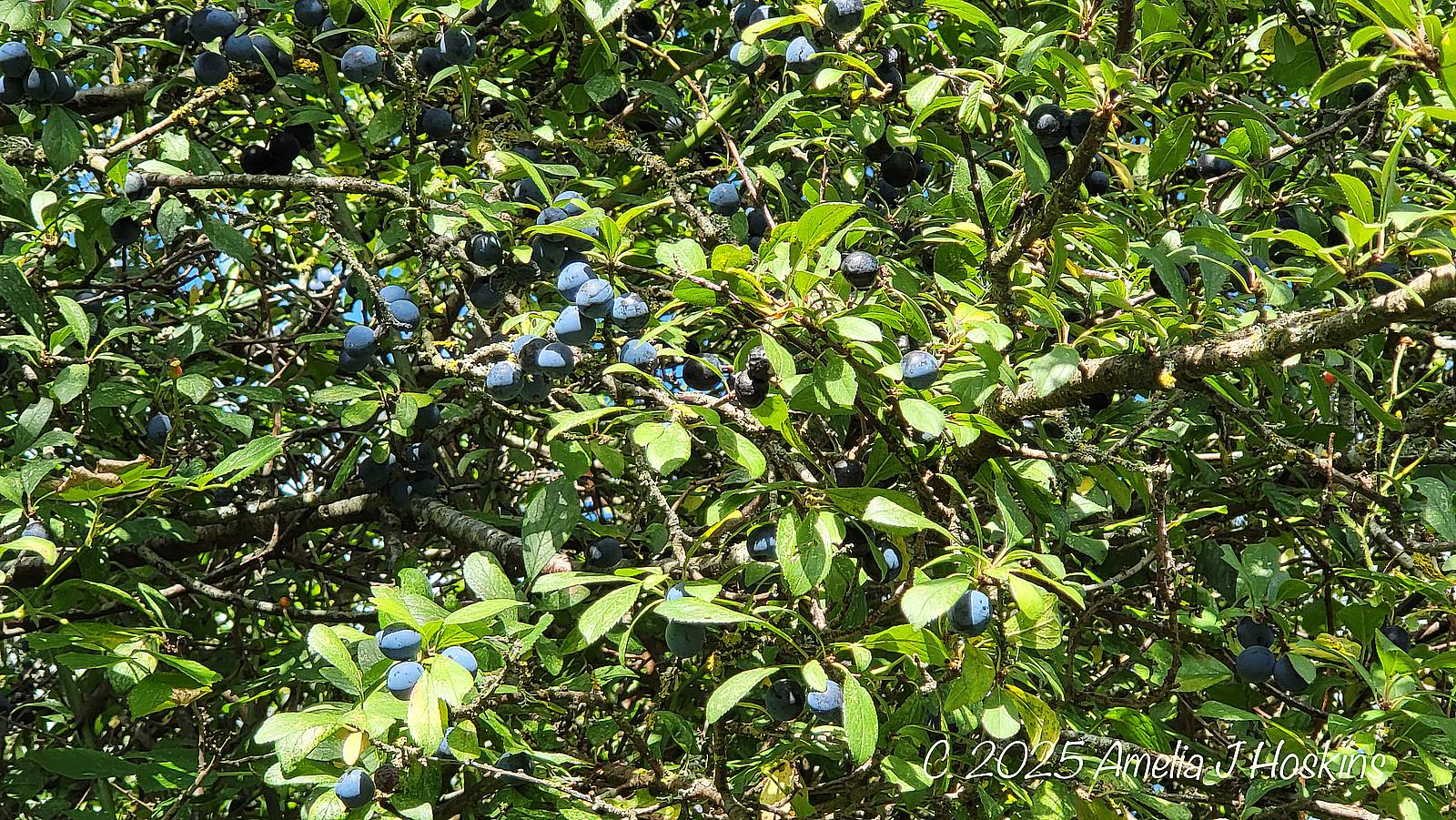
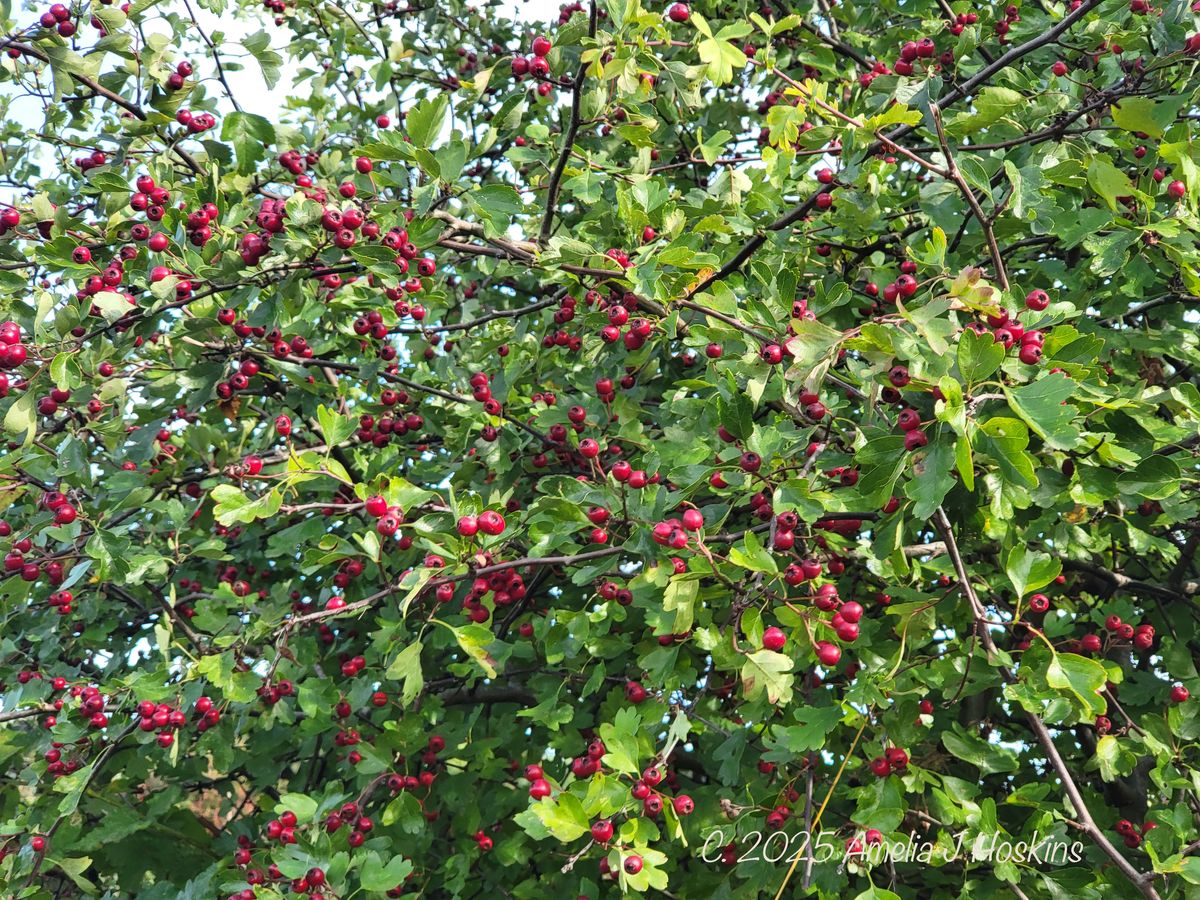
Two pickings: October Berries picked when bright red, when leaves still on branches, and November, when only the berries are there; easier to see and pick, but they are darker red, which I think leads towards lavender results.
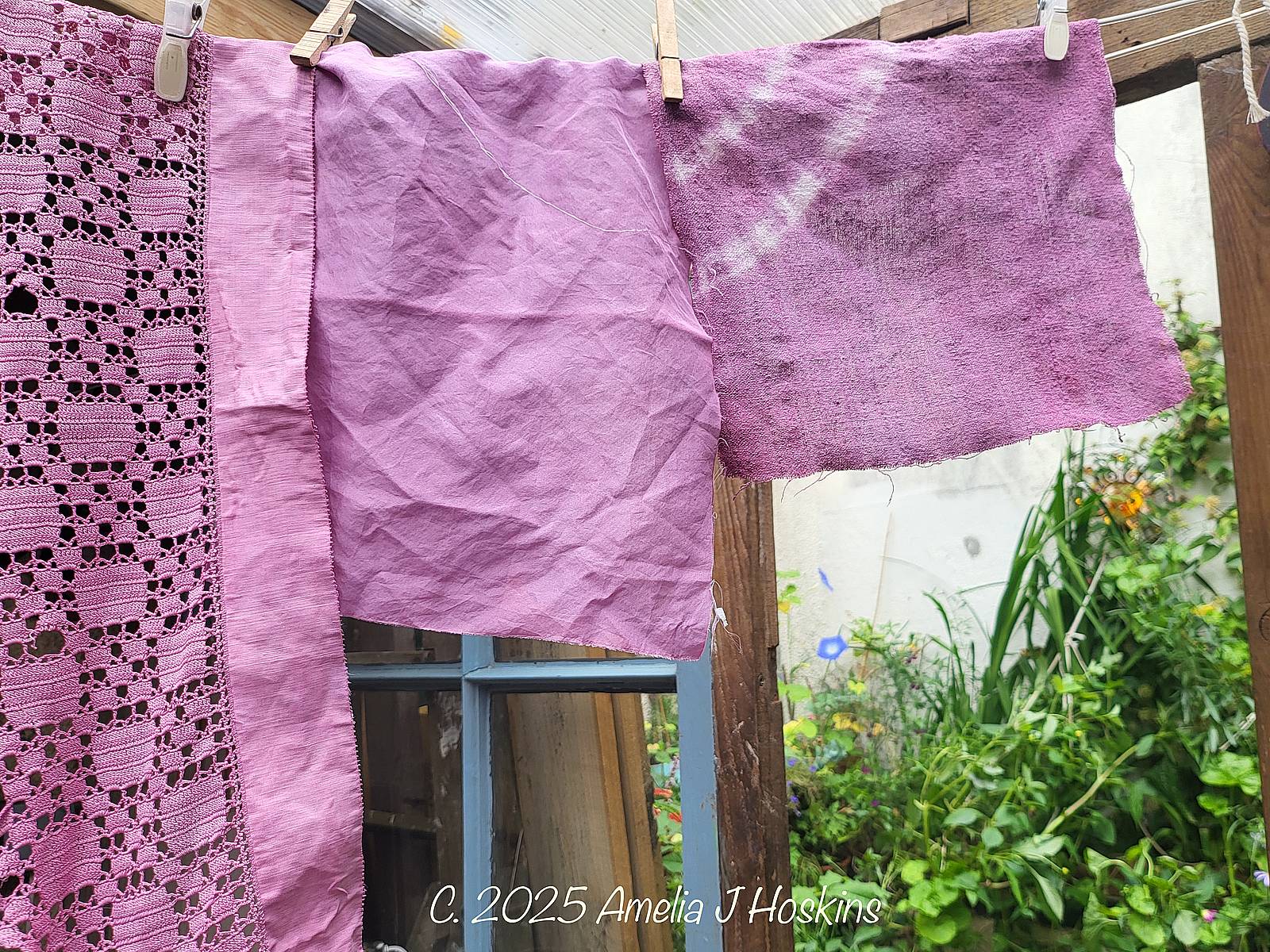
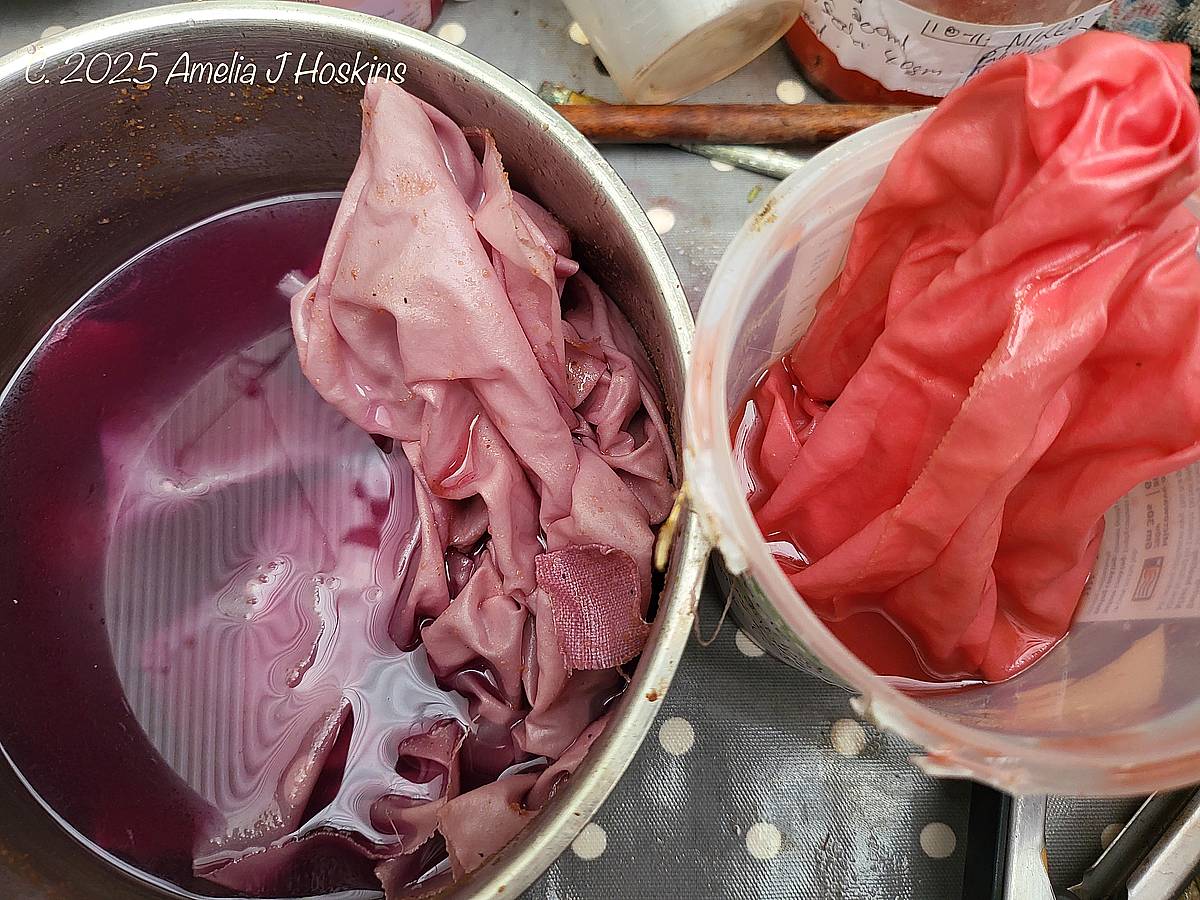
Red habotai silk result is from soaking in hawthorn berry dye bath modified with citric acid (at least 50 grams to 250ml dye liquid). Weaker lavender silk soaked in non modified dye bath, but pre-mordanted in Alum Sulphate. Weaker result because the first Erin dyed silk took most of the pigment strength.
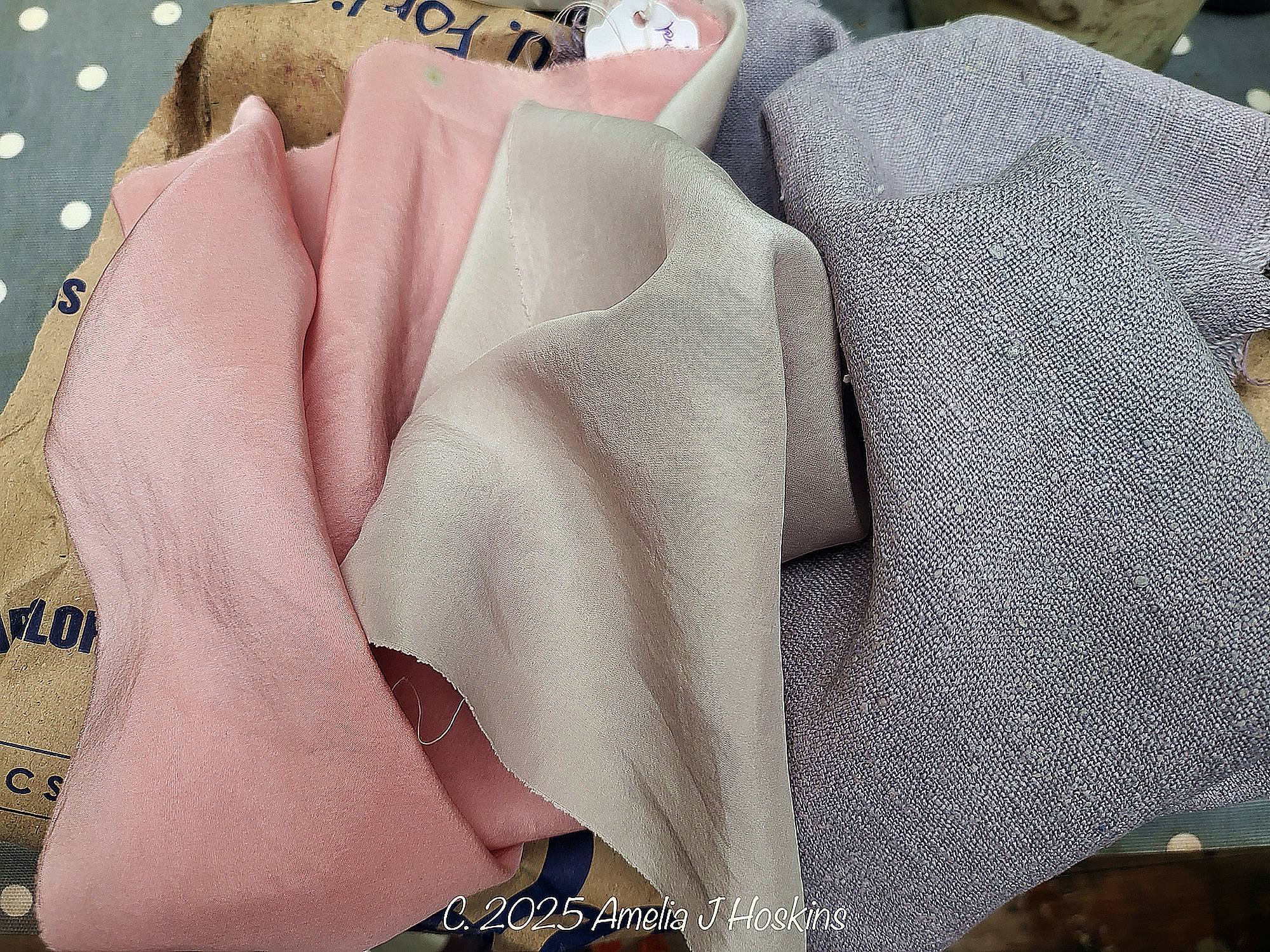
Erin silk (right) first soak in the dye; result dark lilac on drying. This may fade to more pink. Middle silk grey result as second soak. Pink silk is darker (photo didn't catch it)
I chose Erin silk to take up the first strong pigment release, then add subsequent silks for paler colours which became grey.
Erin silk result after soaking 24hrs in citric acid modified dye bath. (separate dye bath)
The first soak in dye bath gives the strongest colour. Subsequent silk dyes are a shade lighter. Alum mordanted silks varied in colour tone. Erin silk (thicker slub) took dye well and result is lavender. However Habotai (thin) turned grey with just a hint of the lavender tone. Modifiers can be painted/printed on such a grey tone to get colours: or it can be bundle dyed for more interest.
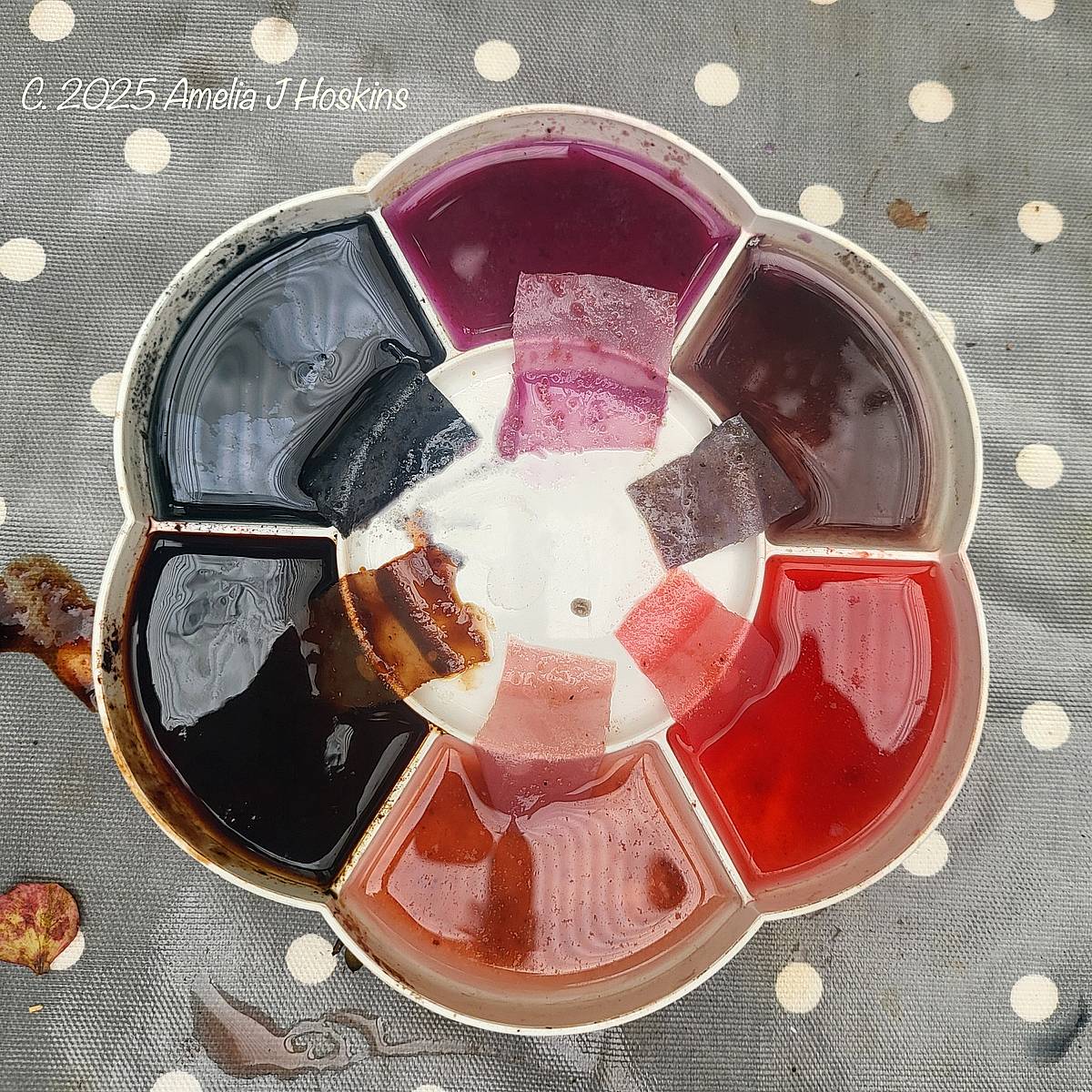
Small samples in dye bath can be very dark/bright, absorbing much pigment, such as these small Erin strips almost scarlet. I normally put samples in with the first silk soaking. Erin does seem to absorb dye better/quicker than Habotai. [Remembering that I hadn't washed/scoured the second Habotai which turned grey)
My son brought me some sunflowers from a girl seller in the street. They weren't large, but they were very bright deep yellow.
TO DO...
A dark olive to be made for print paste... TO BE CONTINUED
Plant seeds collected in October, when crisp and dry red russet. Quite a big dish full so the dye pan quantity made gave reasonable colour, but also will make weaker dye baths if continually brewed up. Colours are quite strong, so well worth collecting as much as possible from my allotment plant.
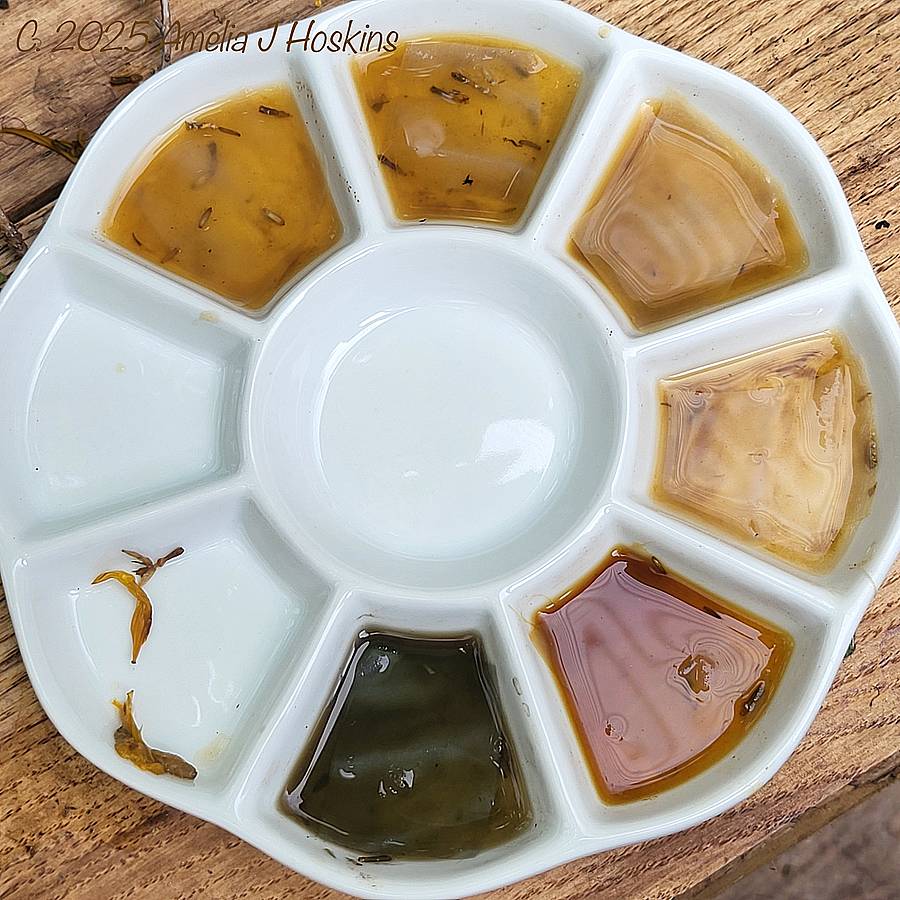
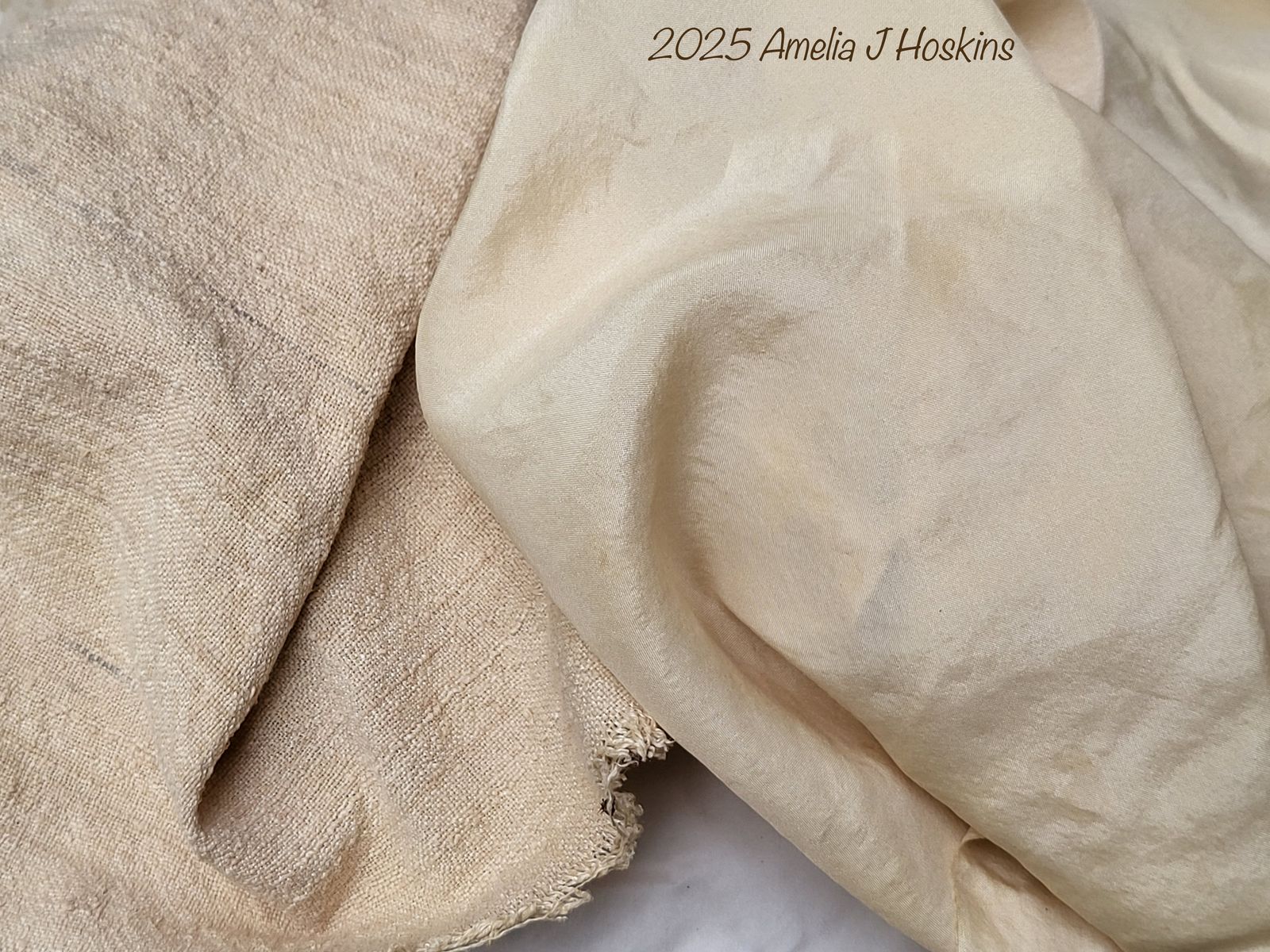
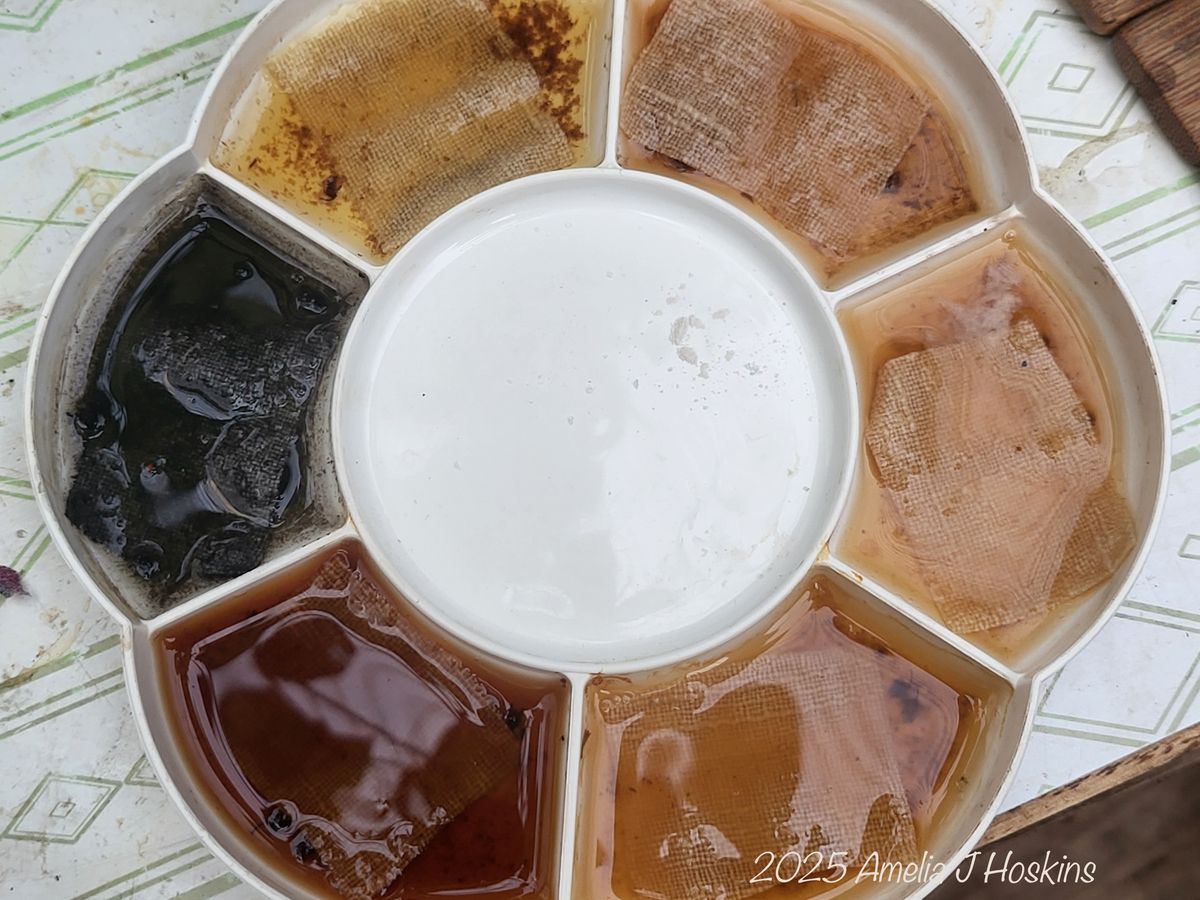
Erin Silk samples in dye palette of variety of modifiers. Shades can then be chosen for modifying silk piece and for mixing print pastes. Erin silk, which looks a bit like linen, takes on a stronger or darker colour than the Habotai silk. The dock creamy beige is quite warm with slight variations created by the modifiers.
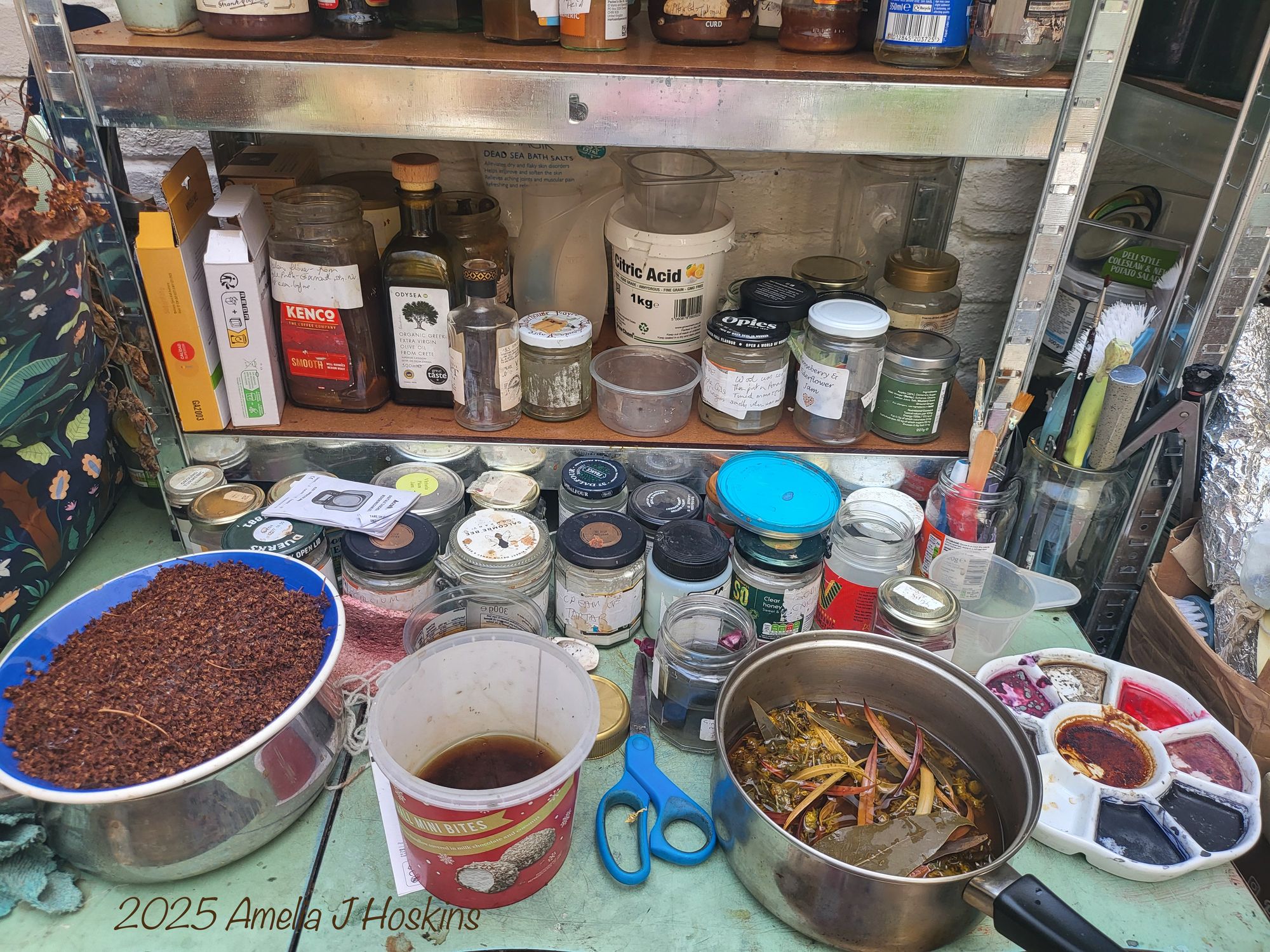
Workshop table has red-brown docks seeds in bowl after boiling up, the dye liquid in a plastic pot and also some eucalyptus leaves soaking in water.
Samples are soaked 24hrs in modified dye. 2tsps of dye liquid + 2grms modifier powder. Slight variations are interesting. More larger samples coming....
Results on Erin silk (thicker weave) and Habotai silk (thinner, smoother)
Different silks will take dye differently, I discovered. Some good colours here with modifiers, which helps me determine which modifiers to use. I mix them into the final dye bath, after the tests.
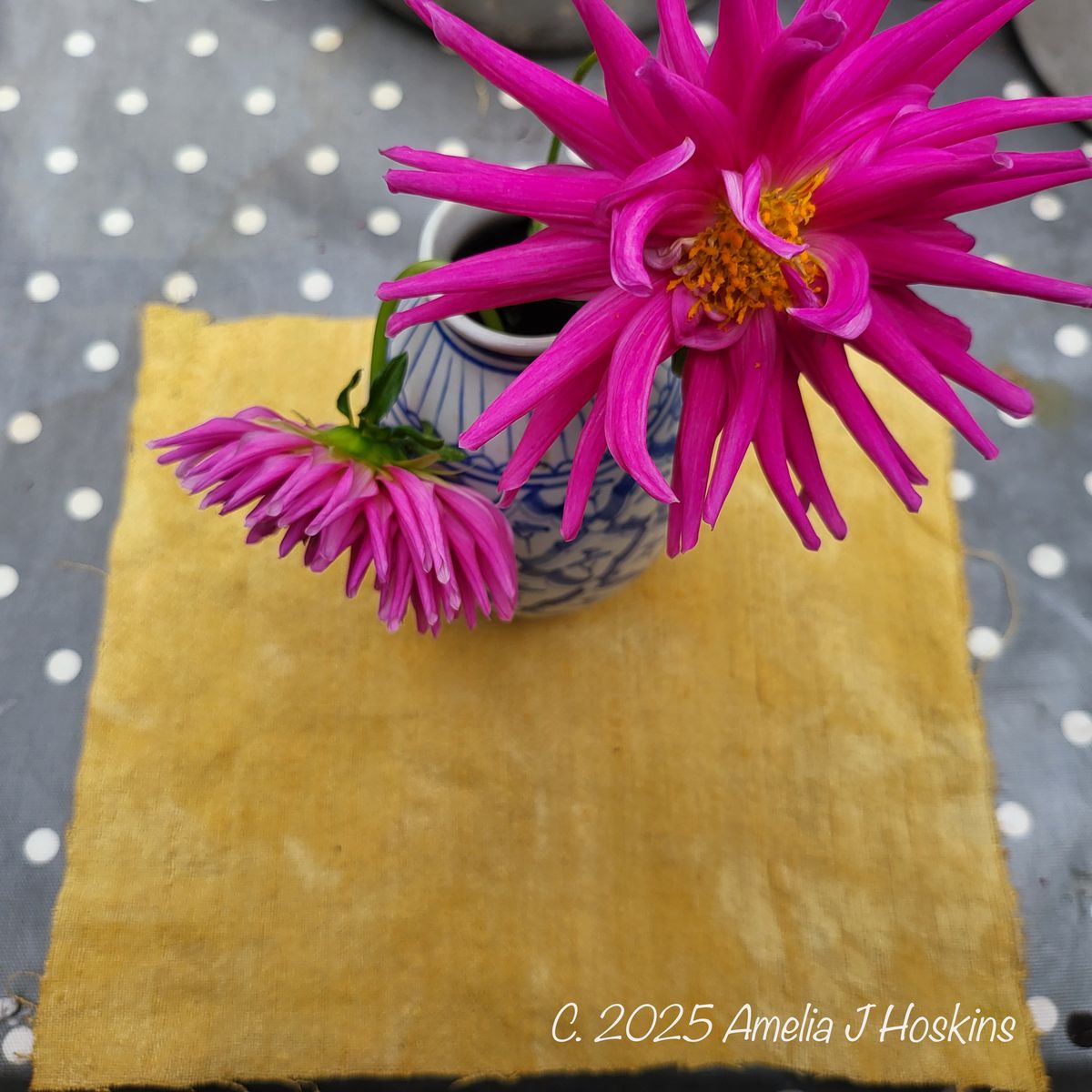
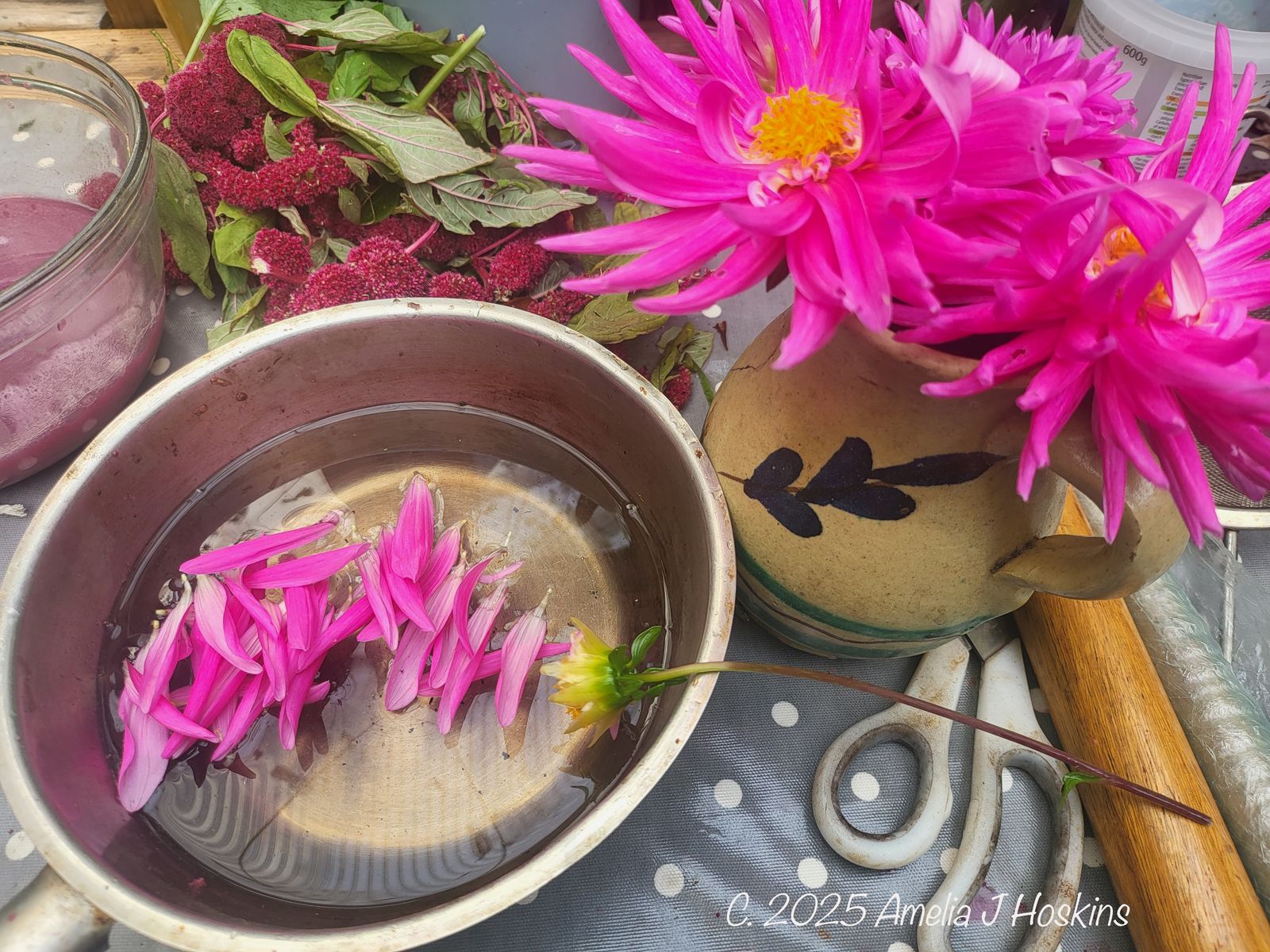
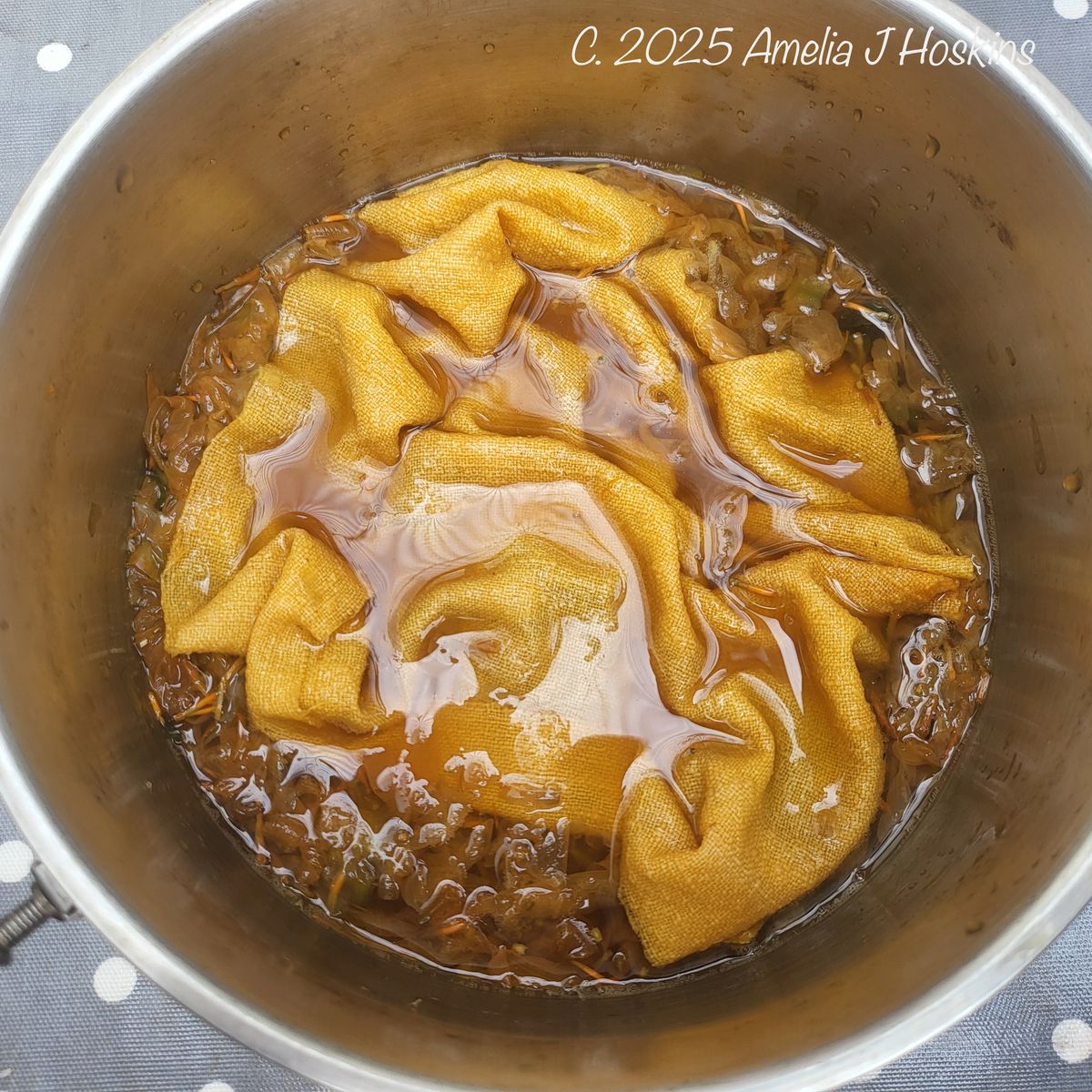
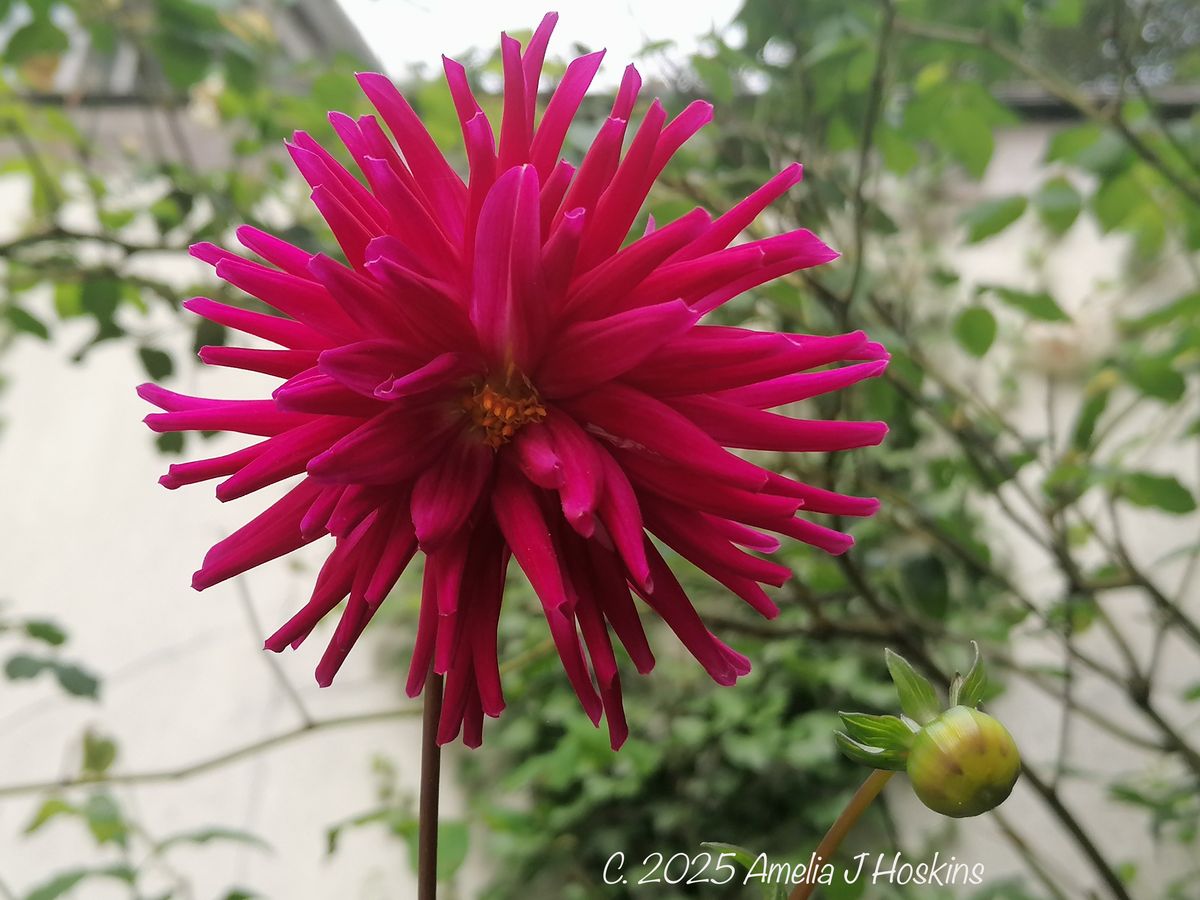
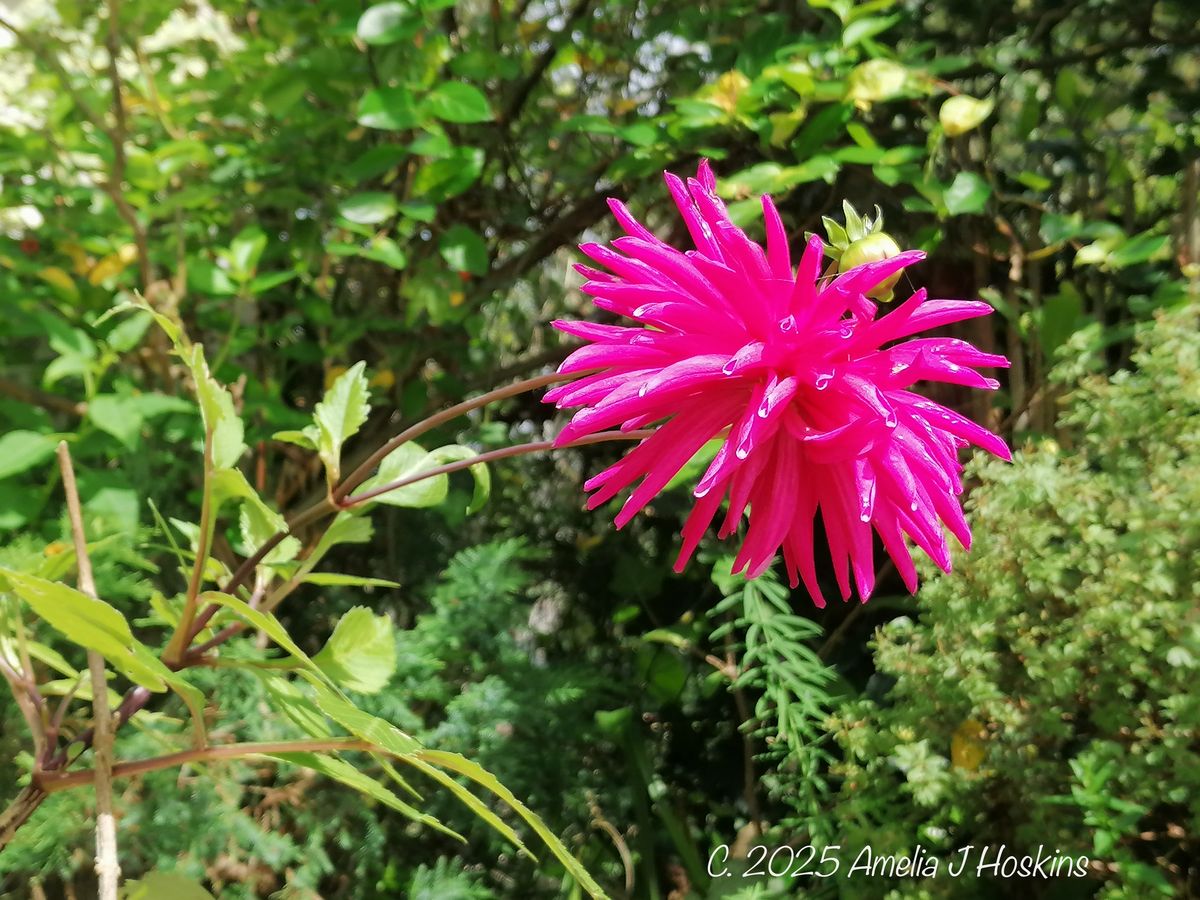
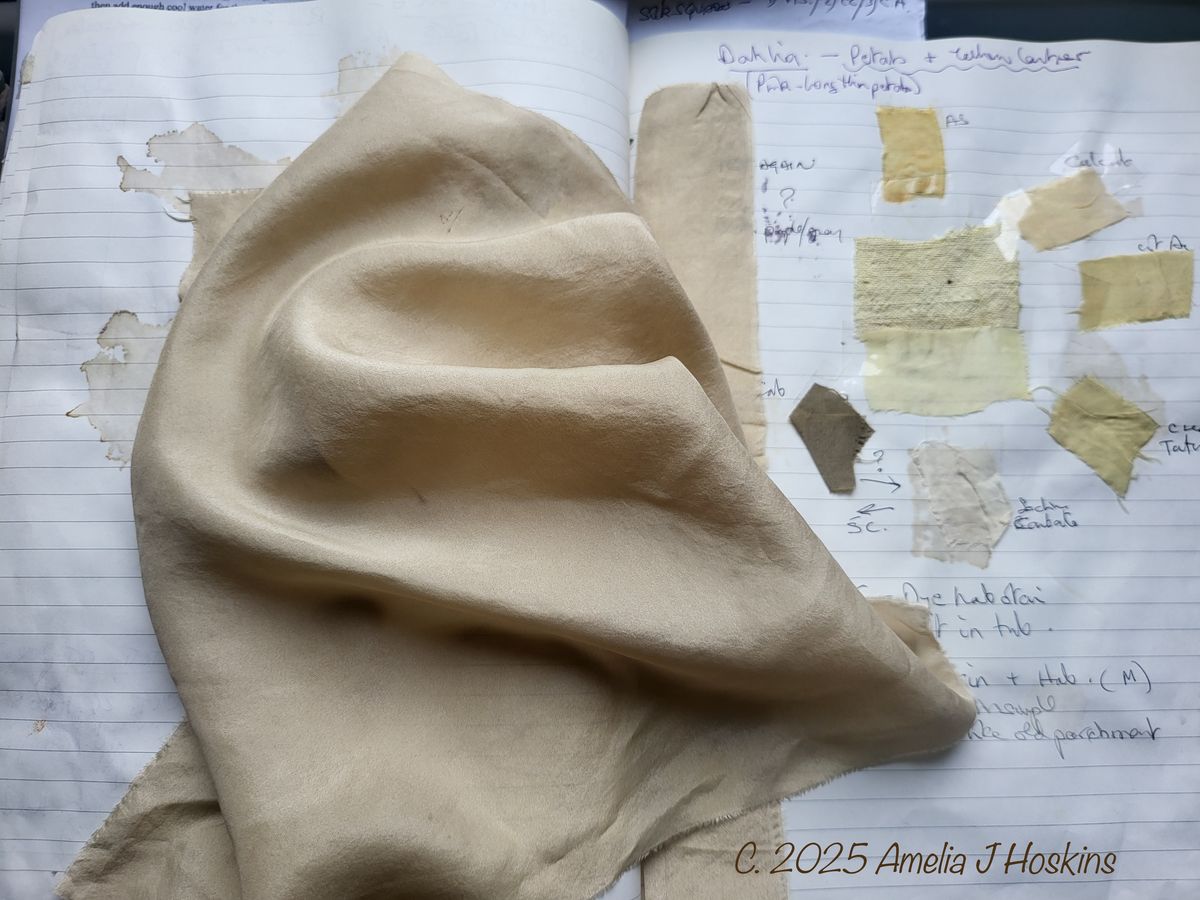
I thought dahlias would give pink, but NO, golden yellow. Petals are soaked firstly for days, then heated gently, before adding silk. The yellow flower centre gives the strong yellow dye on Erin Silk, and a duller warm yellow on Habotai Silk.
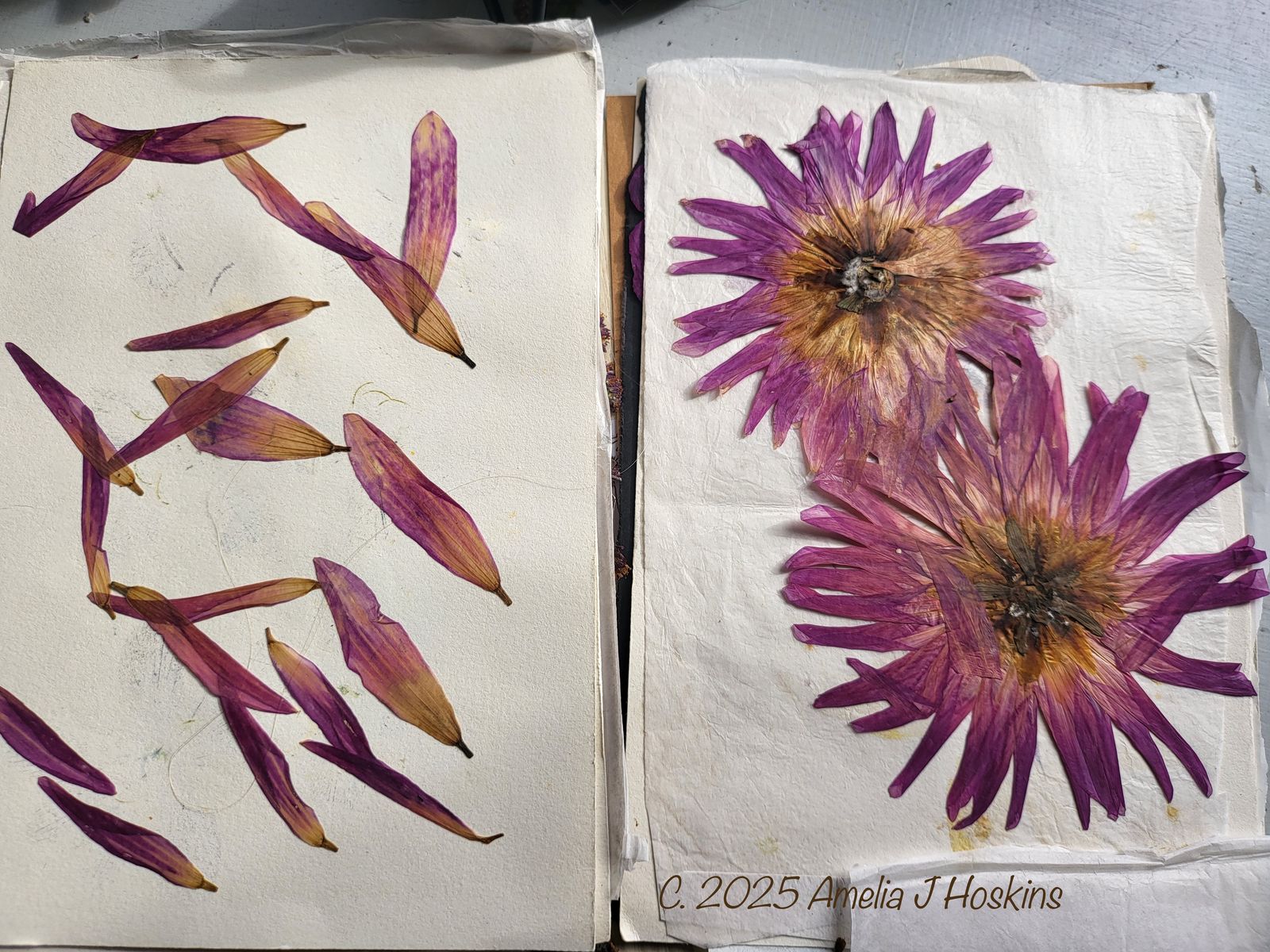
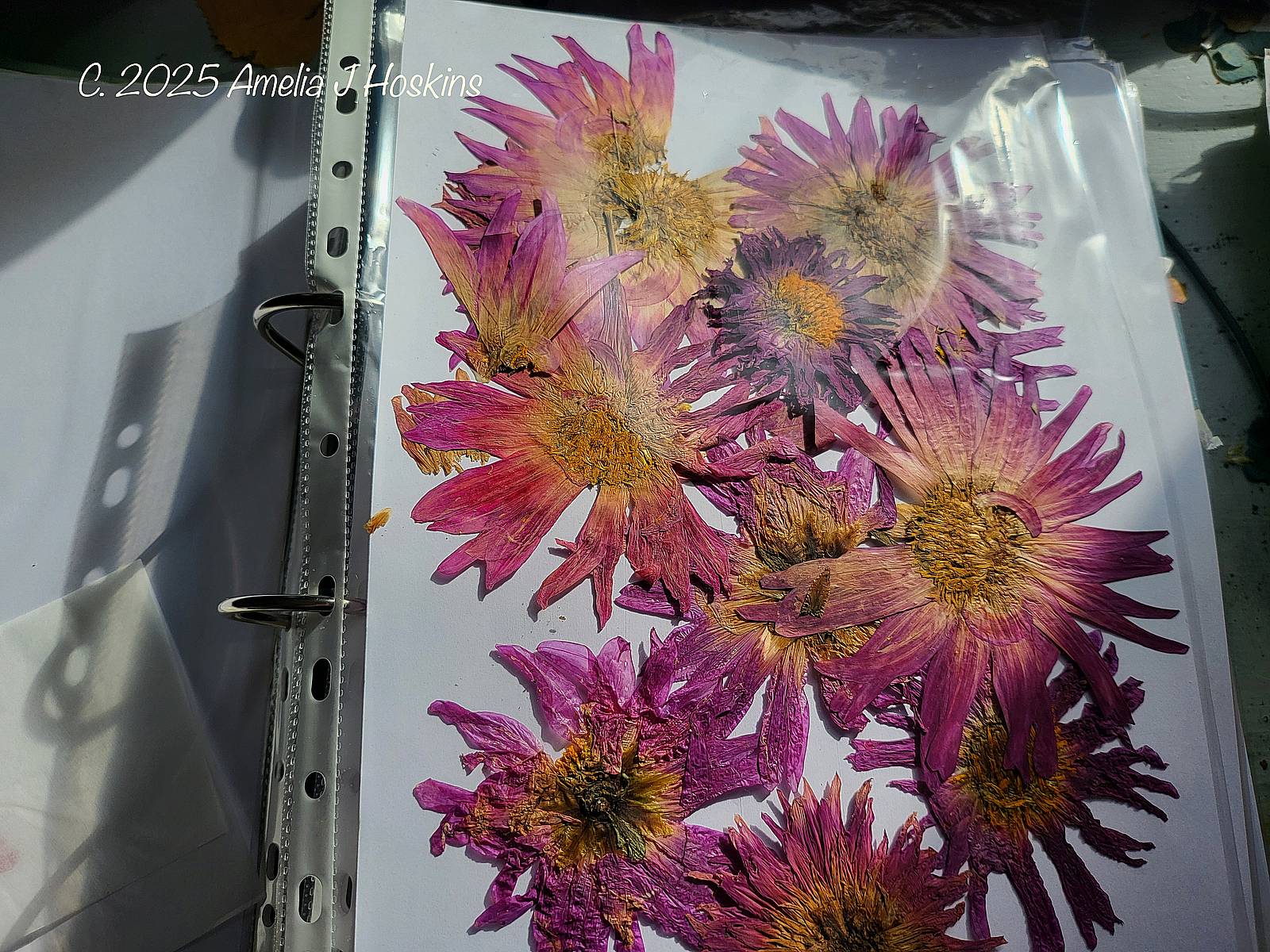
Quite a lot of dahlia flowers saved, pressed: worth trying some in bundle dyes. [To do...]
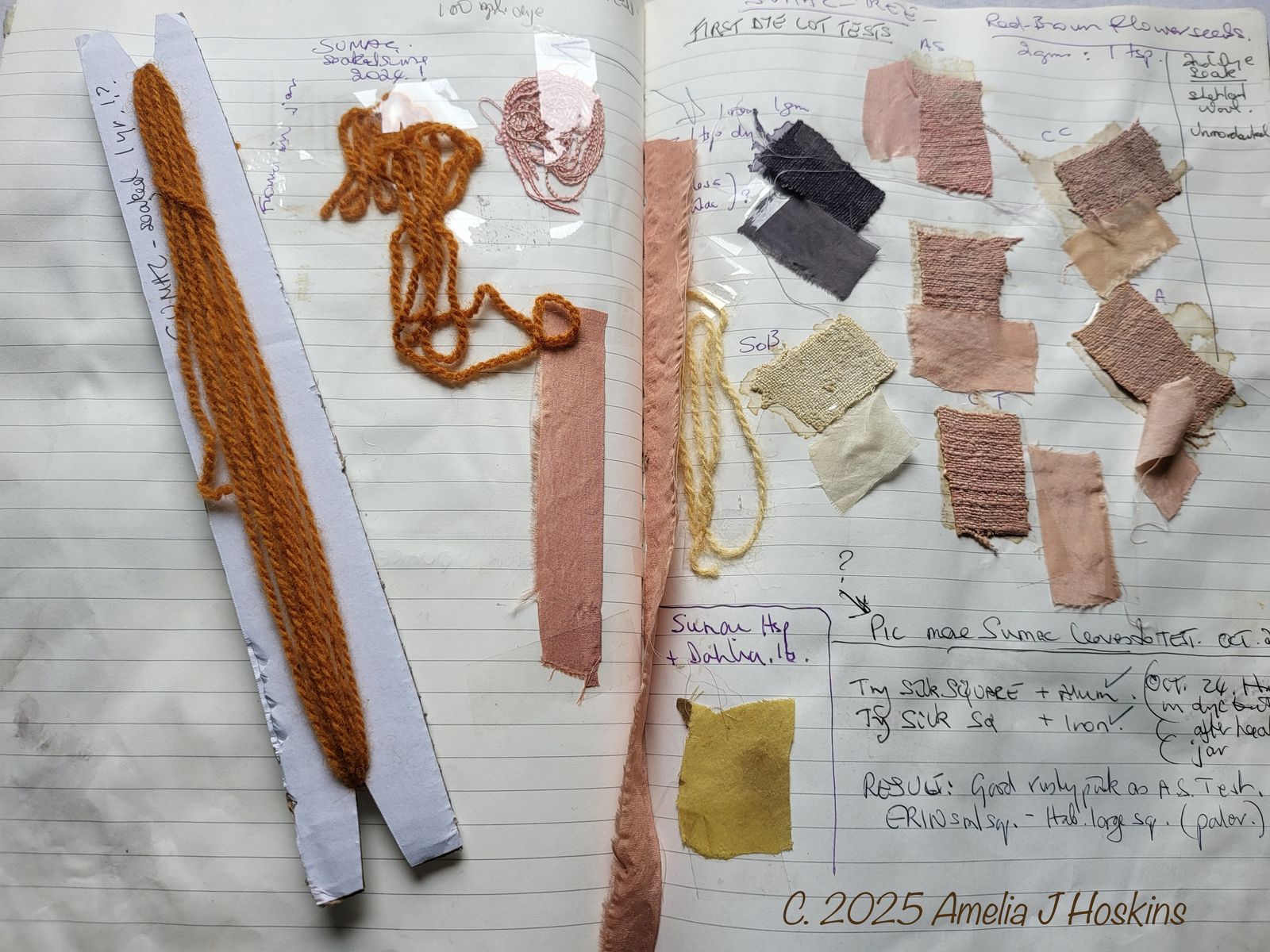
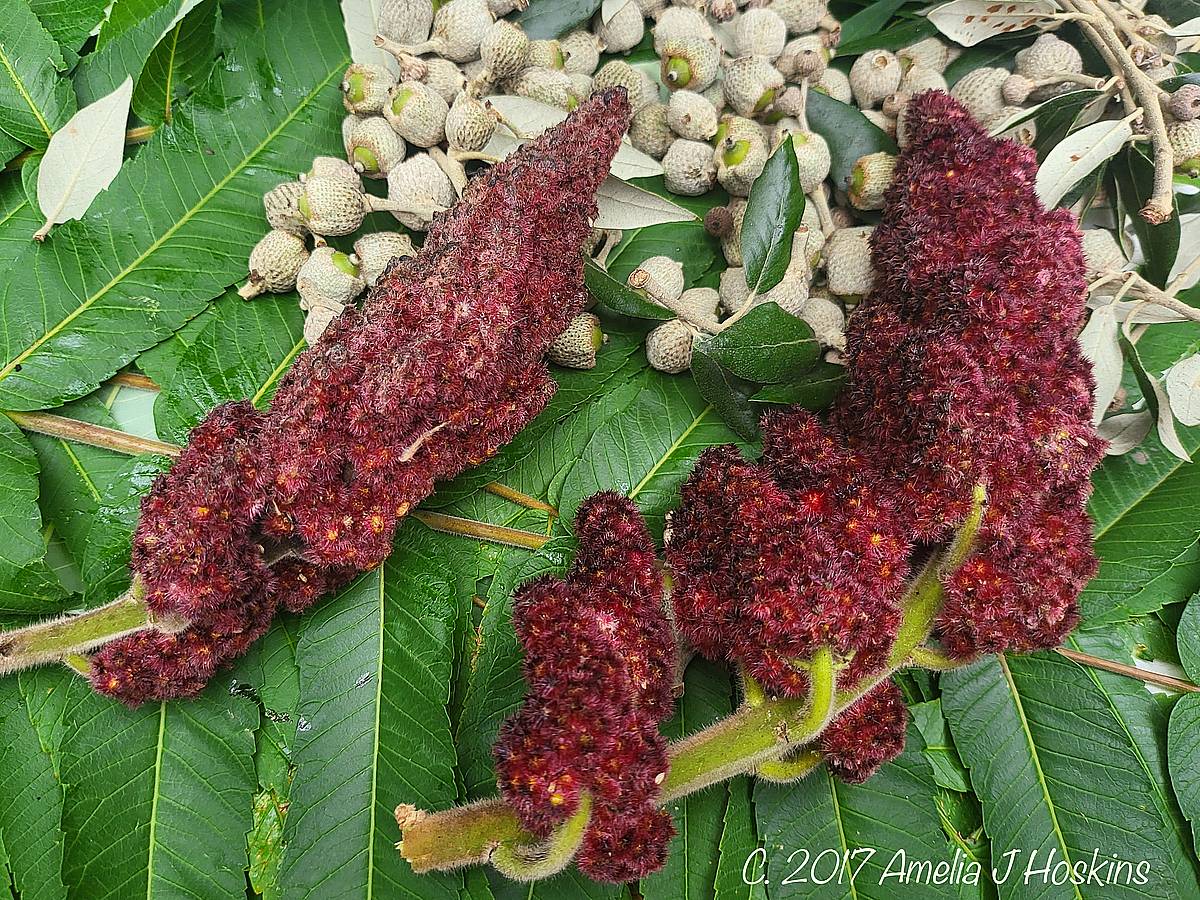
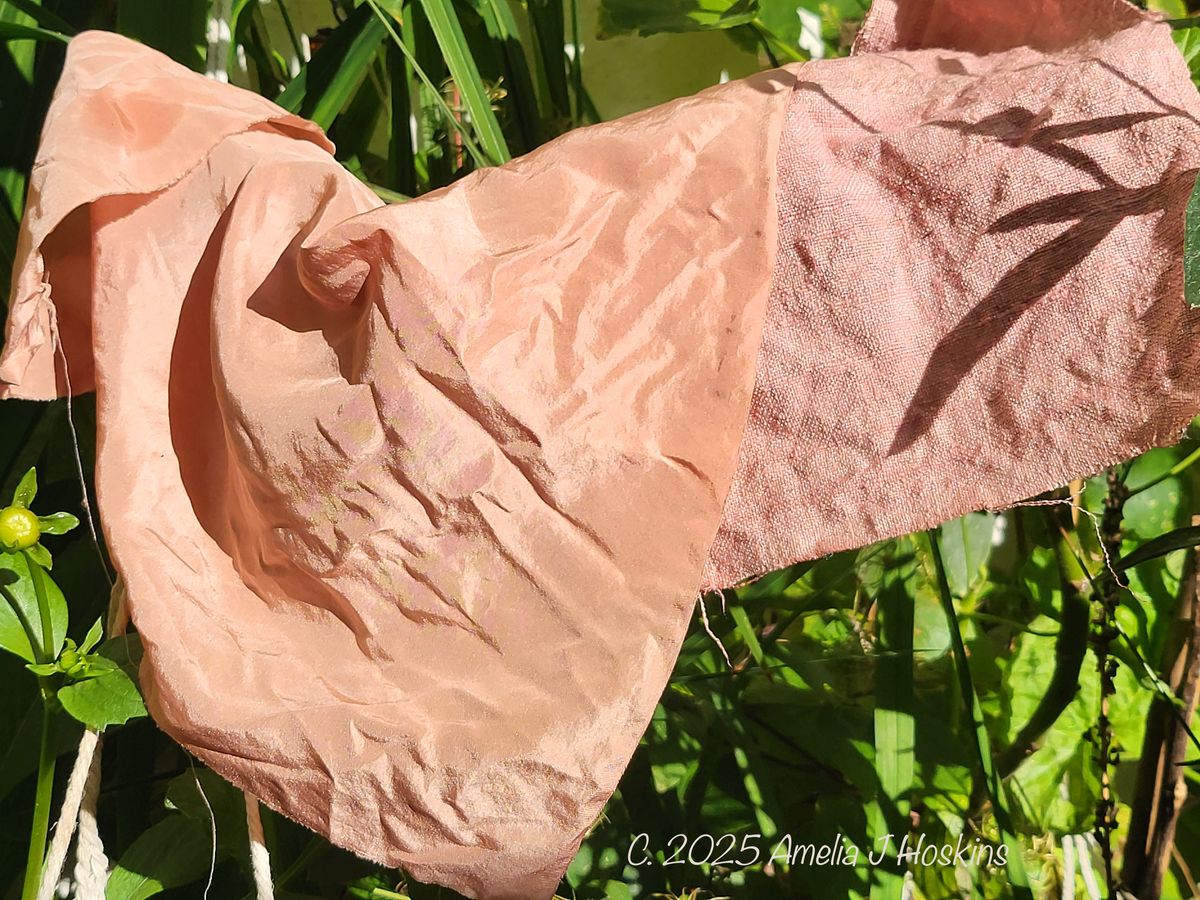
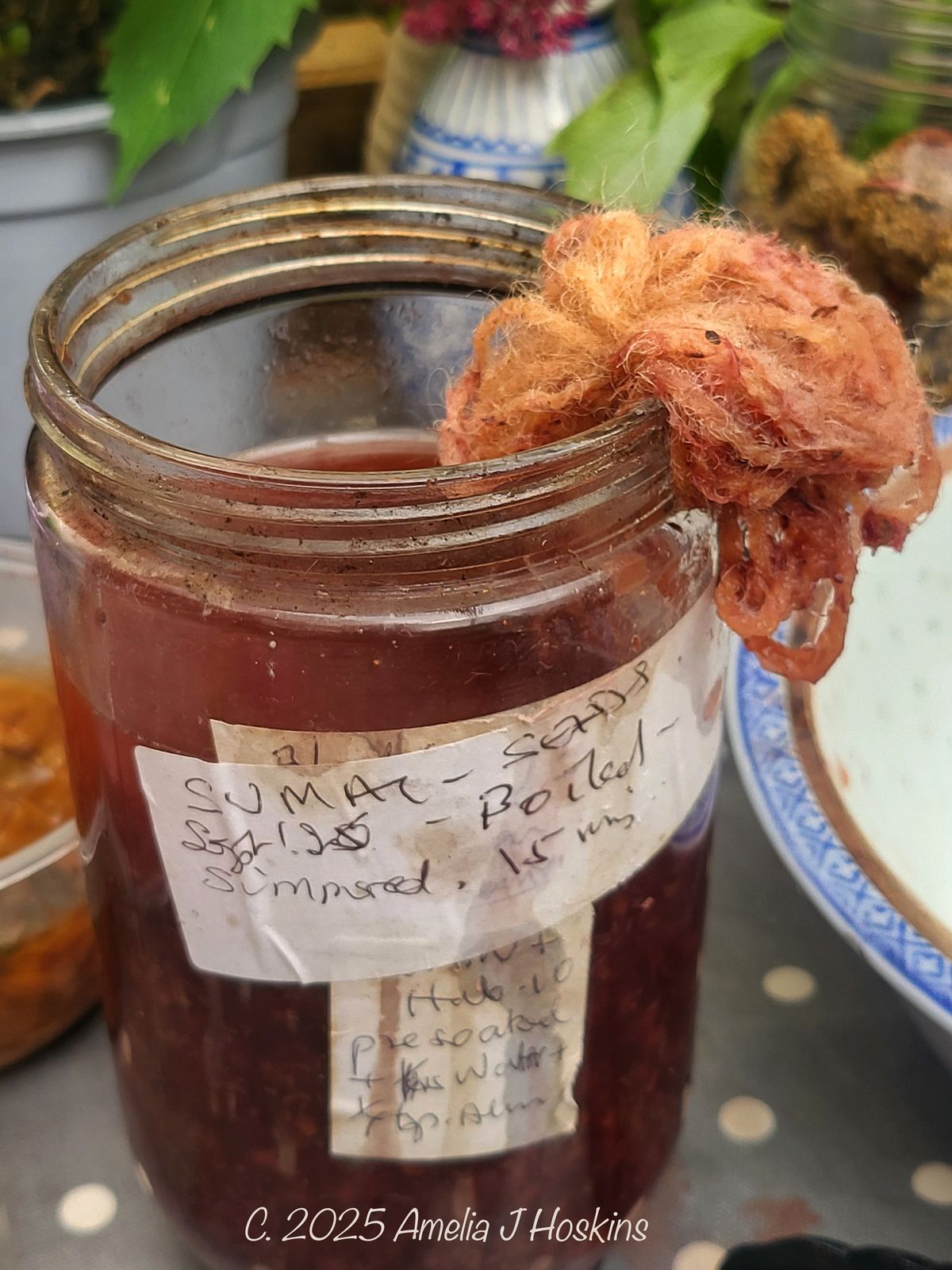
Good strong tones achieved with modifiers. [See notebook image above.] I chose to simply use alum sulphate as a pre-mordant (which matches my silk pieces, although no mordant at all (centre test sample), would be fine. An interesting change from predominant salmon pink, is the pale straw sample, modified with Sodium Bicarbonate, (alkaline). This stops the pink coming through, but Sumac is more valuable for the stronger terracotta pinks.
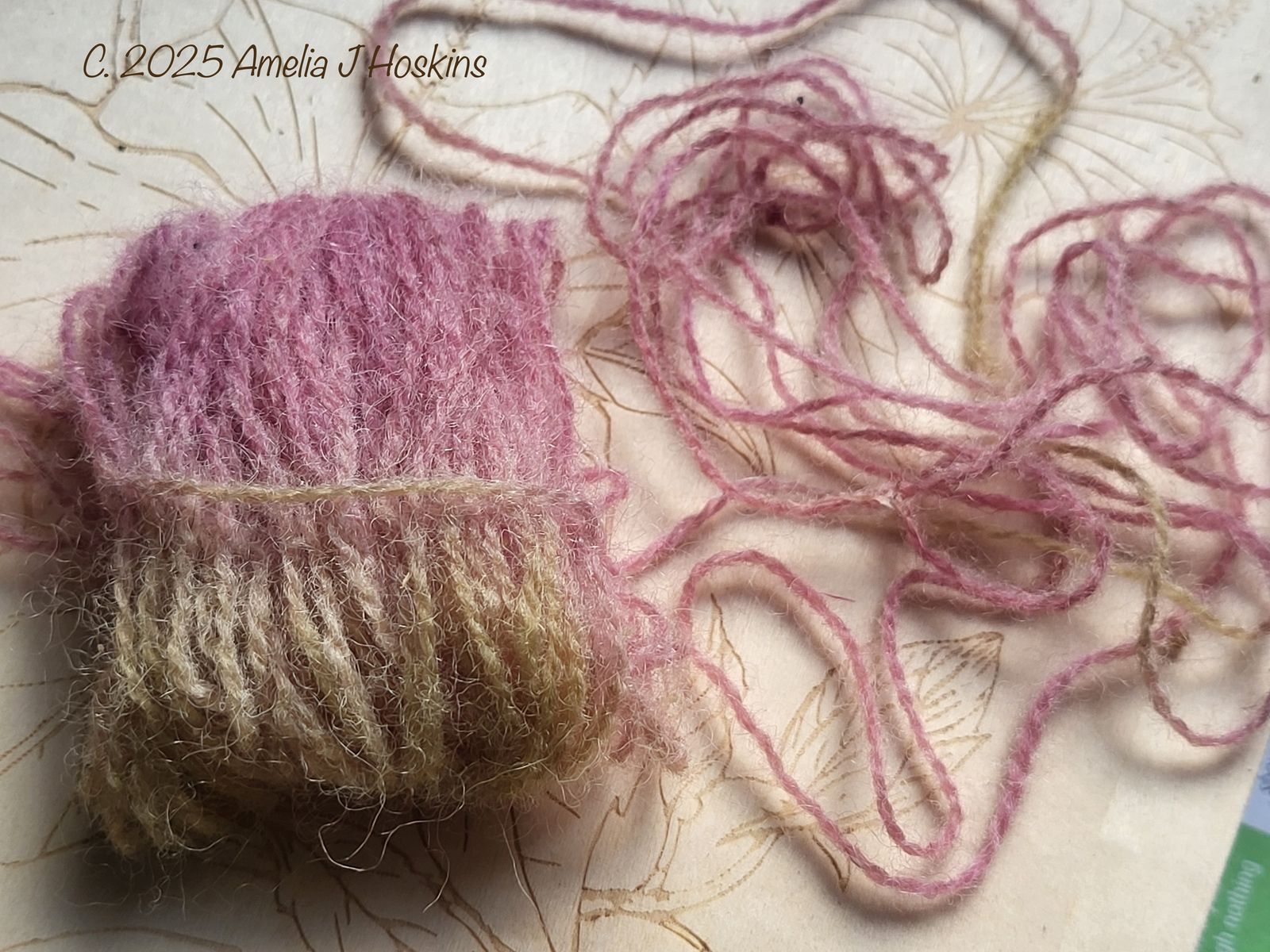
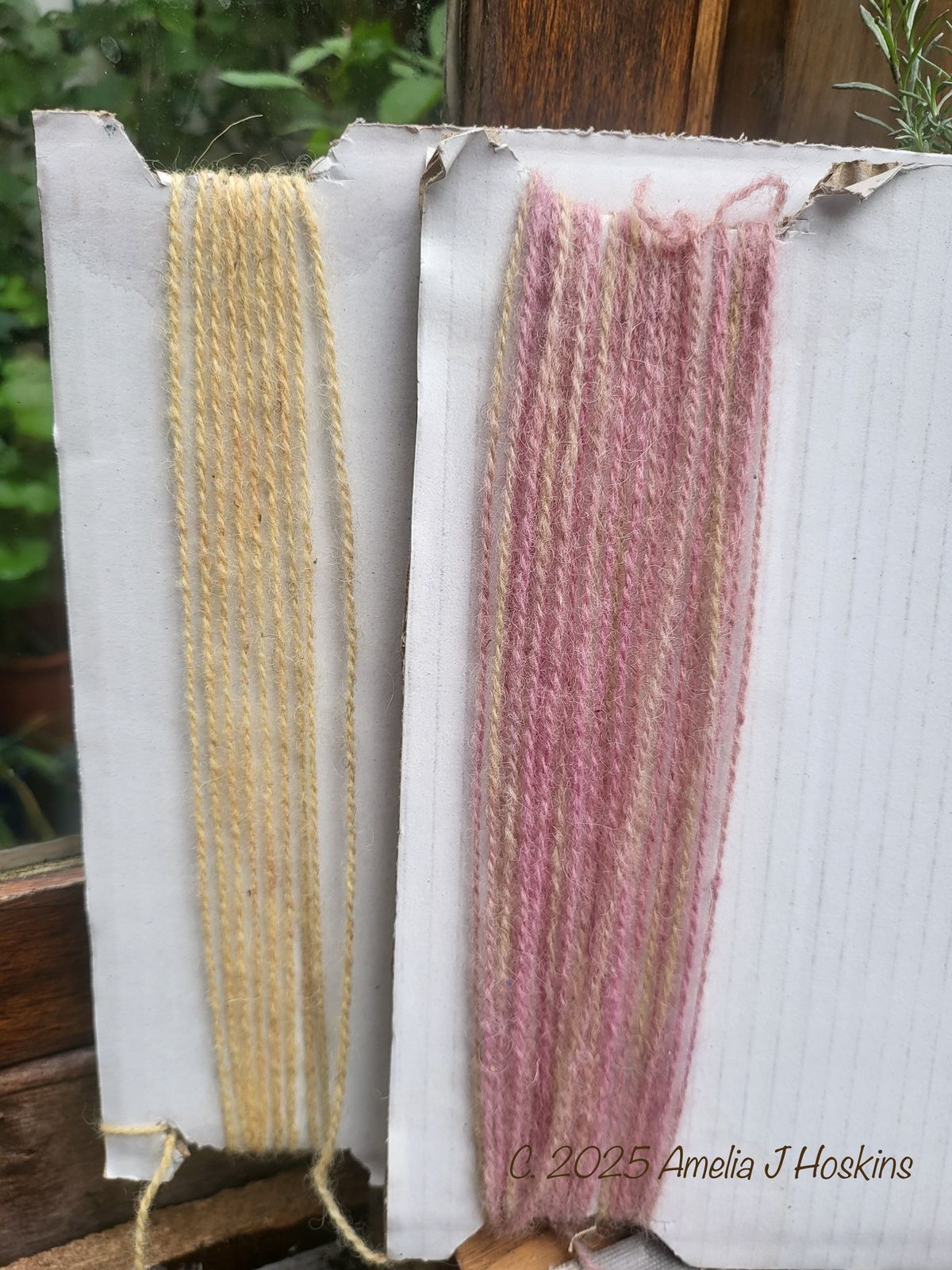
Shetland wool was soaked in dye jar, but probably not mordanted, and has oils in (must be alkaline), which prevented the pink shades. Shetland wool, dyed ginger was found in previous year's jar of Sumac dye! Worth leaving wool in for longer after dyeing silk pieces.
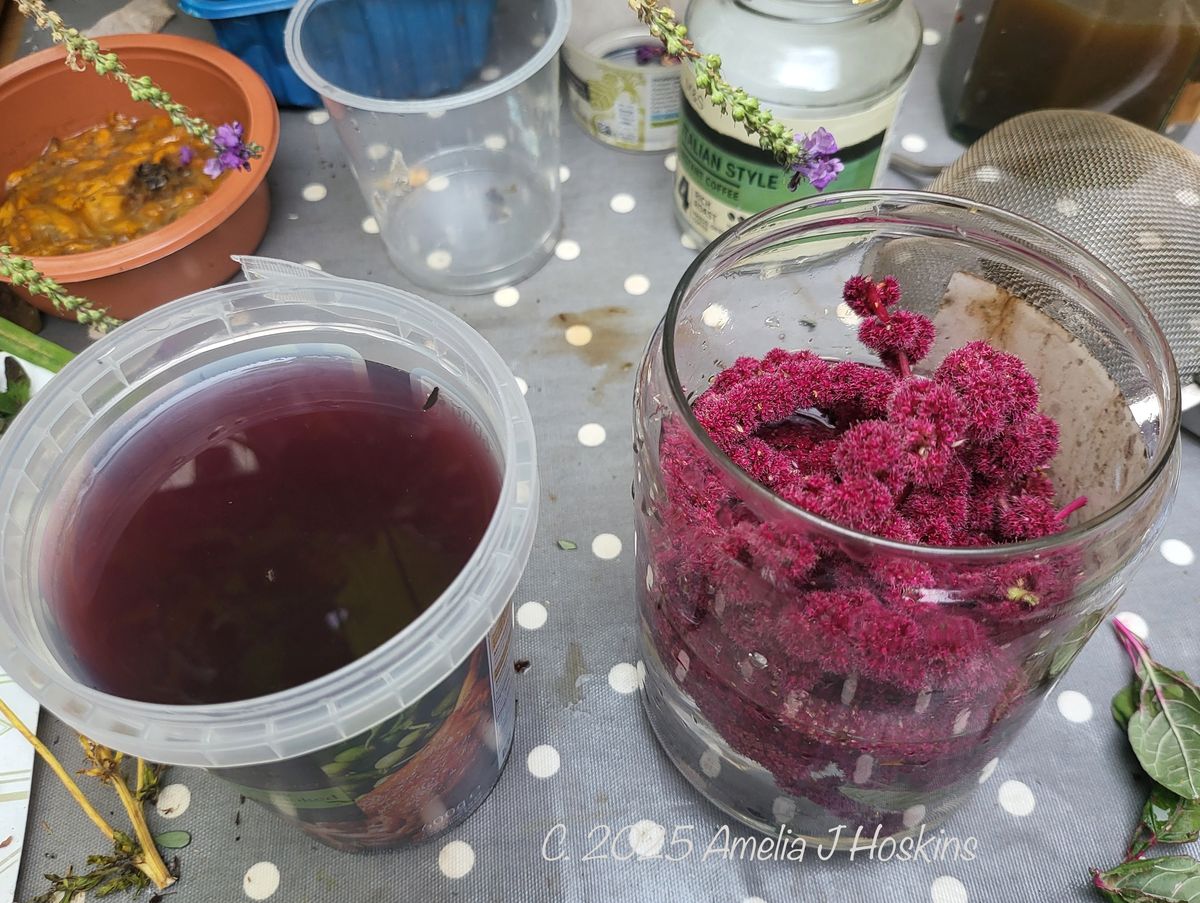
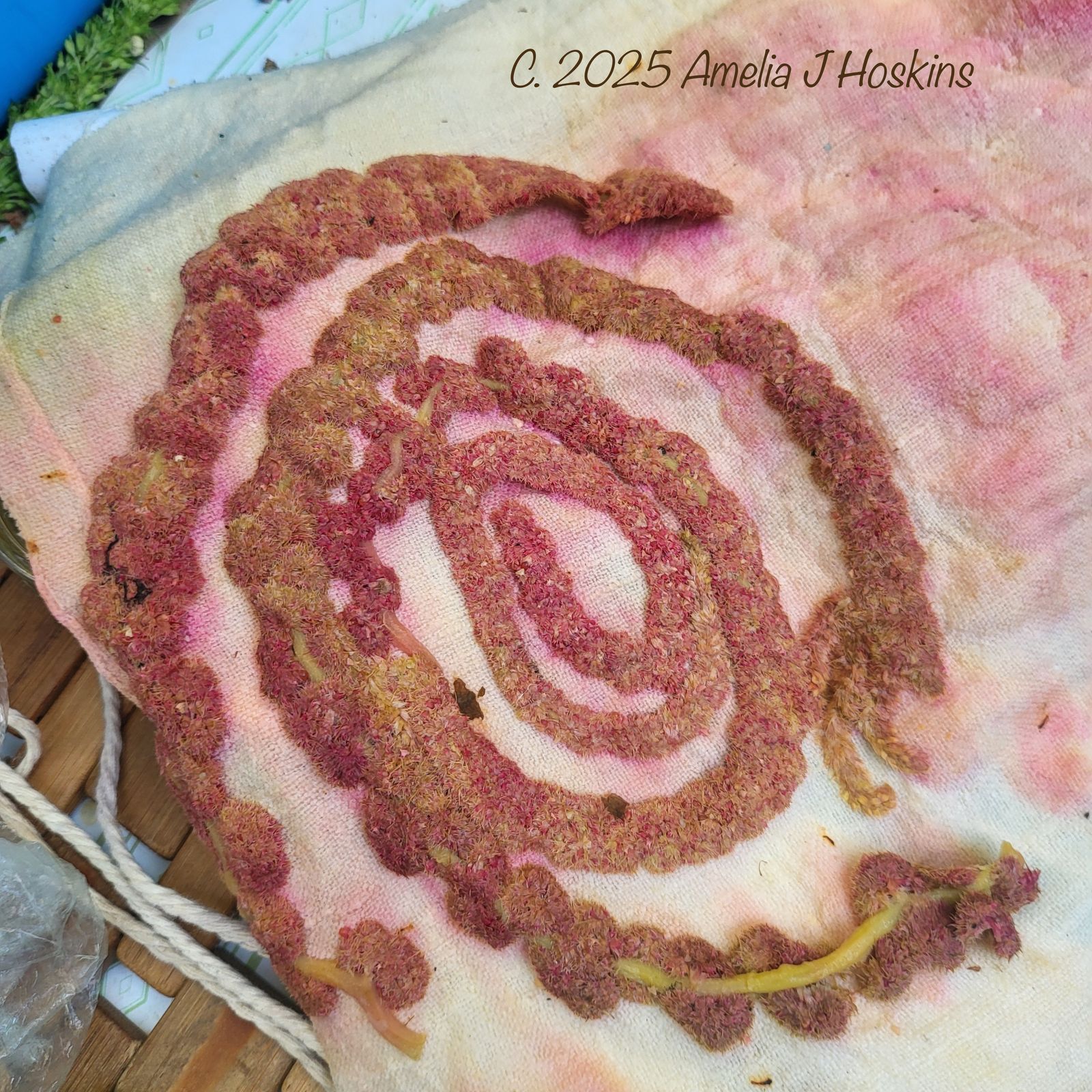
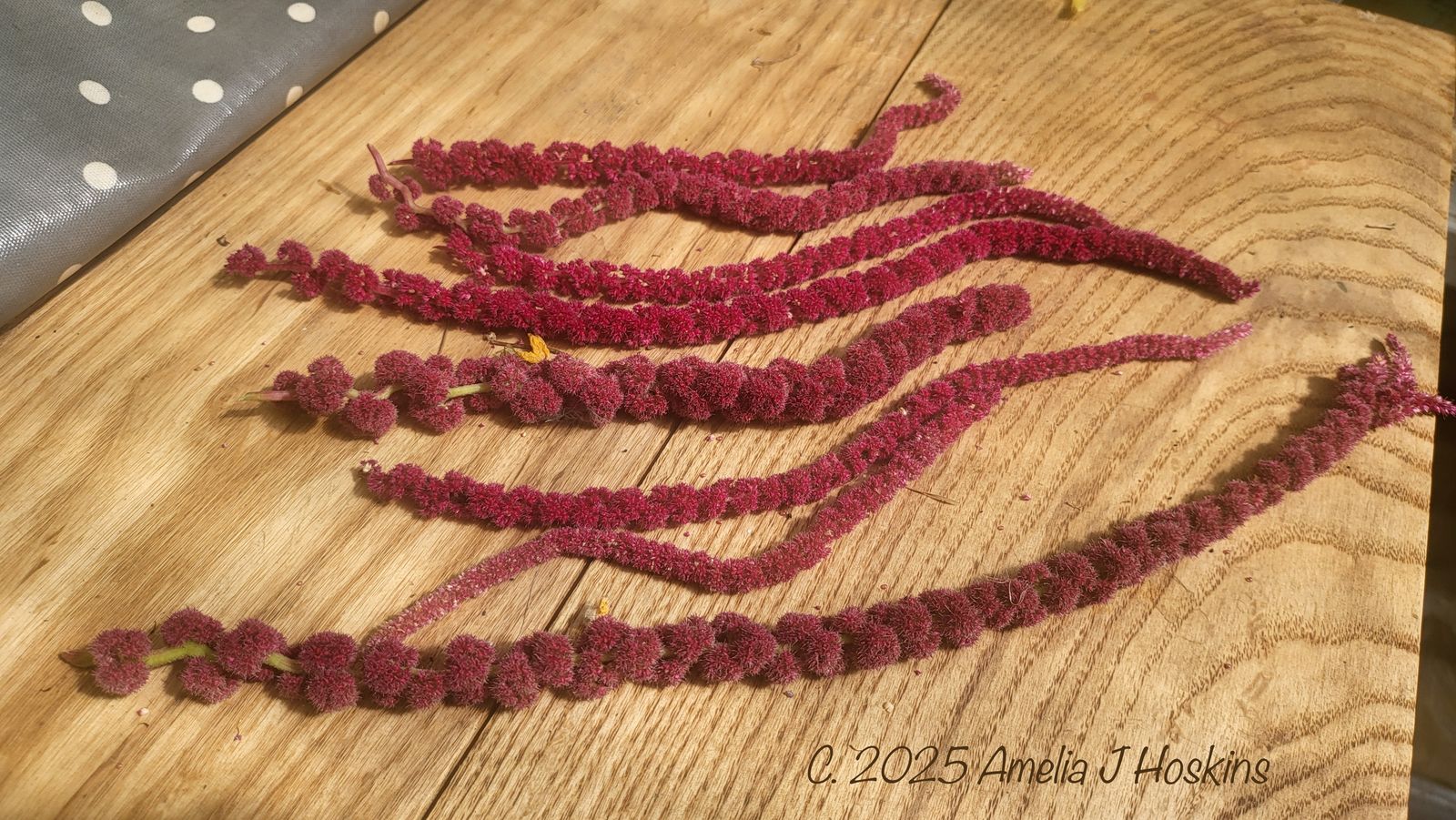
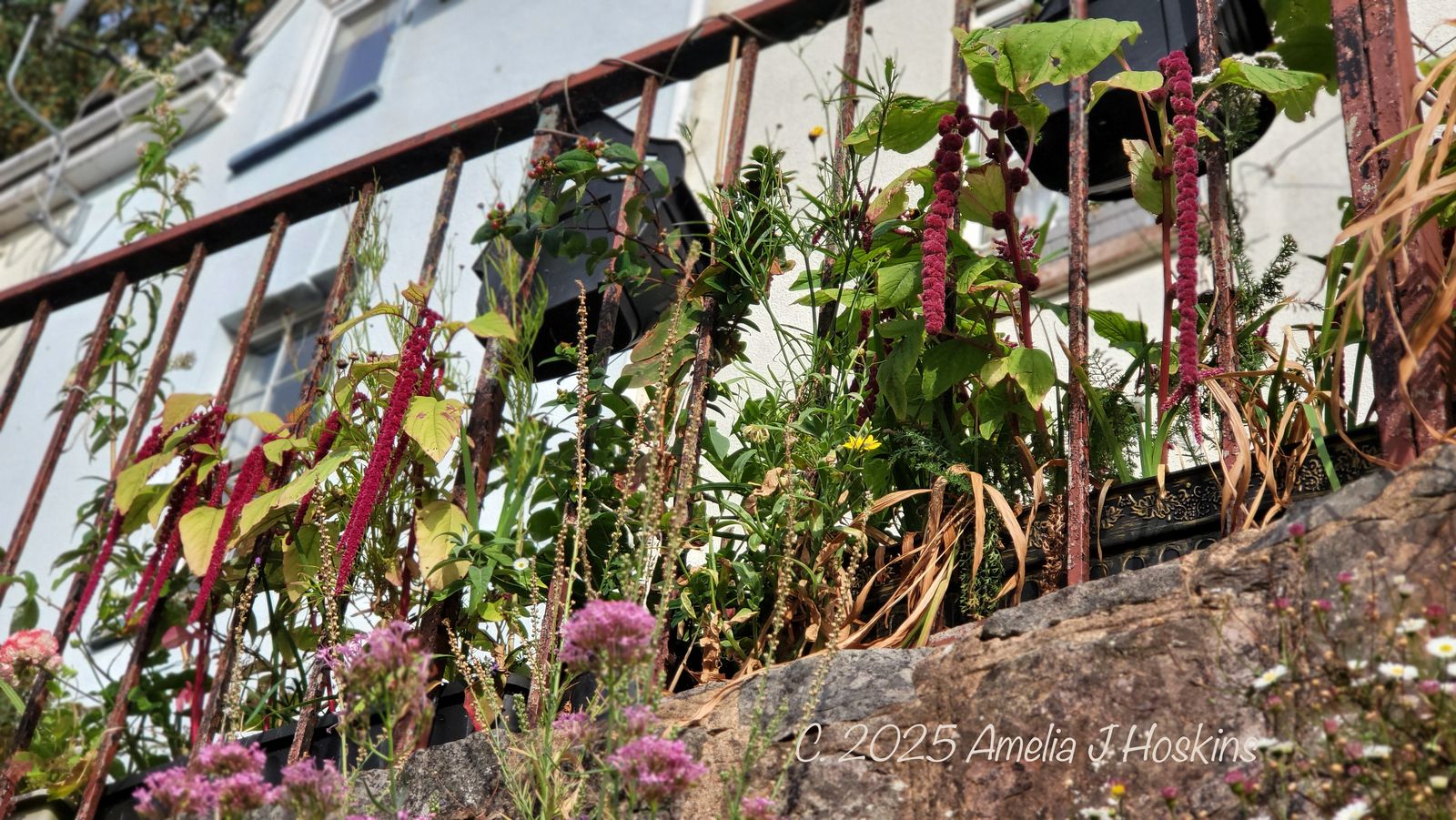
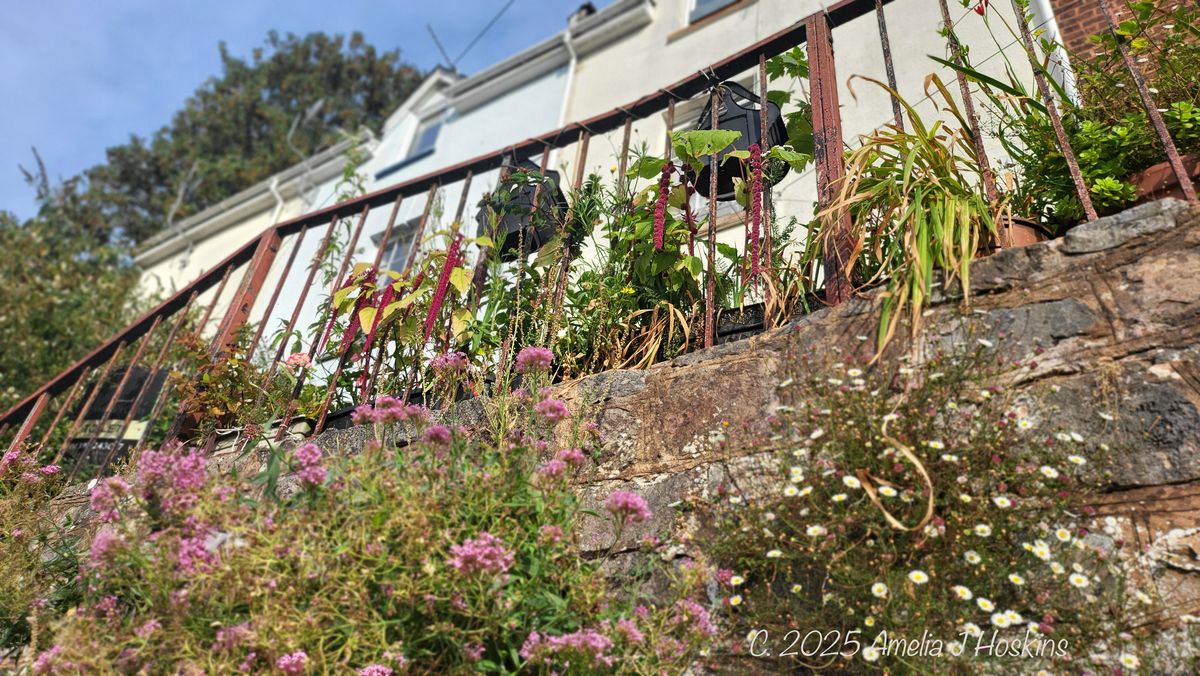
This year, 2025, I grew amaranth from seed, and they thrived in west facing pots. Tassels get quite long, if left through to August.
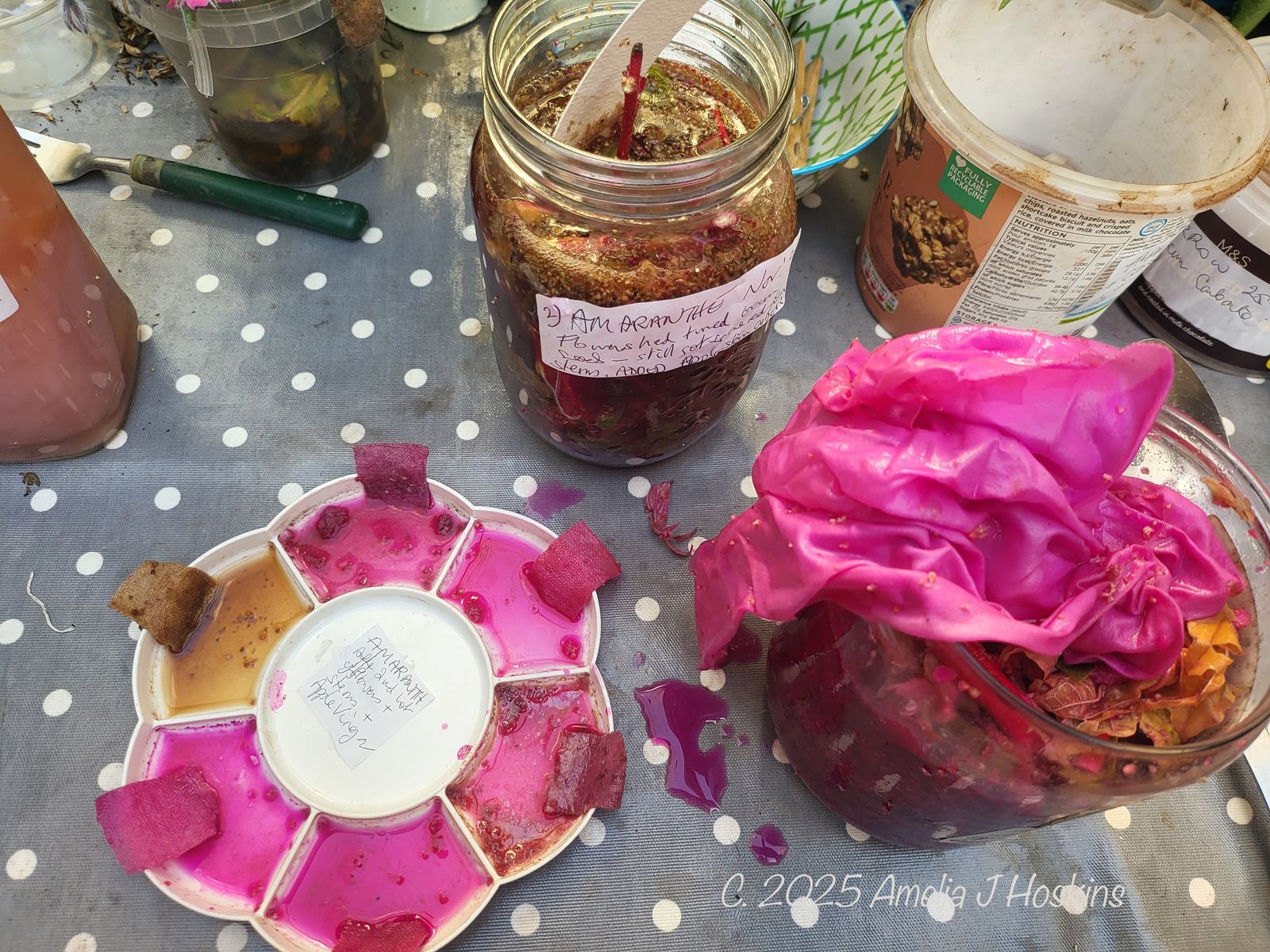
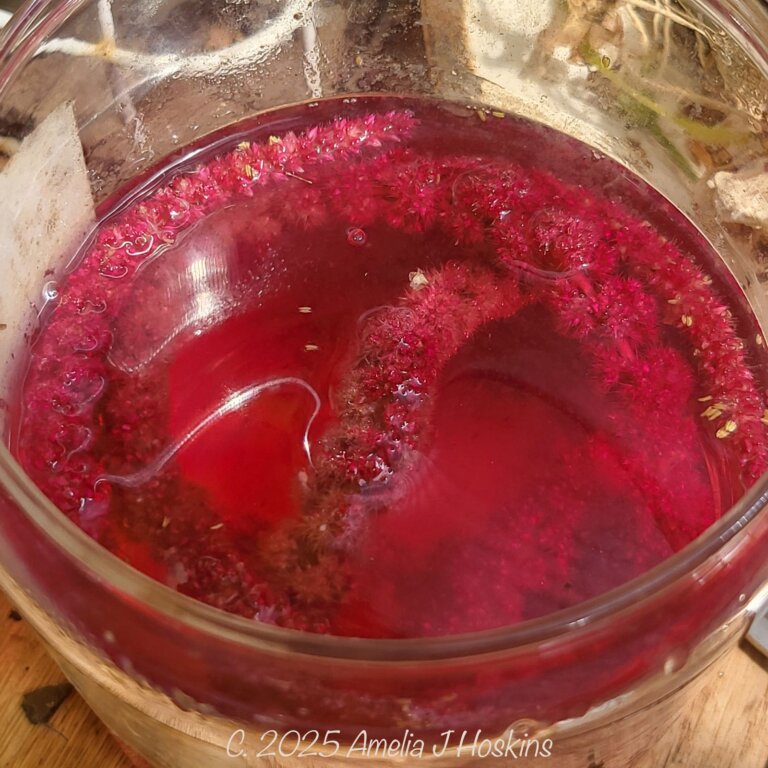
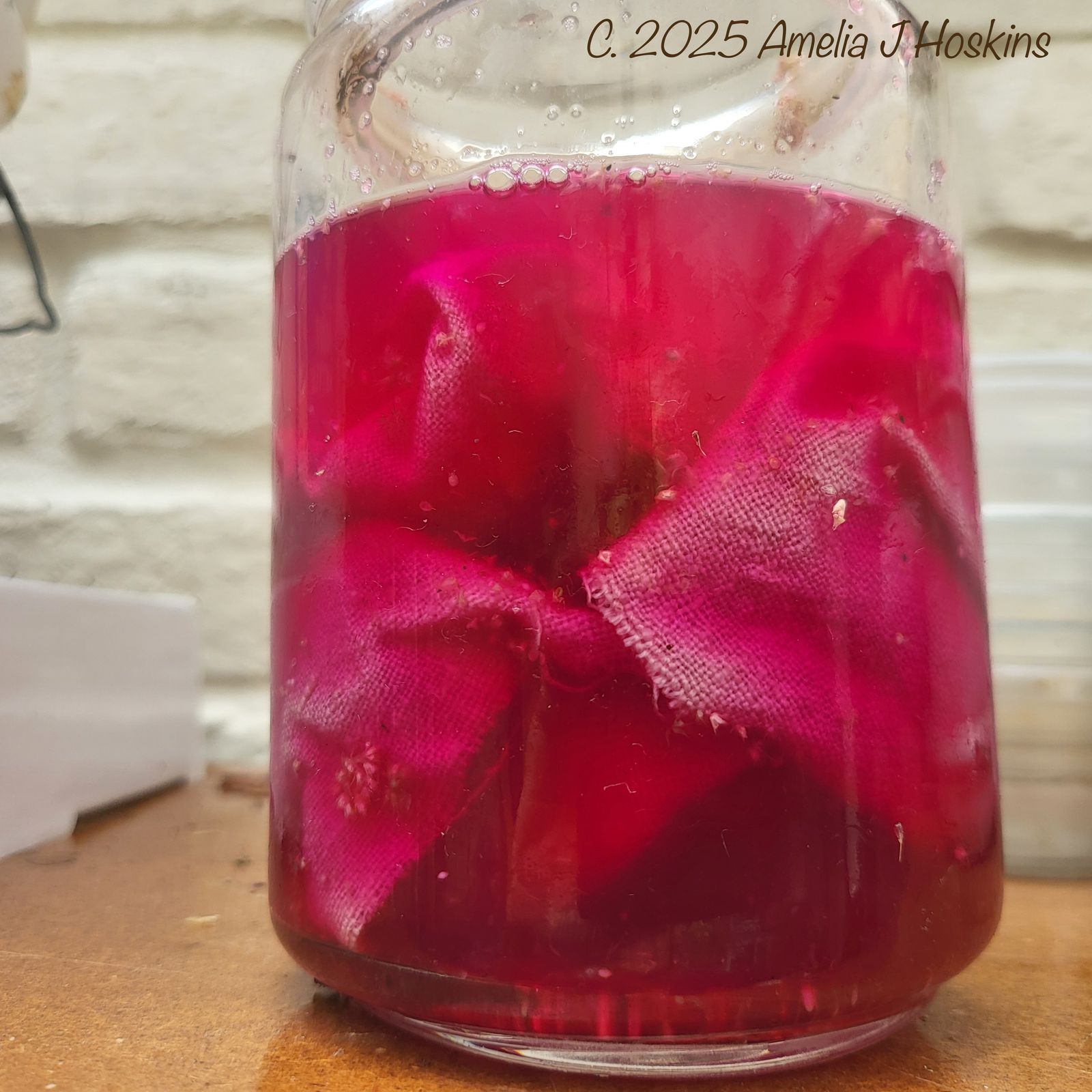
After adding more flowers to soak in August-October dye jar, together with apple vinegar from apple waste and skins, the advised Ph3 was achieved. The habotai silk finally TOOK the colour - a bright magenta pink. It held and did not wash out, also rose-magenta pink after drying. CONCLUSION: Either longer soaking OR apple vinegar addition allowed for dye absorption. More pond water added to jar and more apple vinegar for subsequent pinks; maybe paler...
Pink or magenta must be 'coaxed' carefully from the flowers. The joy is that the 'fixer' apple vinegar is available from ripe apple peelings in October. If the seeds proliferate, there'll be plenty of pink dye next year.
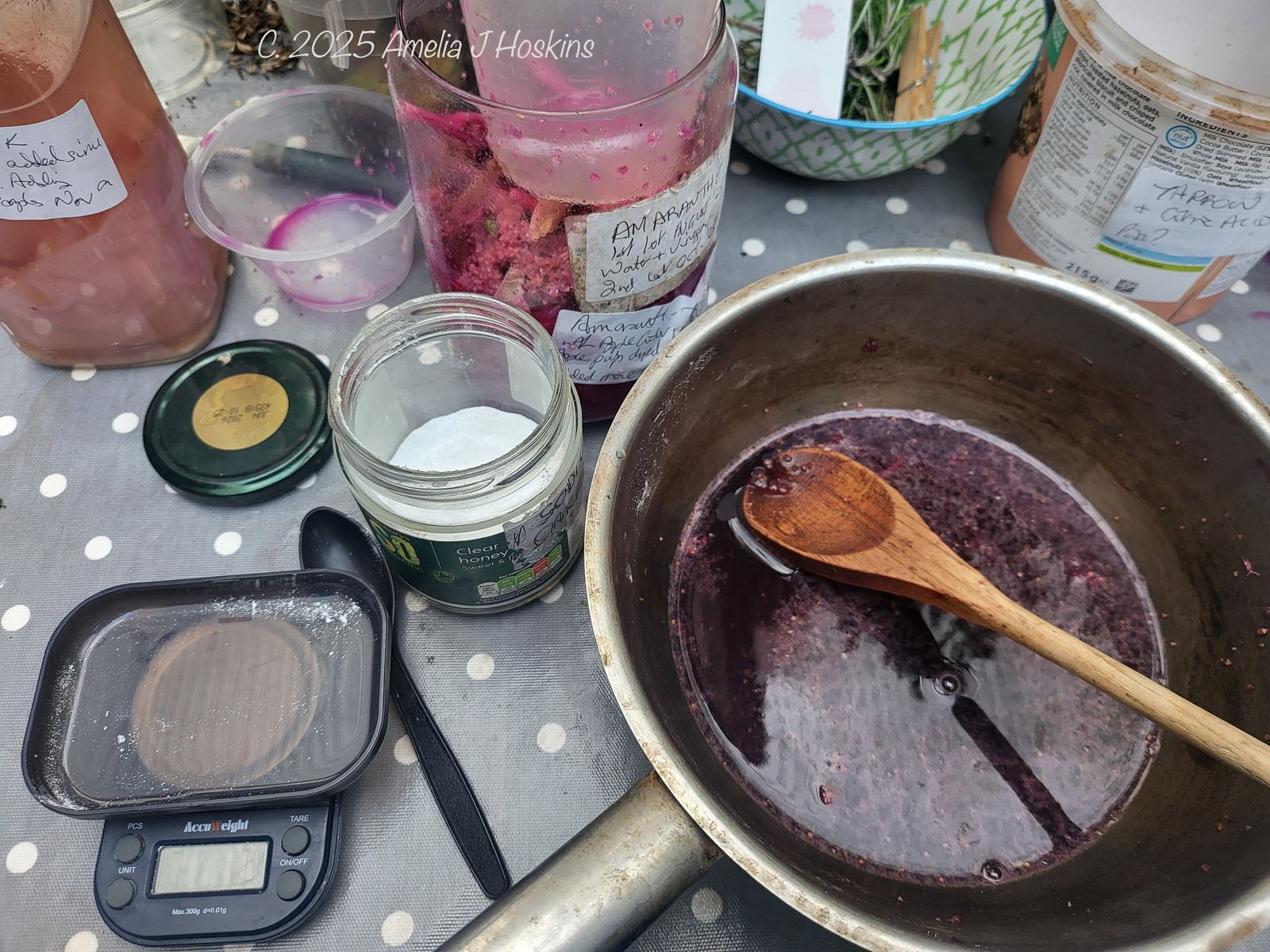
I must have got the modifiers mixed up: using Bicarbonate of Soda, silk turned gold in the purple dye. More tests...
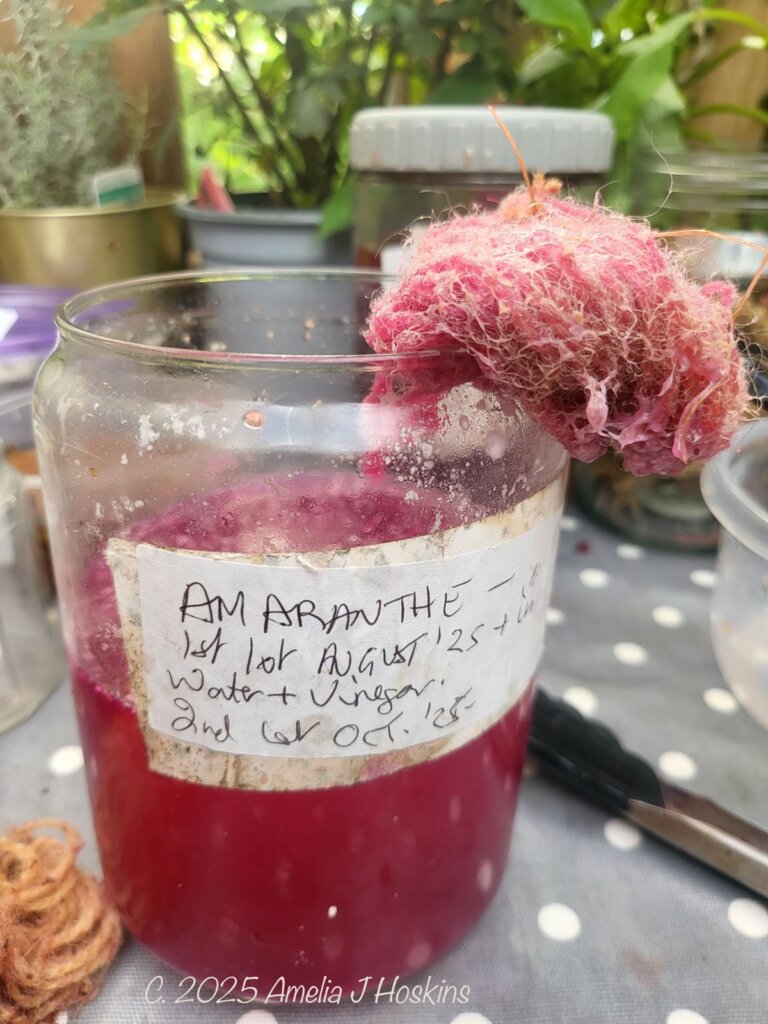
A 3rd soak jar behind in image shows the flowers brown, as they were changing from flower to seed, only partly pink. However water has gone purple, so in hope, some more pink stems were added. [the older the plant, the pinker the stems]. This pink seems quite strong. Amaranth plants are over by November, but keep producing tassels of magenta from July/August to November.
First sample tests were cream yellows. By September more tassels picked and they are still good, but starting to 'seed'. I made a dye jar in August, left soaking for some weeks with some vinegar and pond water, but only resulted in cream/beige. I added more to it in October and also added some vinegar, which helped get a pink result on Shetland wool.
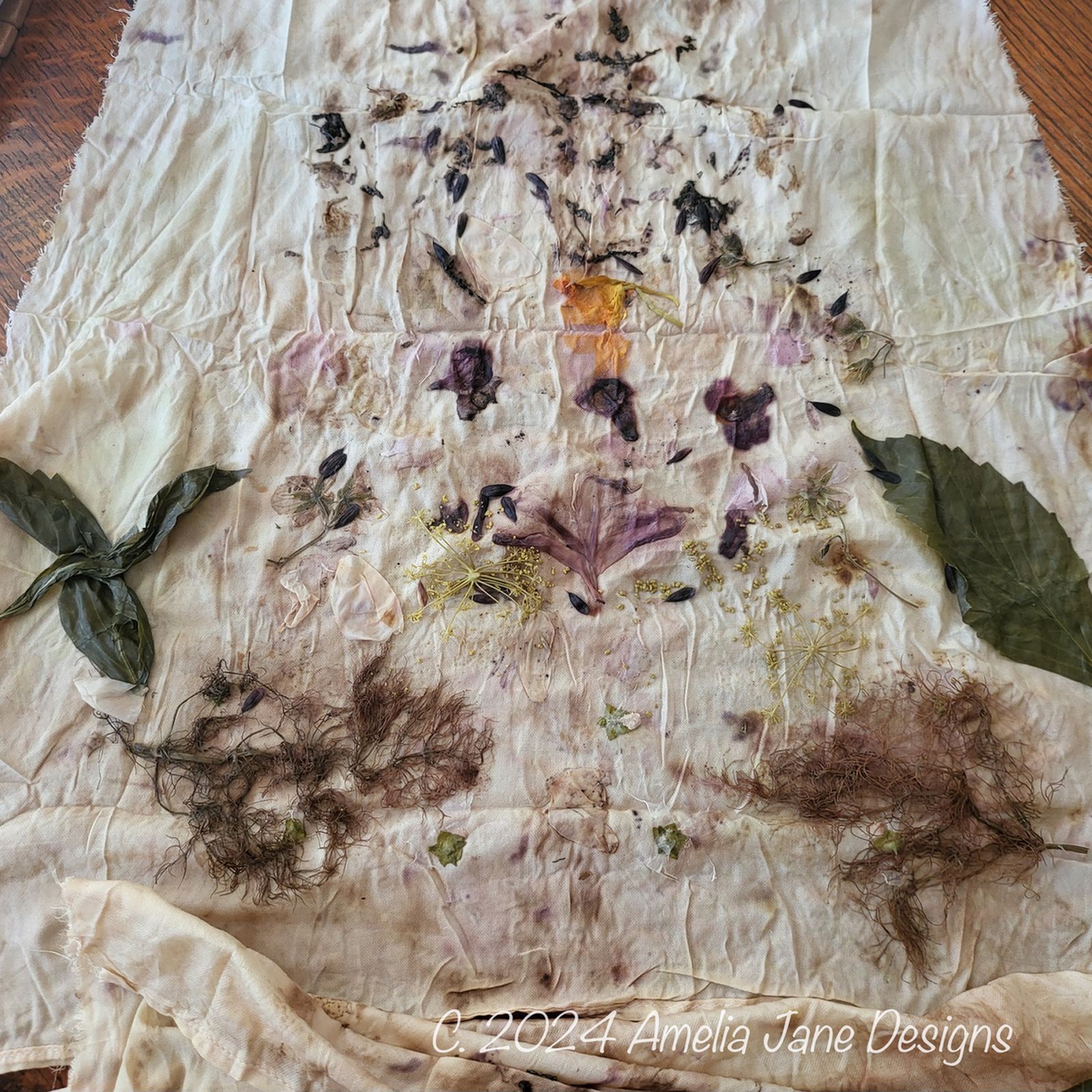
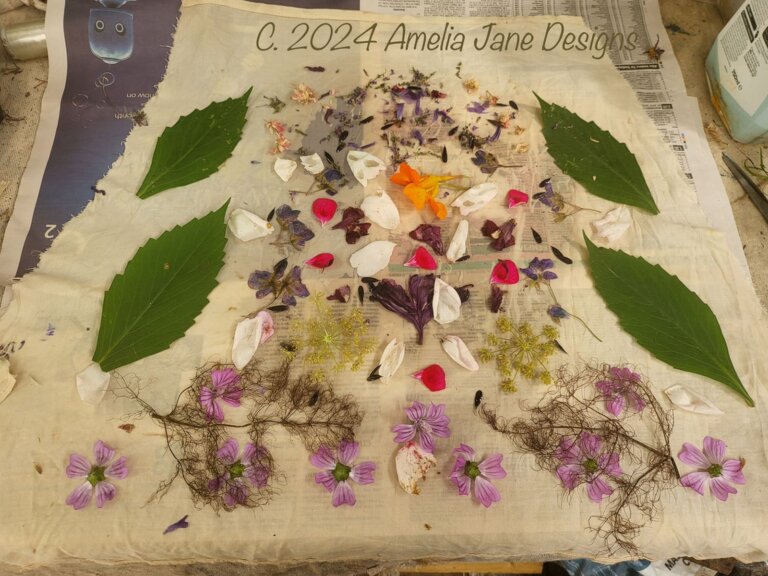
2024: My first experiments with bundle dye and eco printing. The mystery of natural plant dyes is intriguing and fun to try many plants to see what happens. Even white rose petals can produce some shape outline. Images of multiple steaming into Ahimsa silk which is thicker than Habotai, a bit like cotton. [Ahimsa - peace silk where the silkworm is not boiled].
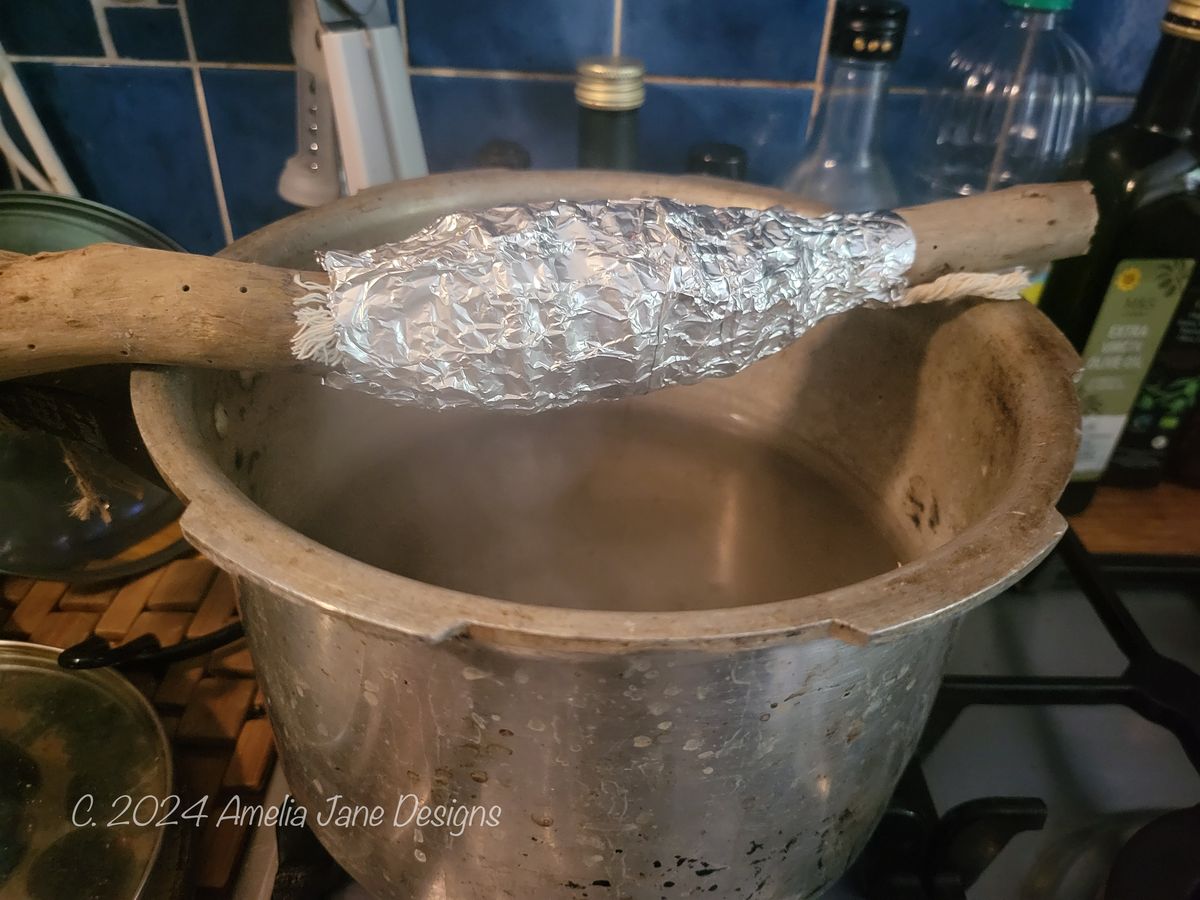
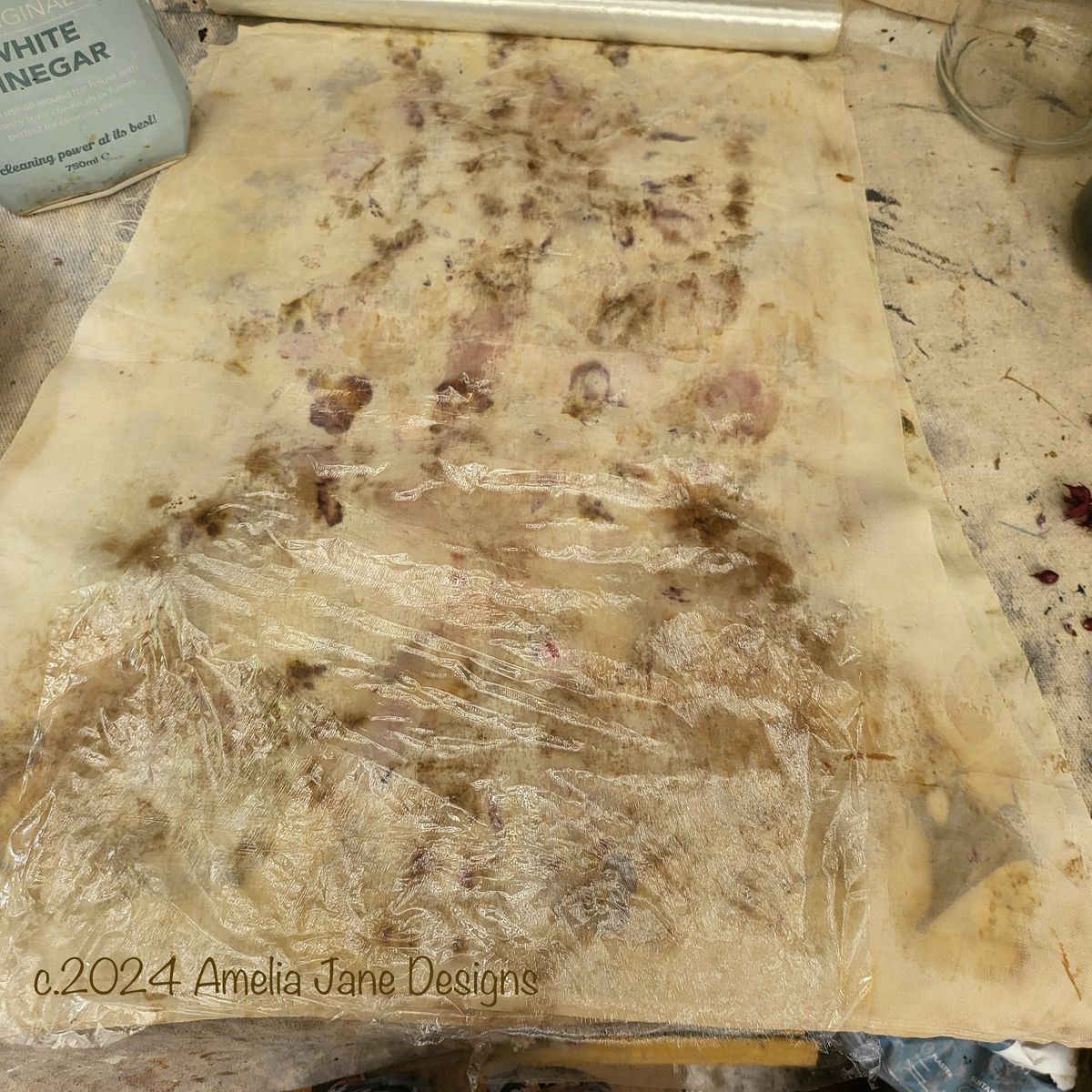
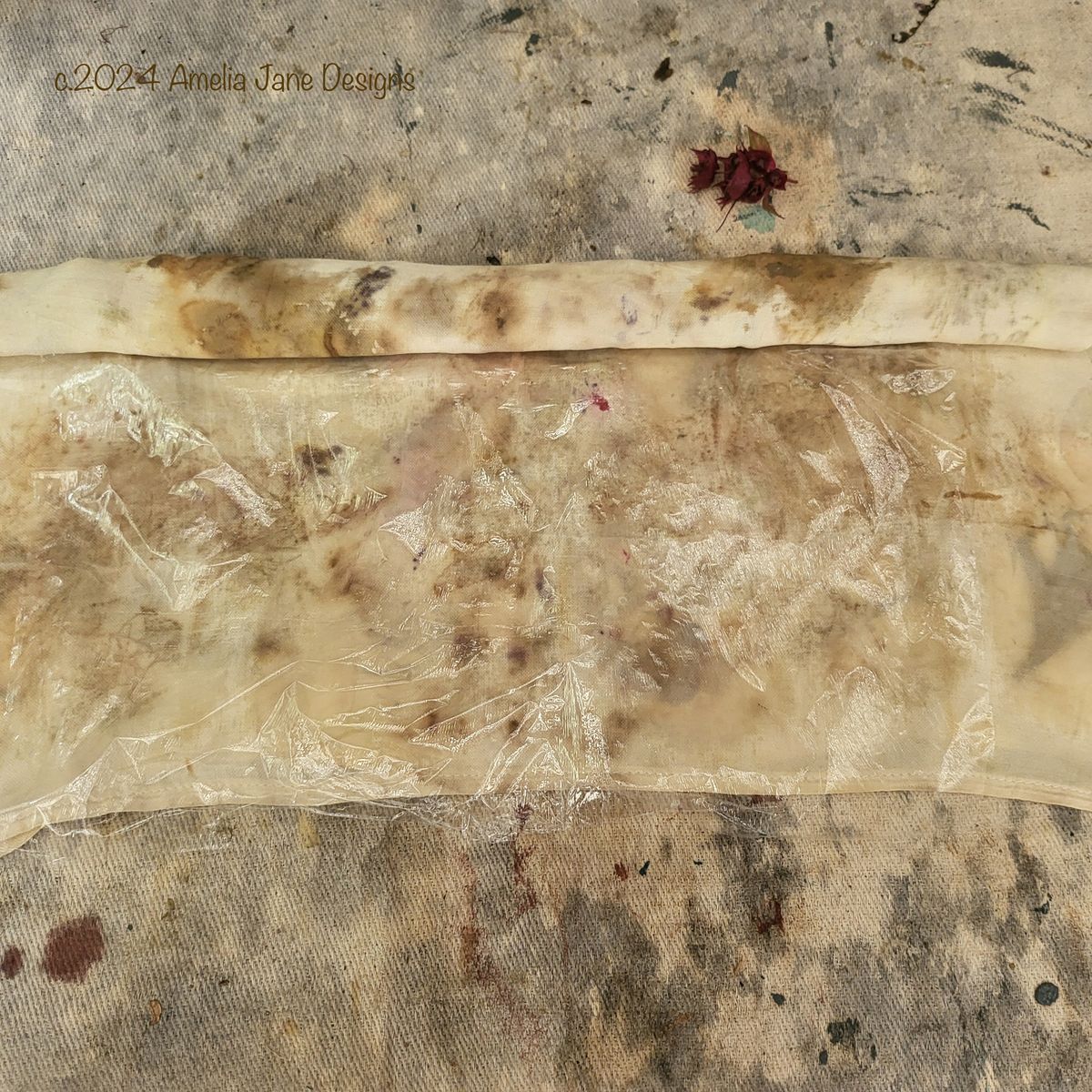
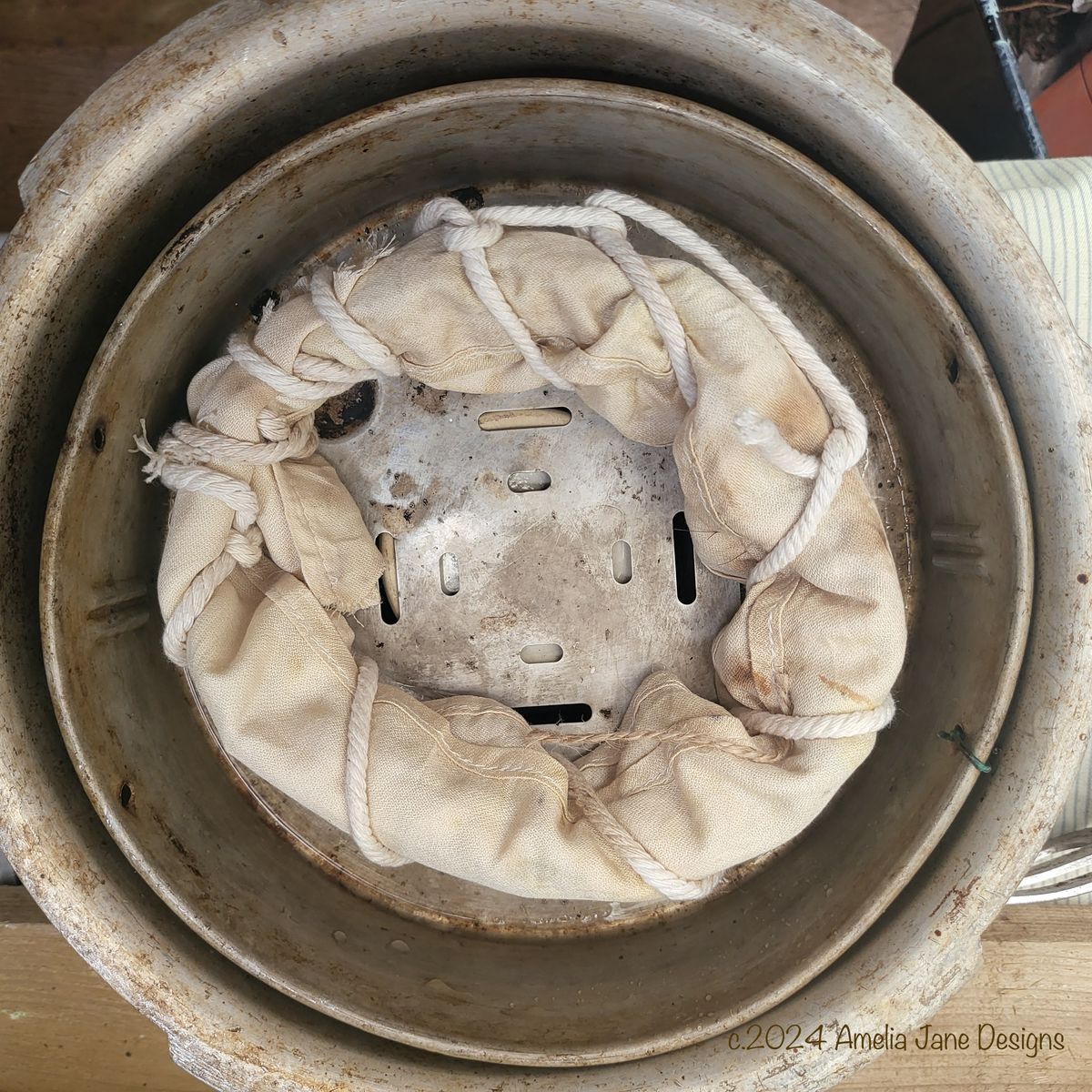
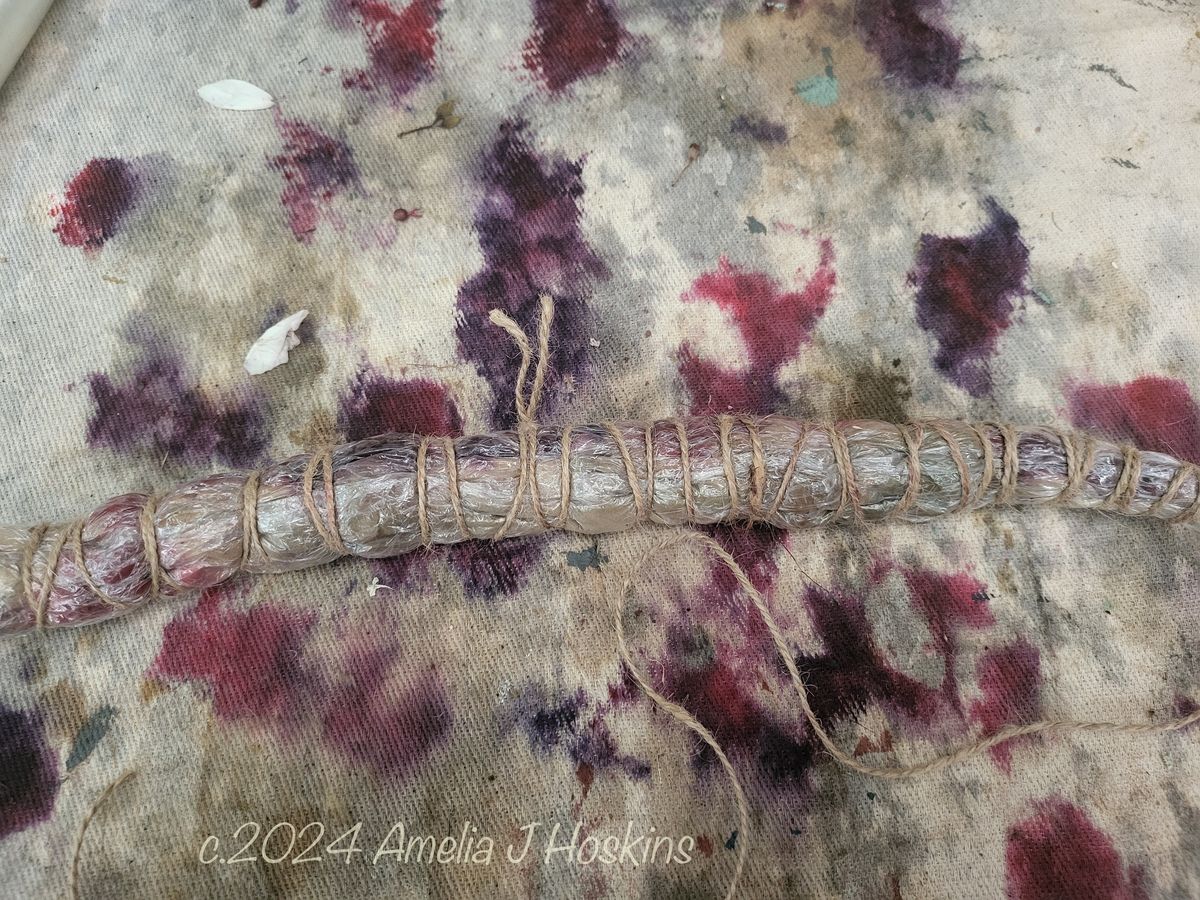
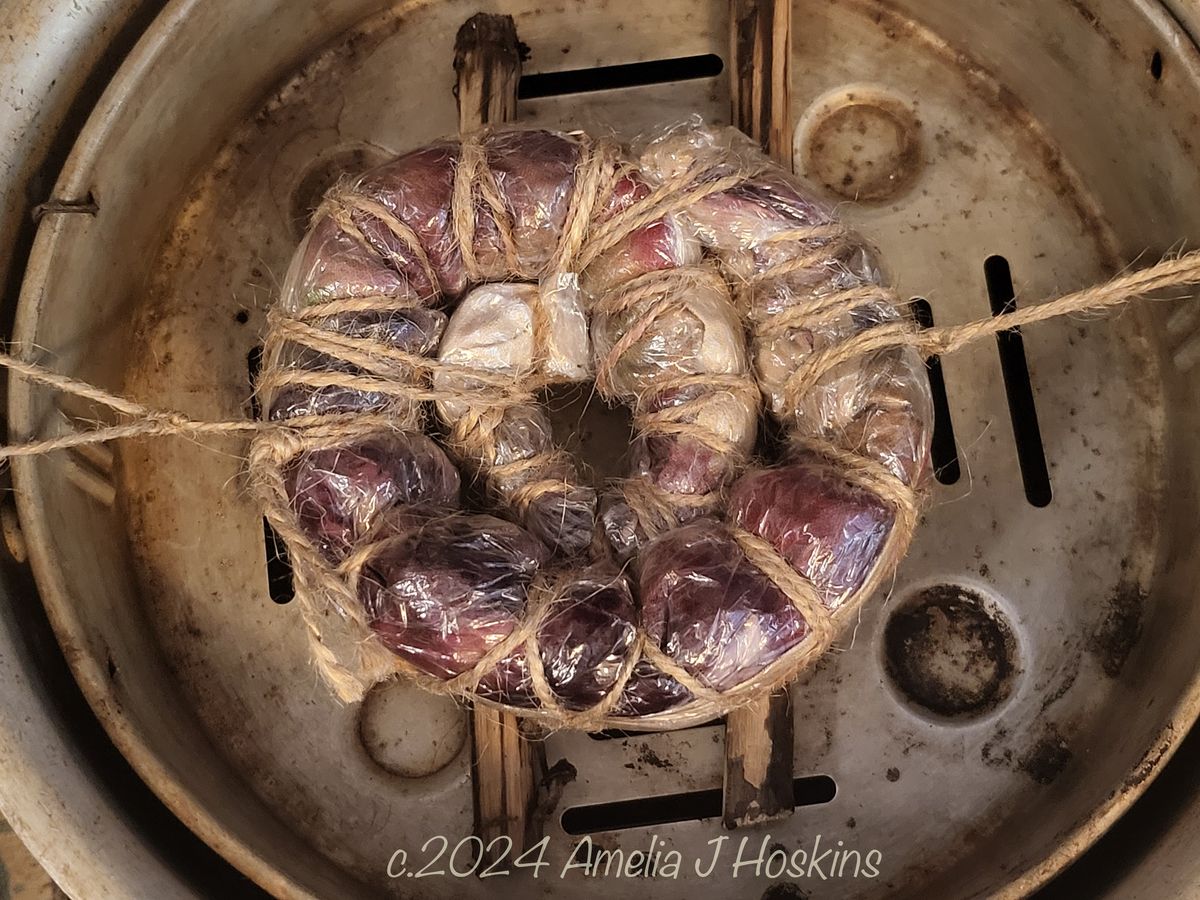
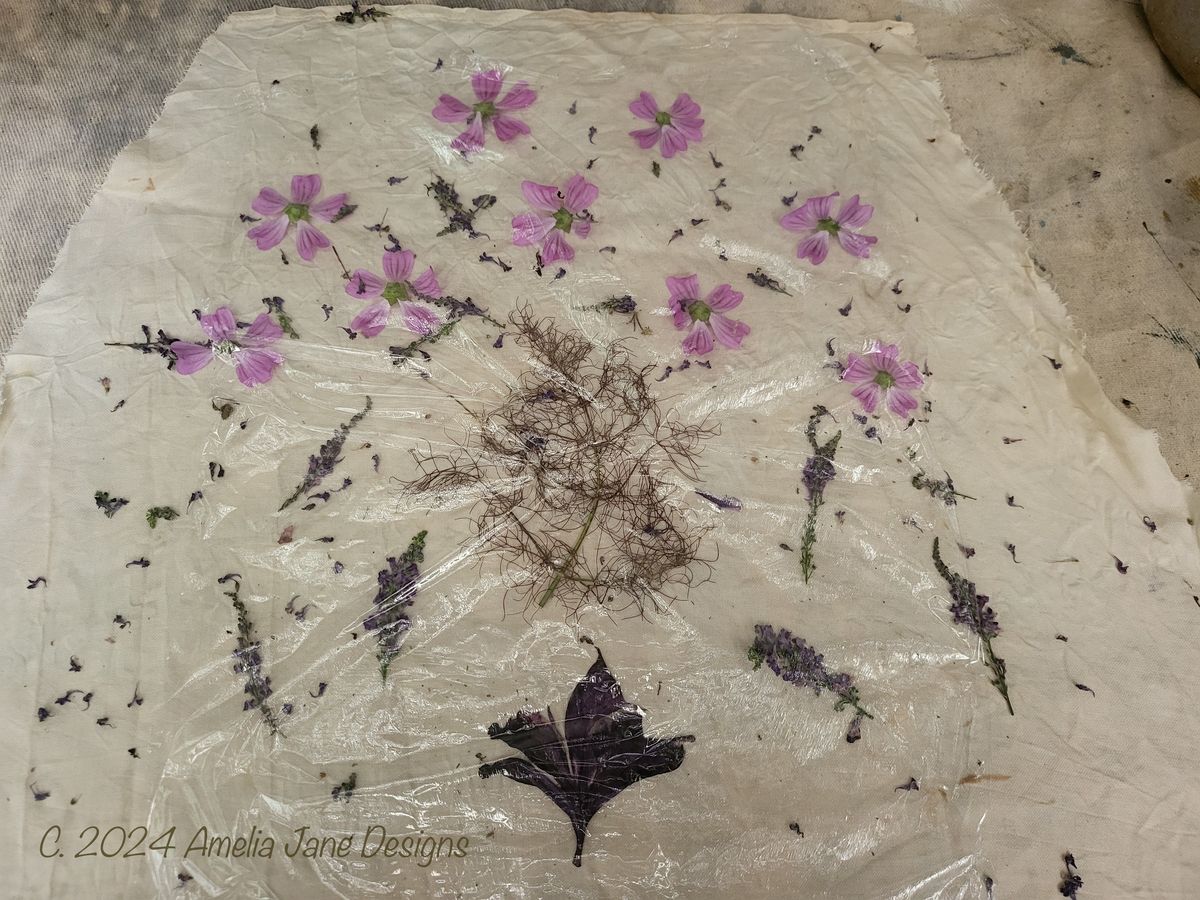
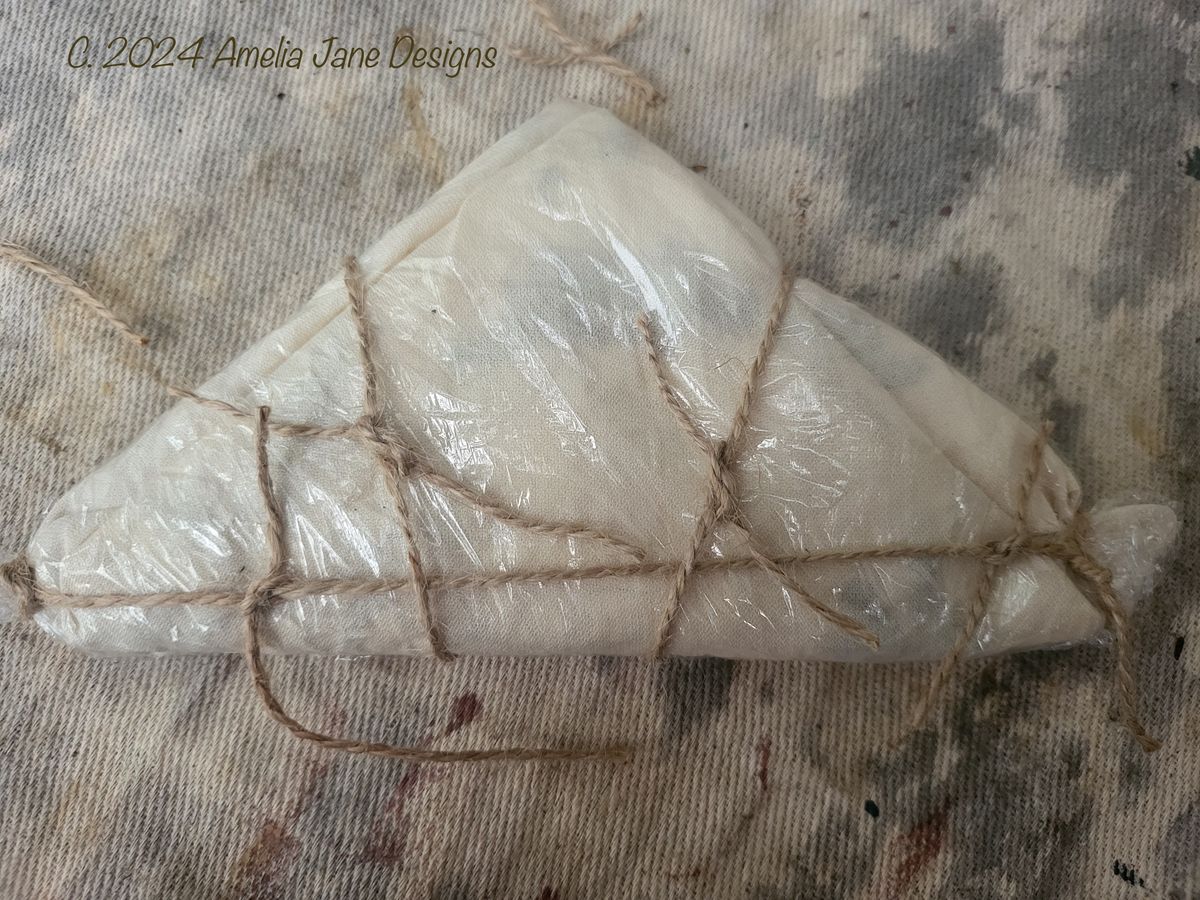
Parcel covered with clingfilm for steaming. Foil covered, wrapped around large rose tree root which rests over steam pan. I vary processes: open steaming 2-3 hrs or closed lid in a trivet for an 1.5hr
Linaria was disappointingly brown, as had previously dyed blue on golden Habotai. Possibly a light vinegar spray caused browning.
[One piece mordanted in alum powder; one piece in soya milk. Soya produced nothing so subsequently washed and soaked in alum for Sessions 2-4]
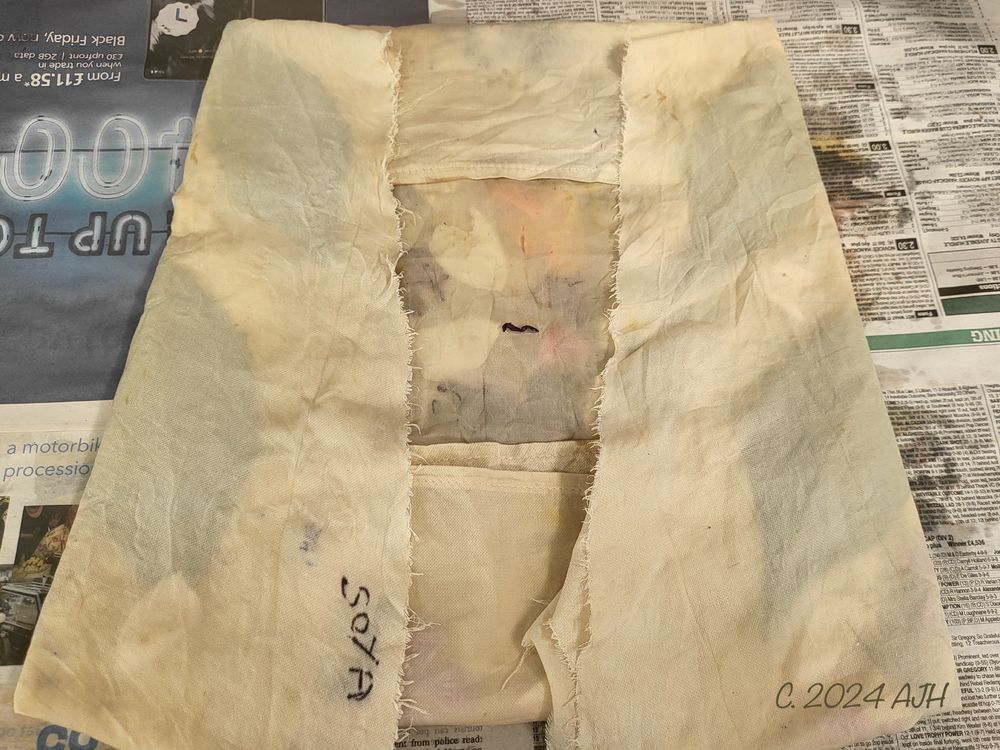
Two silk layers [previously mordanted with alum] were sprayed with white vinegar before folding into a parcel. Sometimes I roll fabric up, sometimes I fold; all experimental. Parcel wrapped tightly around the steaming stick.
Antirrhinums worked the best, and probably too strong a vinegar spray turned them brown, as they have come out violet before. Gladioli DOES print, if feintly. All the material left some mark: even the woad seeds were quite dark. Dahlia leaves were surprisingly pure green, not browned ! and well defined: worth pursuing again with an iron modifier.
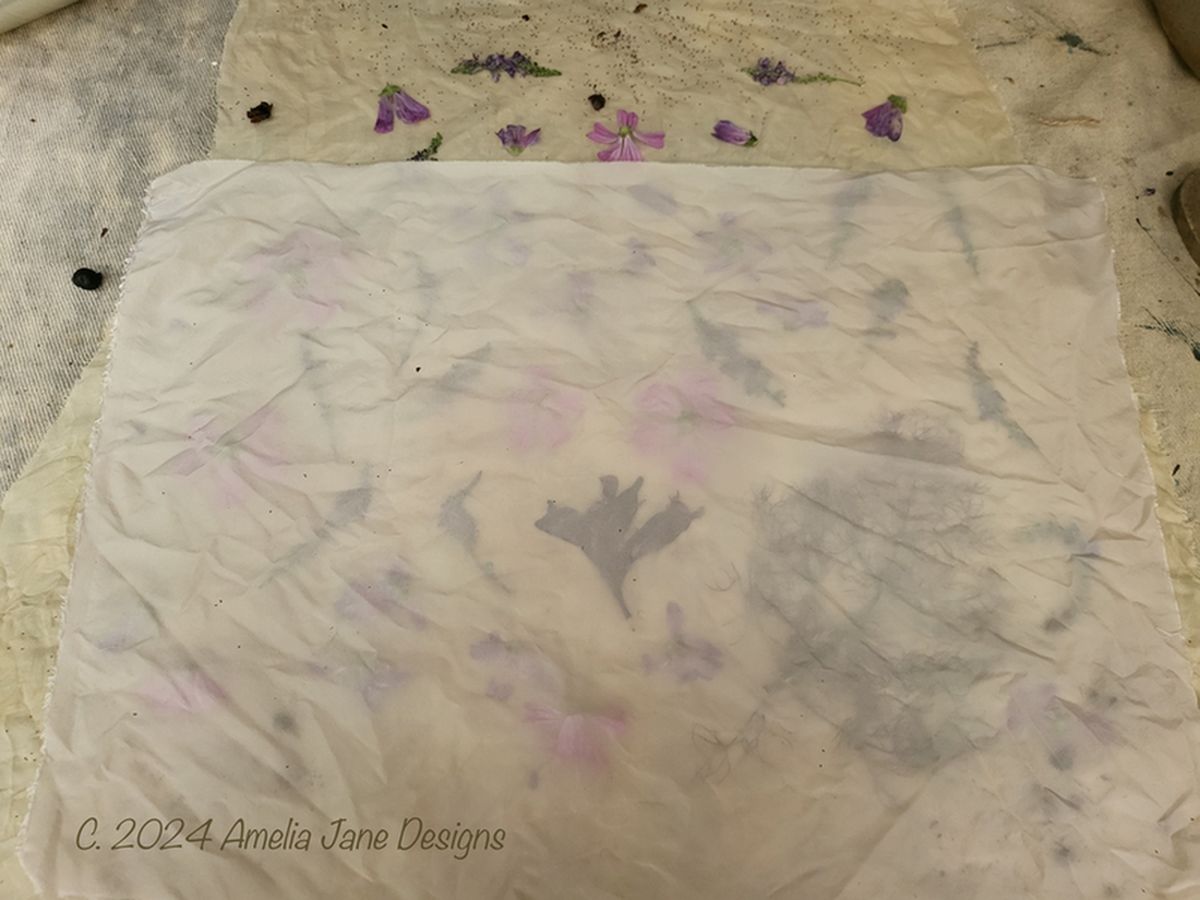
Small piece of Habotai silk added in the sandwich, to test on thinner silk.
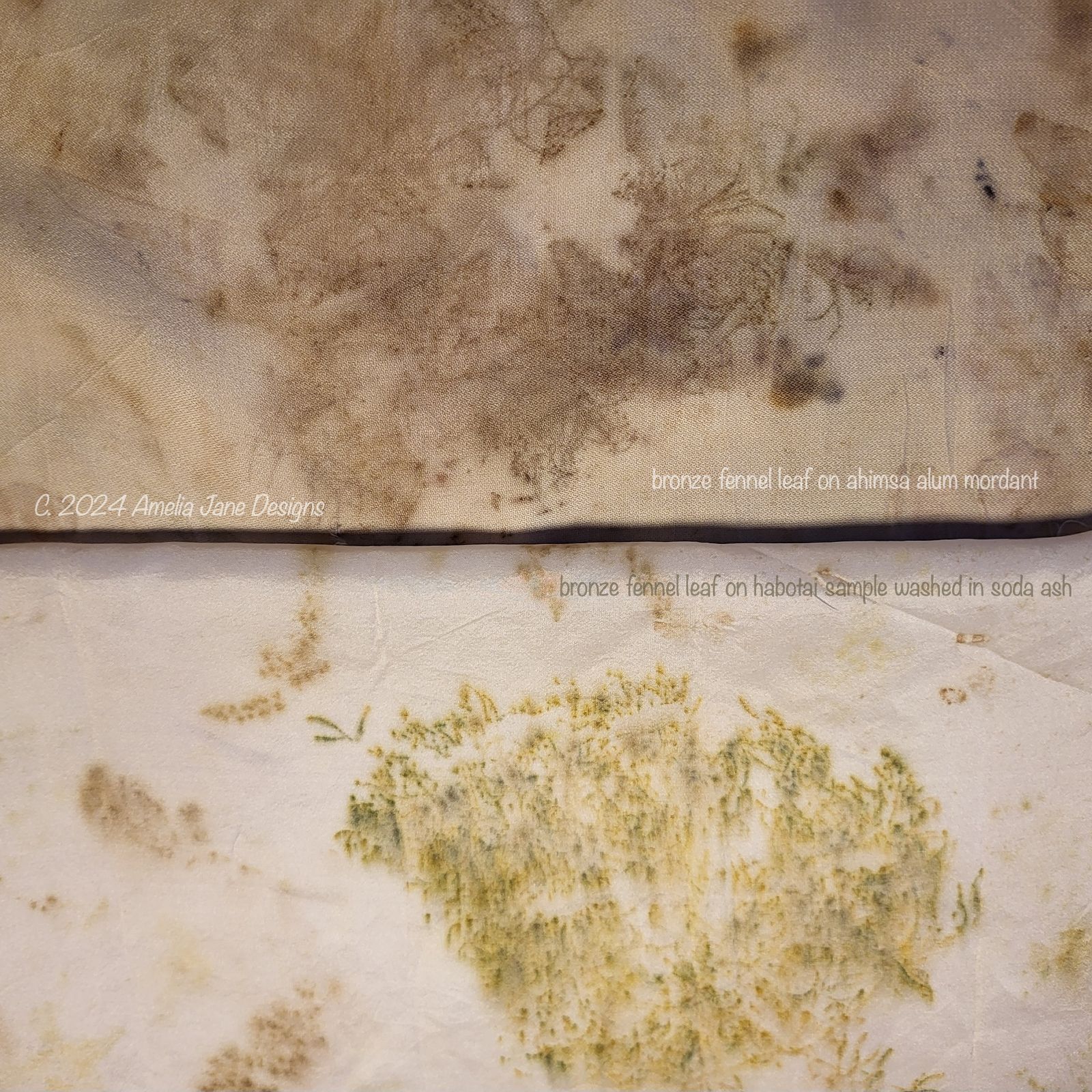
The bronze fennel leaf is promising, as a print or all over texture background: Brown on alum mordanted Ahimsa silk. On Habotai mordanted silk - turned bright green AFTER washing with soda ash. Useful as an all over landscape texture.
Note: Fennel may make a good green dye bath with soda ash.
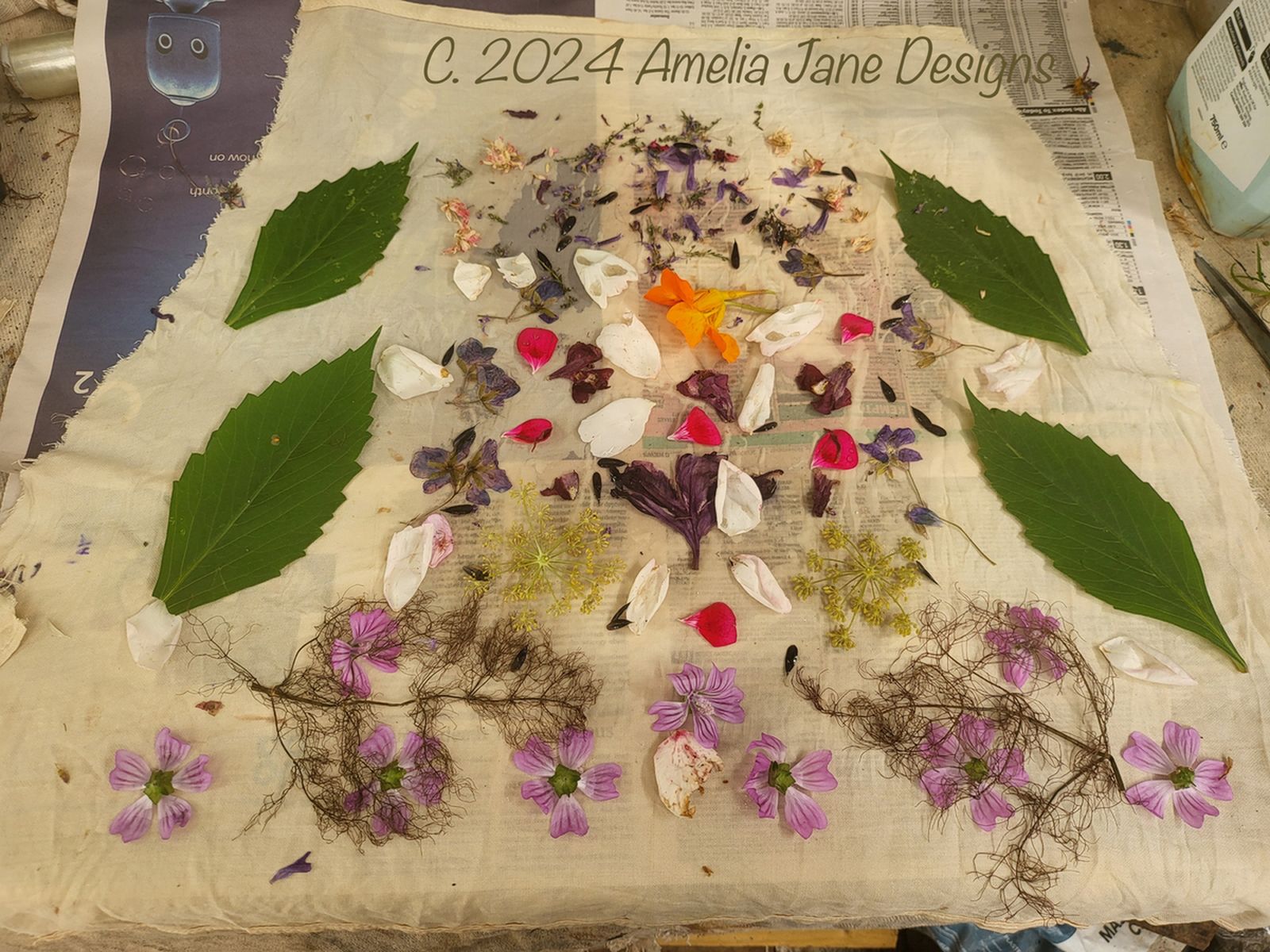
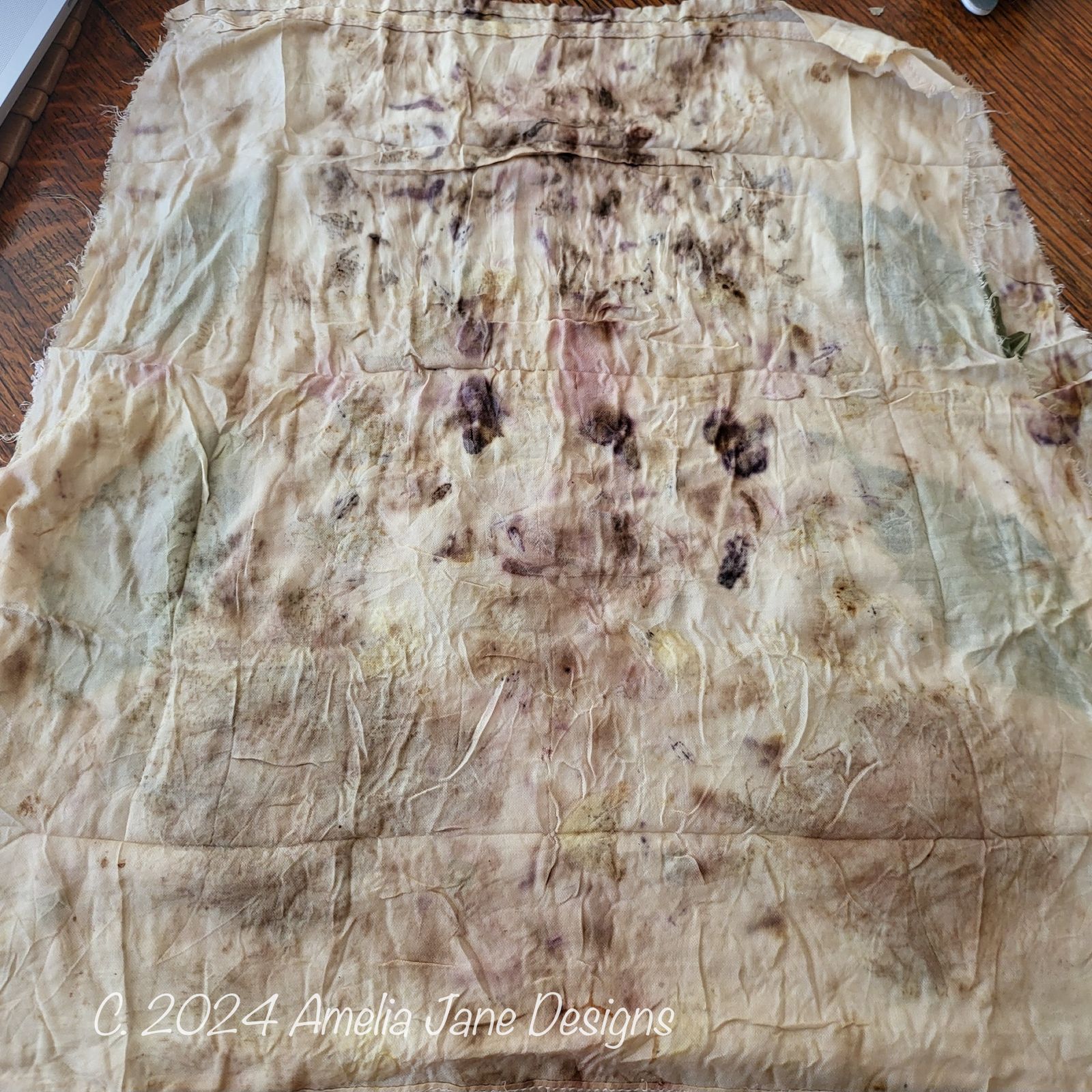
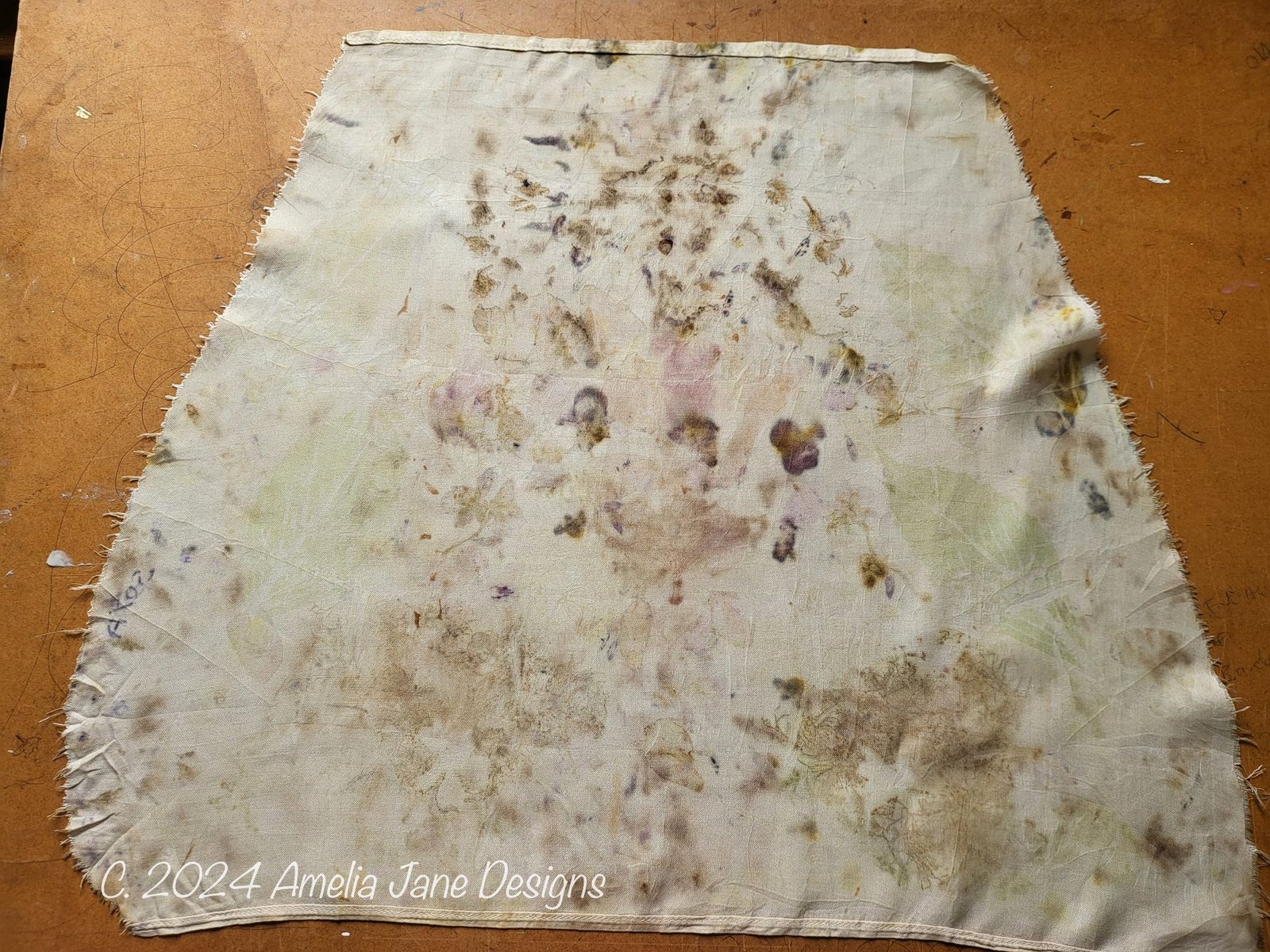
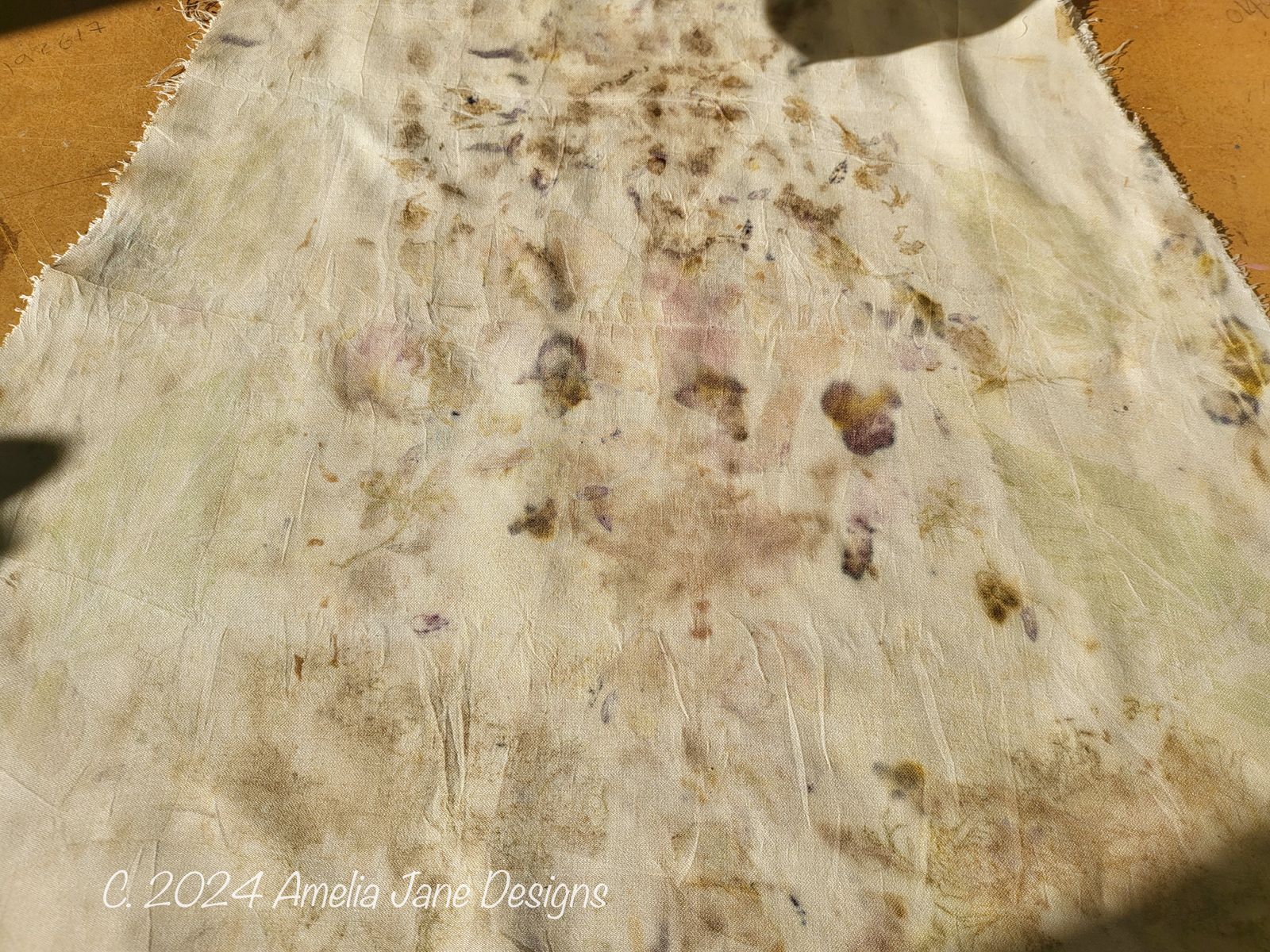
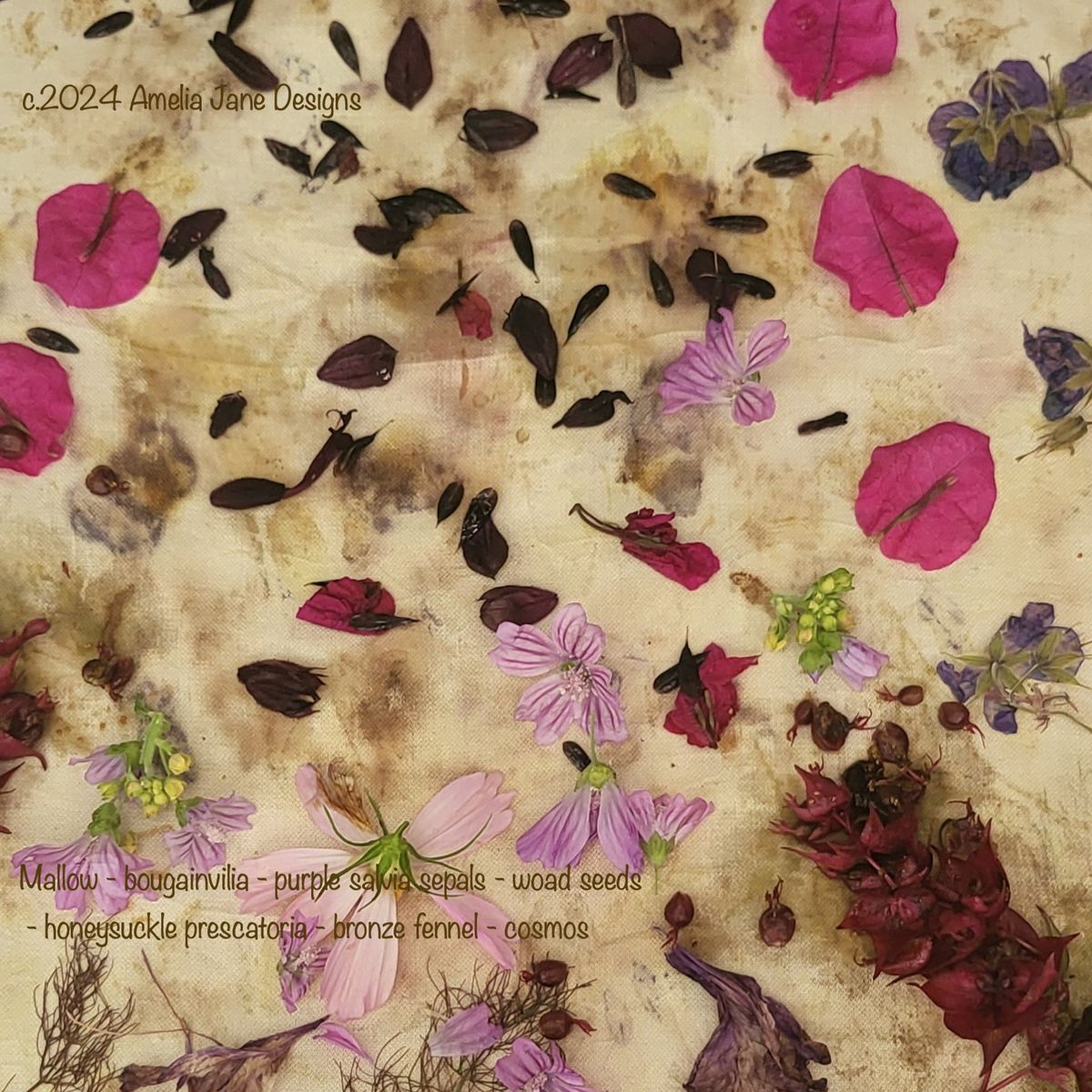
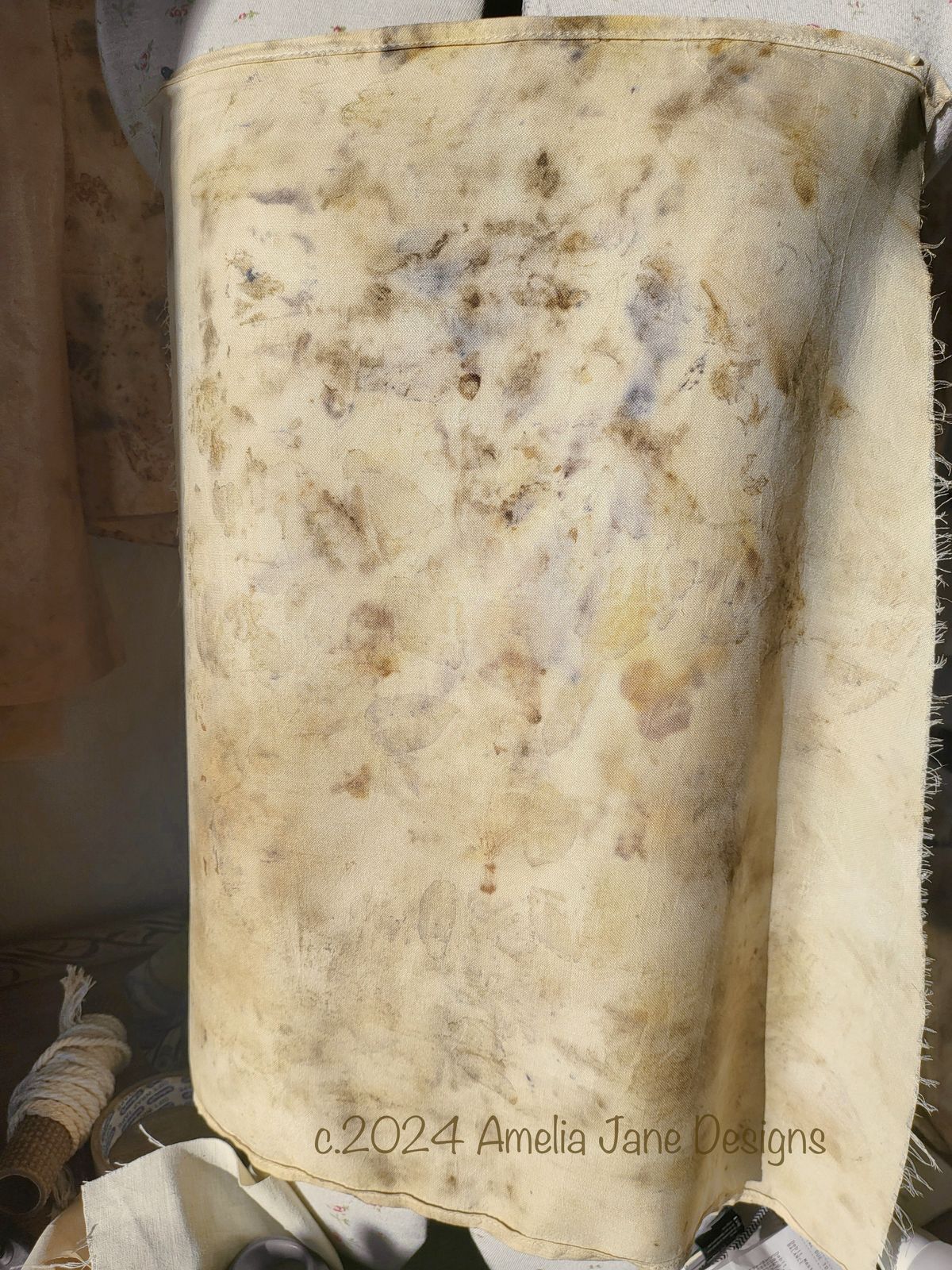
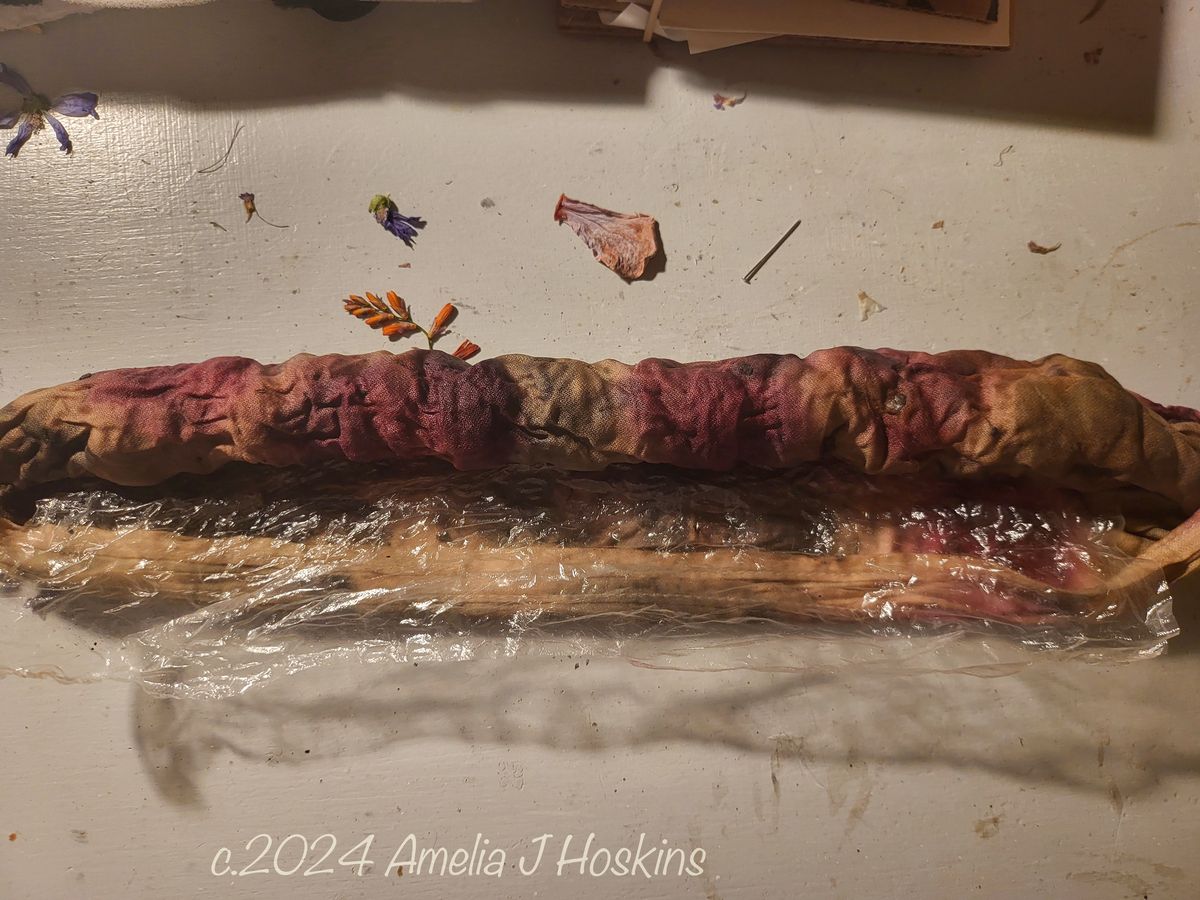
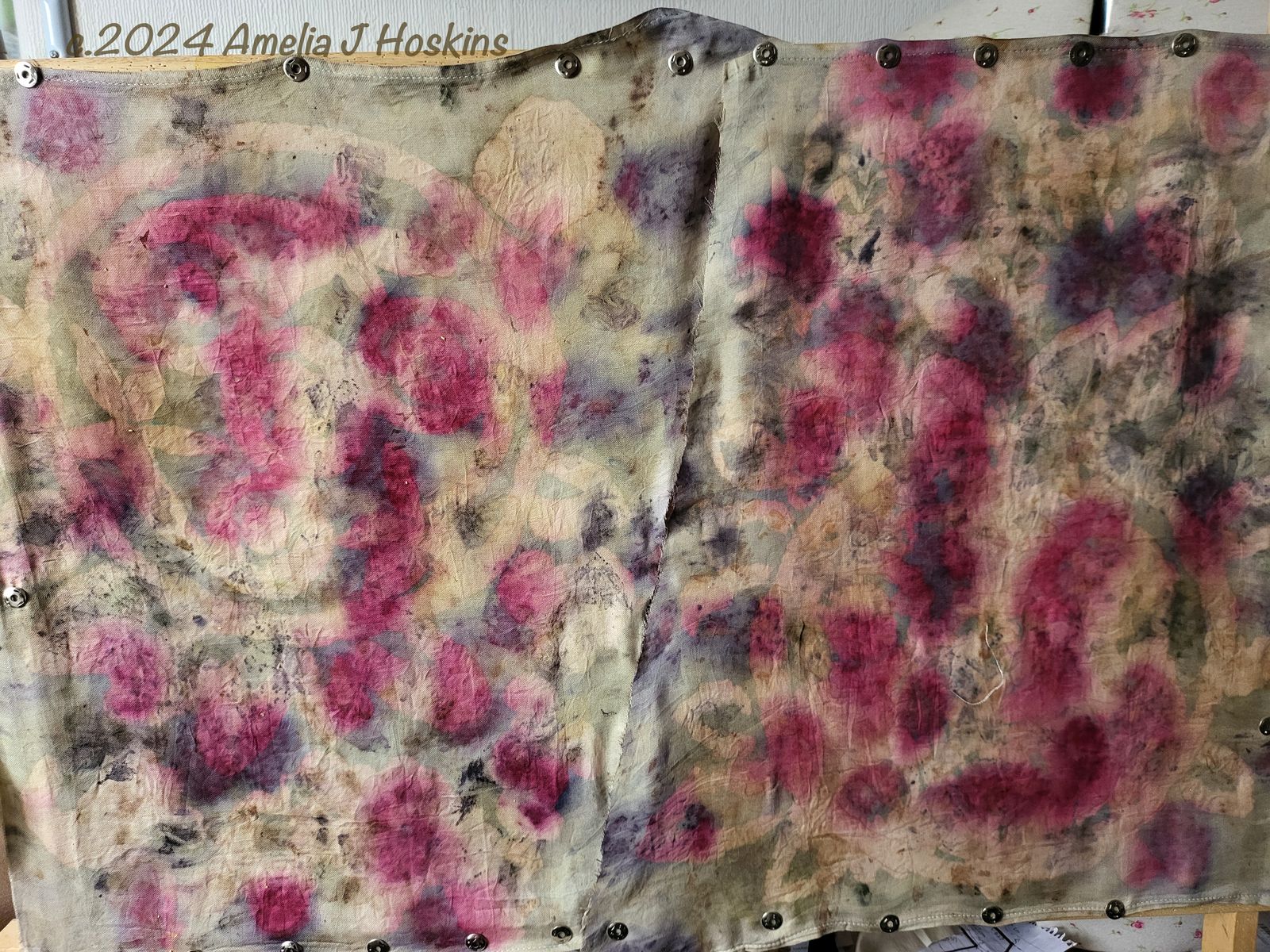
Ahimsa silks after steaming, washed, pressed: Both pieces are identical. Pieces will eventually be used in a garment, but not colourful enough at this stage, only interesting as layer on layer experiment. Identifying multiple colour marks from photo of plant placements. New blue-violet effects at top (possible from woad seeds); orangey lower blotches from crimson Himalayan honeysuckle. Bougainvillea show as identifiable triangular grey-brown shapes; so worth pursuing again on pure white, and modify with iron. Dahlia green prints faded a bit this time.
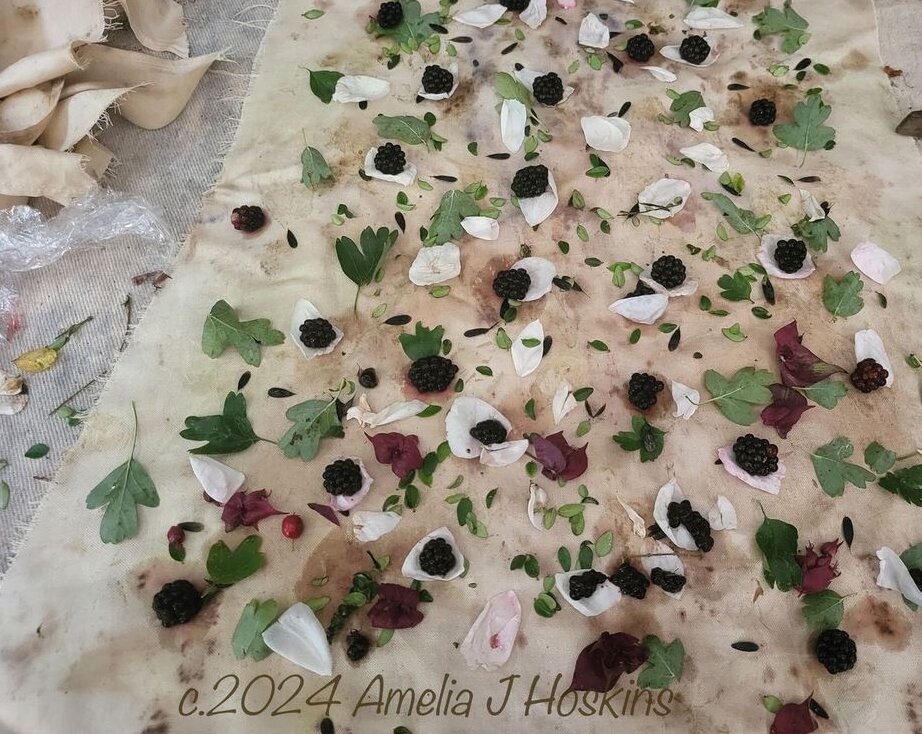
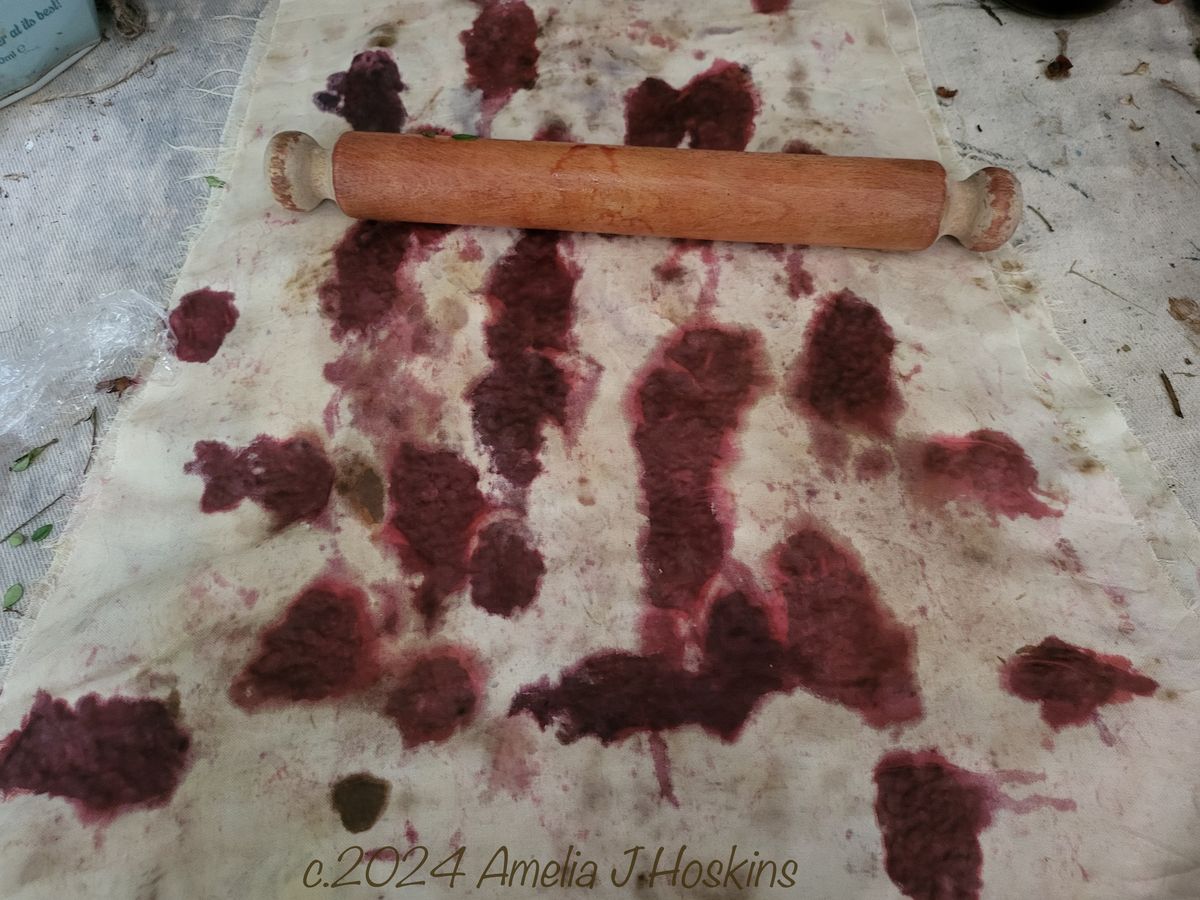
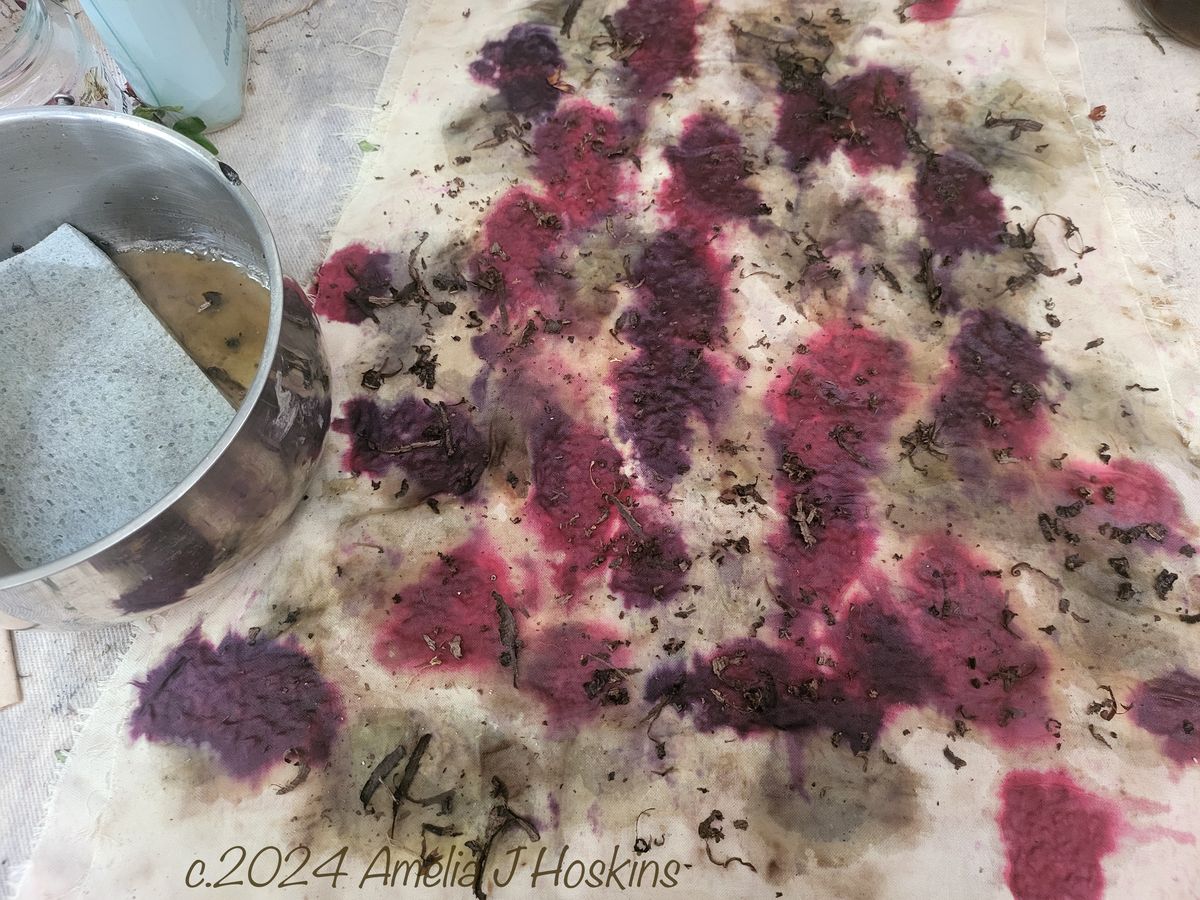
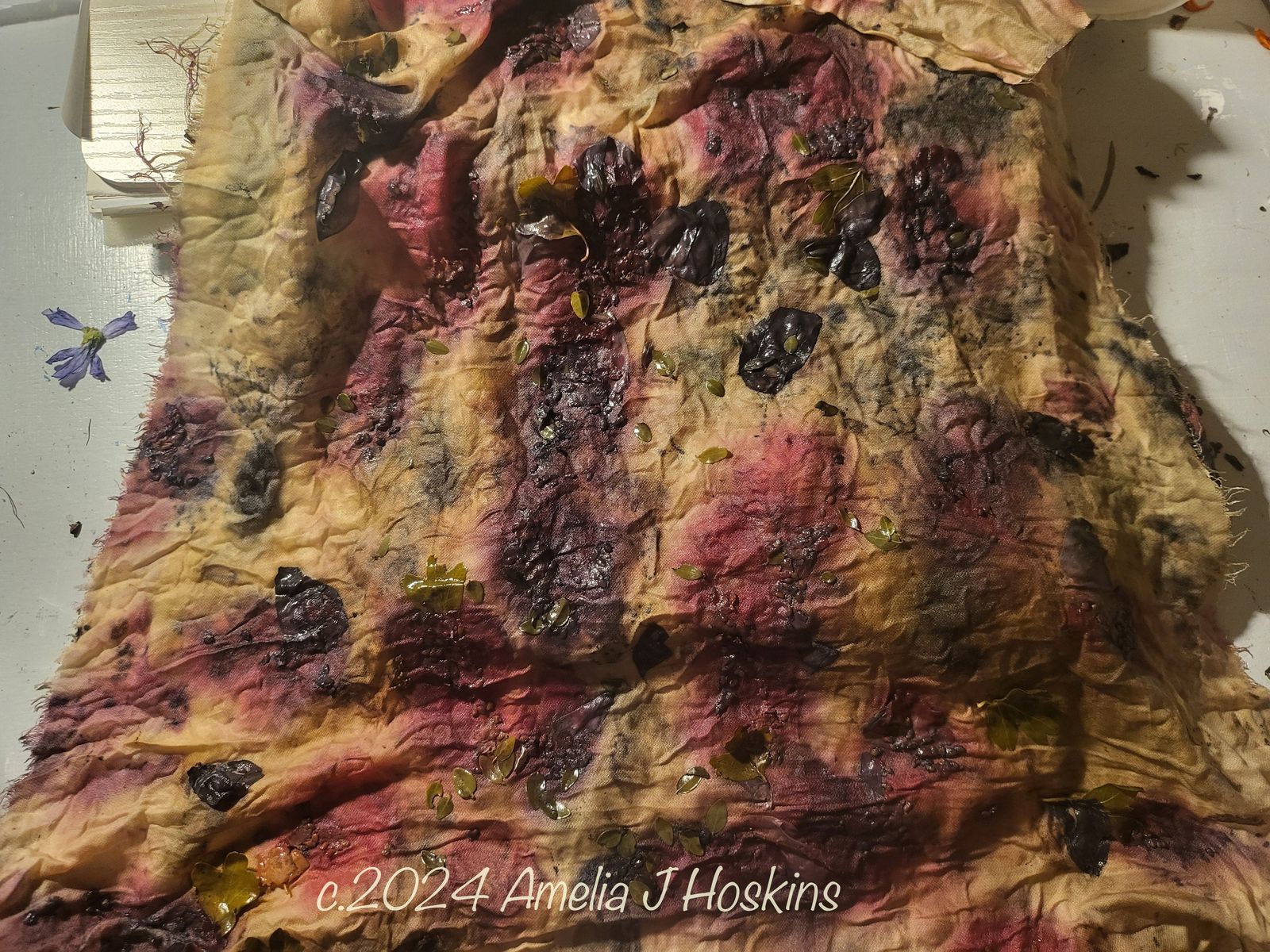
Blackberries were placed on the rose petals. Second Ahimsa piece laid over. Then pastry roller used to squash the dye out. Due to strength of colour, it could have done several pieces at once. Rolling out in pattern directions is also an idea, with small rollers, or pre folding fabric to form geometric mirroring. Much purple dye lost to the backing cloth.
Sponge dabbing spasmodically of water, from woad seed soaking, with added sprinkling of iron sulphate.
Rolled parcel to coil, tie and suspend over trivet in steaming pan. Coil sits on two pieces of Fuscia branch, to prevent metal heat stains. Branches were scraped of bark which was added to the plant material above.
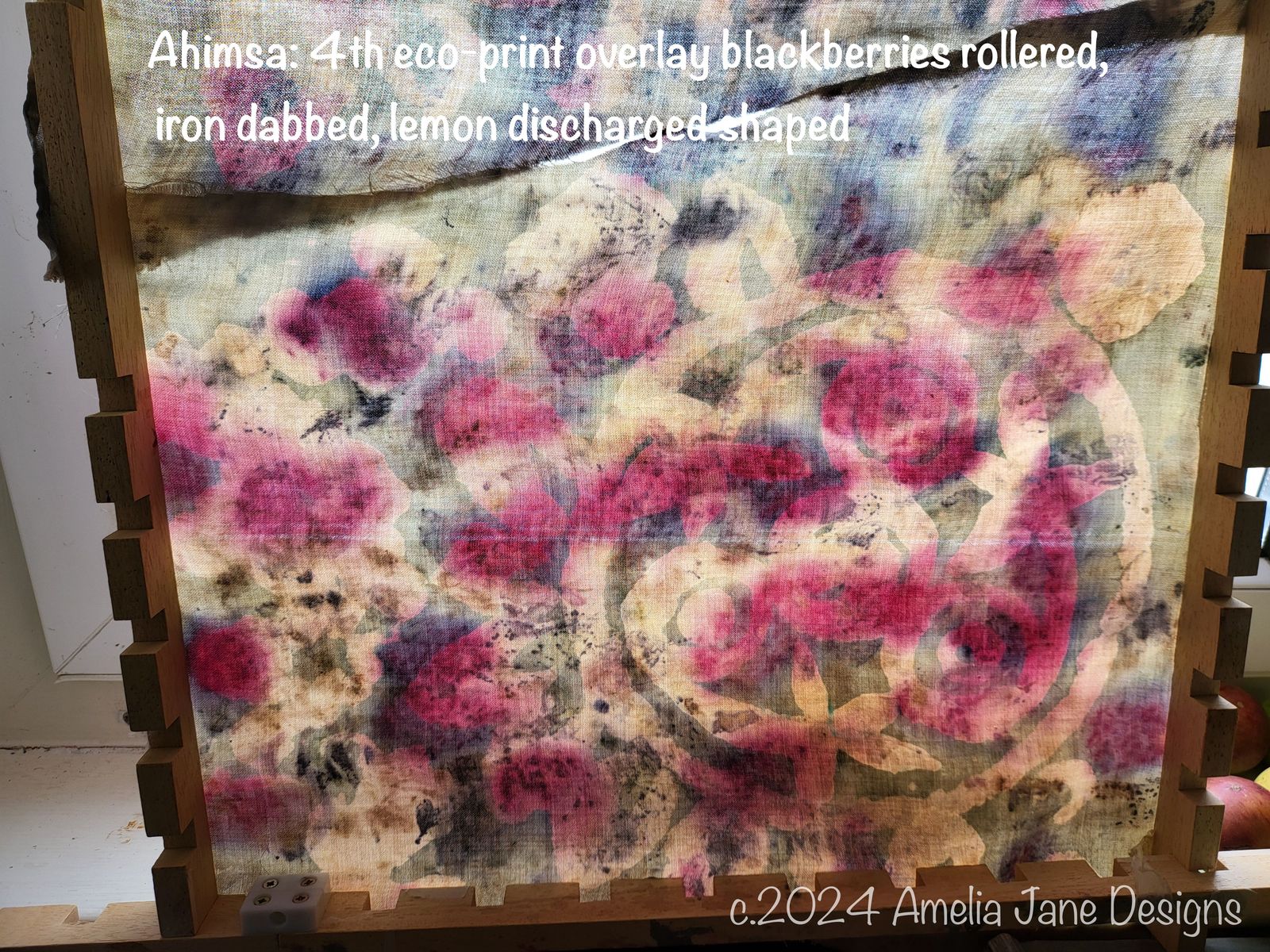
Two Ahimsa silk pieces, upside down to each other. To break up the iron dulled areas, and add interest, circle designs brush drawn-over with lemon juice show discharged LIGHT effect through 'greyed' (iron) background. Lemon brightens blackberry-pink and discharges greyed background to cream. Silks were previously dyed a light golden colour, so the iron may have interacted with that too.
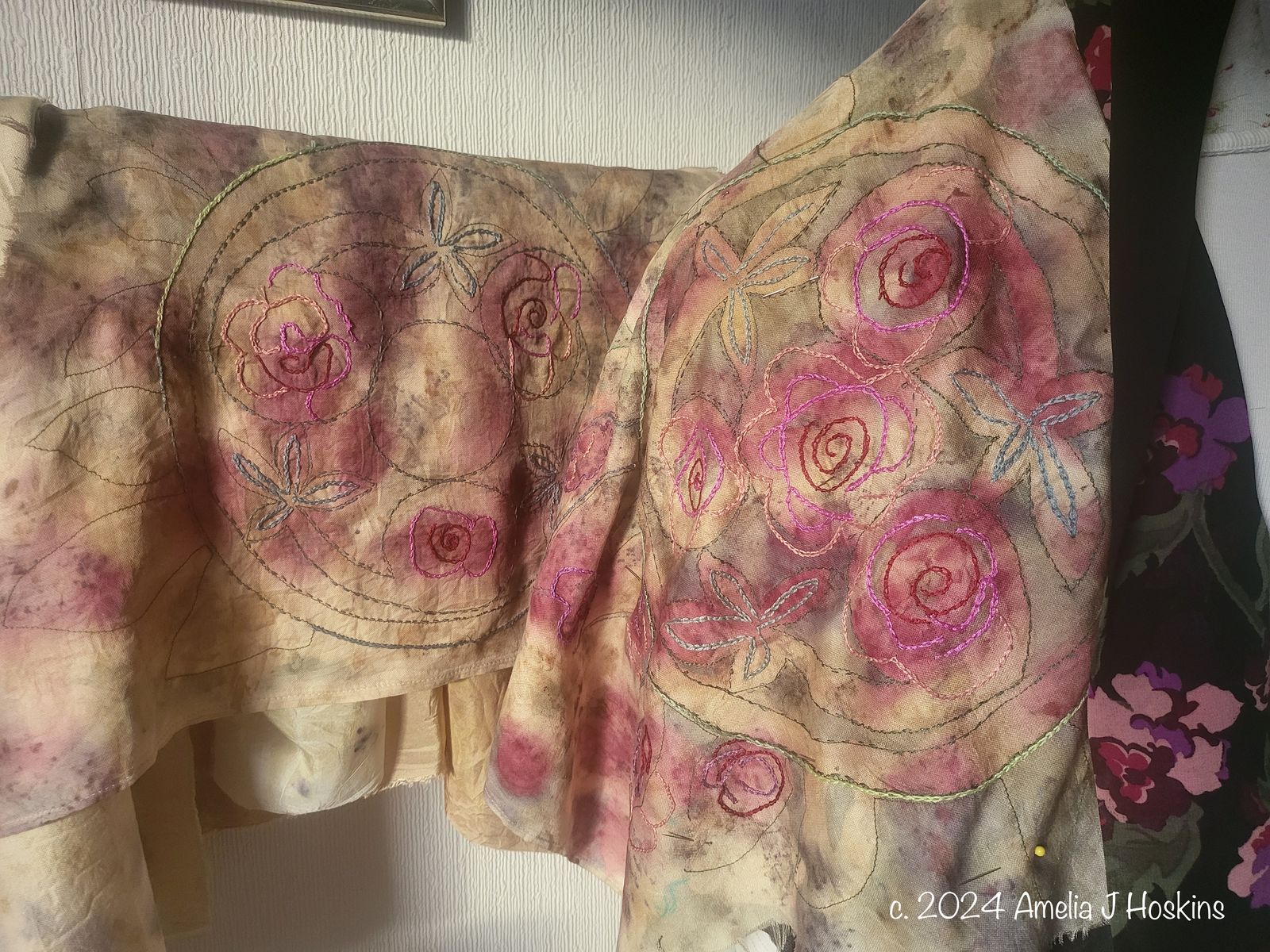
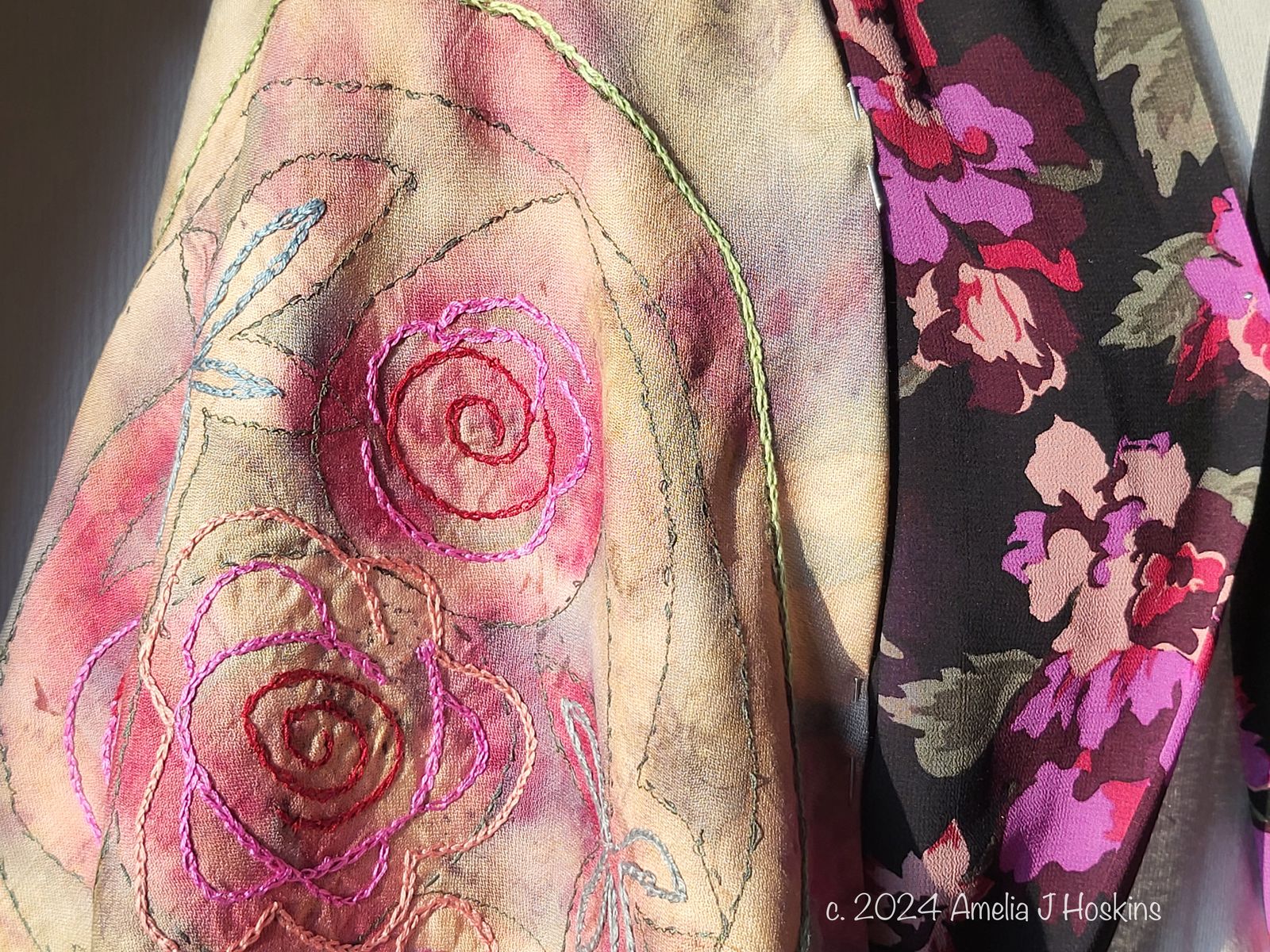
To give some form to the blackberry dyed blotches; triskele design shapes were painted in lemon juice to embroider over. Abstracted rose petal shapes embroidered over colours. Overall effect is 'antique'. This will work with a kimono lining already in stock; with pink colours similar. Enough for batwing sleeves. Purple silk can be added, along with other stock prints with pinks. With the two pieces of ahimsa, enough for each side. Useful to dye two pieces together if garment making.